Books: Afghanistan: Lost Civilization: A Tribute the Vanished Buddhas of Bamiyan

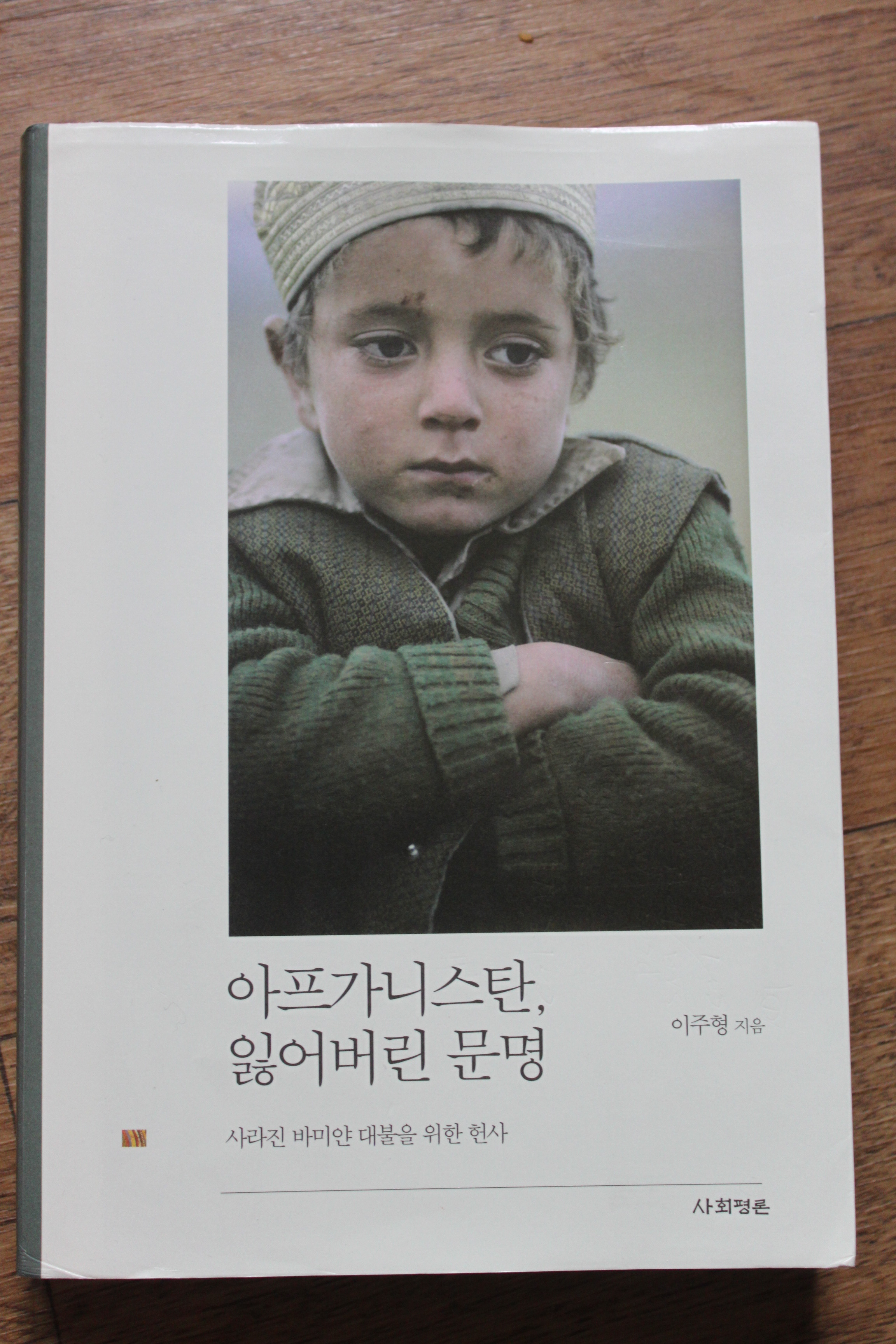
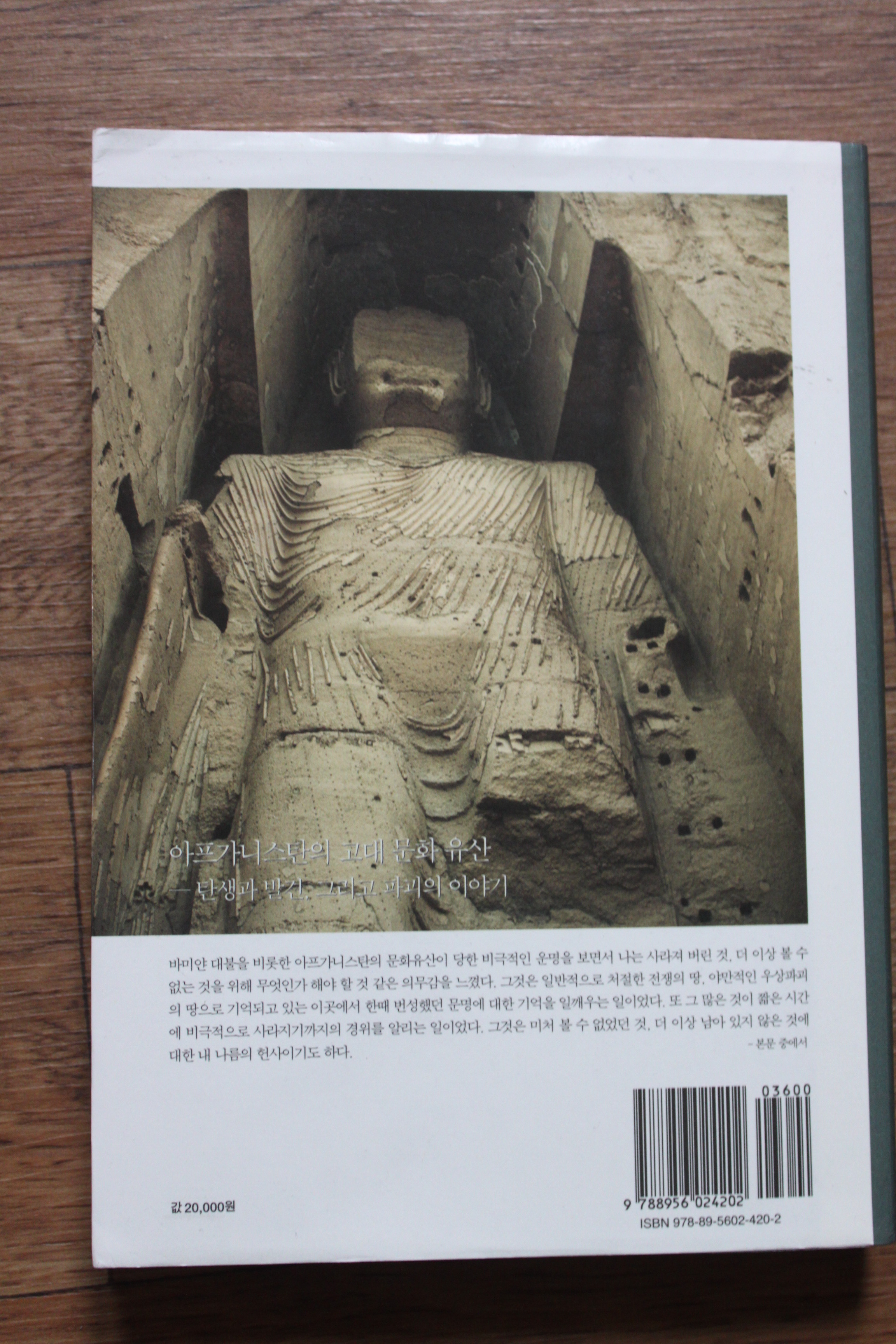
I am reading the fascinating book Afghanistan: Lost Civilization: A Tribute the Vanished Buddhas of Bamiyan (아프가니스탄 잃어버린 문명: 진 바미얀 대불을 위 한  헌사) by Ju-hyeong Lee (이주형). This book relates the compelling story of Afghanistan’s struggle to maintain its cultural identify in the face of a constant geopolitical struggles. The book is quite well written and in reflects a rather Korean perspective on Afghanistan’s position as a “roundabout” in a series of routes to power for empires. The descriptions of both daily life and ancient history for Afghanistan are quite moving.
caption

A central theme in the book is the destruction of Buddhist culture by the Taliban, an act with great resonance for Koreans because Korea sees its cultural continuity with the rest of Asia through the prism of the Silk Road. The Silk Road trade route was critical to early pan-Asian Buddhist culture. The destruction of the Buddhas of Bamiyan by the Taliban government stands out in the narrative. The Buddhas of Bamiyan were two statues carved in the side of cliff in the Bamyan Valley which were designated as idols by the Taliban government and destroyed by dynamite in 2001. The statutes dated back to the sixth century and were universally recognized as the height of Gandara art in central Asia by experts.

Professor Lee teachers Buddhist art at Seoul National University and is an expert on central Asia. His book deserves to be translated into English, but the prospects for such translation are not great. Some bits of Korean contemporary culture are trickling out into the world in English versions, but the scholarly and artistic aspects of Korea today are not given a high priority. Moreover, there are not that many people who can do the work. After all, a translation of Afghanistan: Lost Civilization: A Tribute the Vanished Buddhas of Bamiyan ( would have to be of the highest quality to have any chance of finding a global audience and the number of people who do such work could fit in a small room.
caption


At the same time, I do sense that we are on the cusp of what I have designated as the “Intellectual Korean Wave” (지적 인 한류) in a recent interview with EBS. The Korean wave so far has consisted of pop songs, soap operas, movies and fashion. In essence, the Korean Wave is defined as the hip and dynamic youth (and increasingly older) culture of Korea that has swayed Japan, China, Central and Southeast Asia. But increasingly the world of books, high art and culture are making themselves felt. Although most books for sale in the subway station are not that original, there is much coming out in Korea that deserves to be translated, and translated carefully, into in English, how long it will take to start doing so, I do not know. But such a step is essential for Korea’s development.

Emanuel Pastreich

Circles and Squares

July 17, 2011

Seoul: “Paradise sans Poubelle”

Seoul is without doubt increasing its sophistication with astonishing speed. Yet there are a few points that just do not make sense to the expat enjoying life in this city.

For example, why do the police not ticket the delivery men on motorcycles who rush around causing such chaos, and in many cases kill or cripple small children? it would not be hard to raise the bar and protect us all. Almost every time a man on a motorcycle approaches me on a sidewalk I say to him “This is not the road!” (길이 아닙니다!). And in almost every case he responds “Sorry.” Why? Because he knows what he is doing  is wrong.
All we need is for police to start ticketing seriously and this threat to everyone will rapidly disappear–and Korea will shine.

What is fascinating is that the bar is being raised by Seoul local government, Seoul Metro and many other public facilities, but for some reason we just do not manage to do so for those awful delivery men. We have safety doors on the subway platform for a level of safety you will not find many places in the world, but out on the sidewalk, watch out!

And then there is the issue of trashcans.

Korean facilities are increasingly sophisticated and increasingly public architecture and landscaping is improving. At the same time, Seoul parks and streets are littered with trash. Cigarette butts, bottles, wrappers from ice cream bars, beer cans and cardboard. The problem is two-fold. First, Seoul simply does not have any trash cans. People are willing to put up with trash on the ground rather than insisting on trashcans. Planners do not make trashcans a priority.

The decision is a serious mistake.

At the same time, I see extremely educated Koreans simply throw garbage on the ground while walking. Many Korean kids grow up thinking that is just naturalto toss wrappers on the ground. The trend is most disturbing. Sometimes I think the cause may lie with a misinterpretation of “democratization.” Koreans were so happy to escape from the repressive environment of Korea under the strongman Park Chong Hee that being able to just do anything was mistaken for political freedom. President Park may have had many flaws, but when it came to green zones in urban spaces and strict rules for citizens, he was right on the money.

By the way, smaller cities like Gyeongju and Jinju (and many other towns) are as clean, or cleaner, than Japan, so the problem is in part a Seoul problem.

Finally, I want to note that so many food products, bread, kimbap, rice cakes, everything are being wrapped up. More than was true even three years ago.

I almost never see a Korean say he or she does not need a plastic bag when offered one. And very few Koreans bring a cloth bag with them when they shop. Let us hope we see progress on this front going forward.

Anti Nuclear Graffiti in Seoul

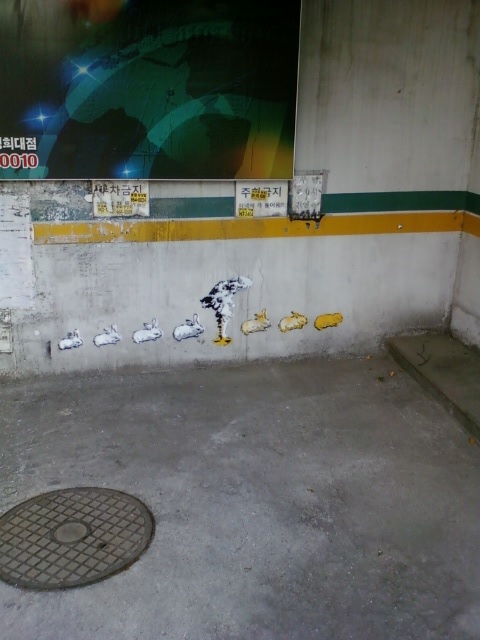
This cryptic anti-nuclear graffiti is showing up around Seoul, spay painted on walls by an anonymous activist. The reference to a fabled, perhaps apocryphal, tale of a rabbit born in the Fukushima region which had no ears is clear. I had not seen this sort of politically-charged street art around Korea anytime in recent memory.

Alternative Instruction Program at Daeseong Middle School, Gochang, Korea

Alternative Instruction Program at Daeseong Middle School, Gochang, Korea


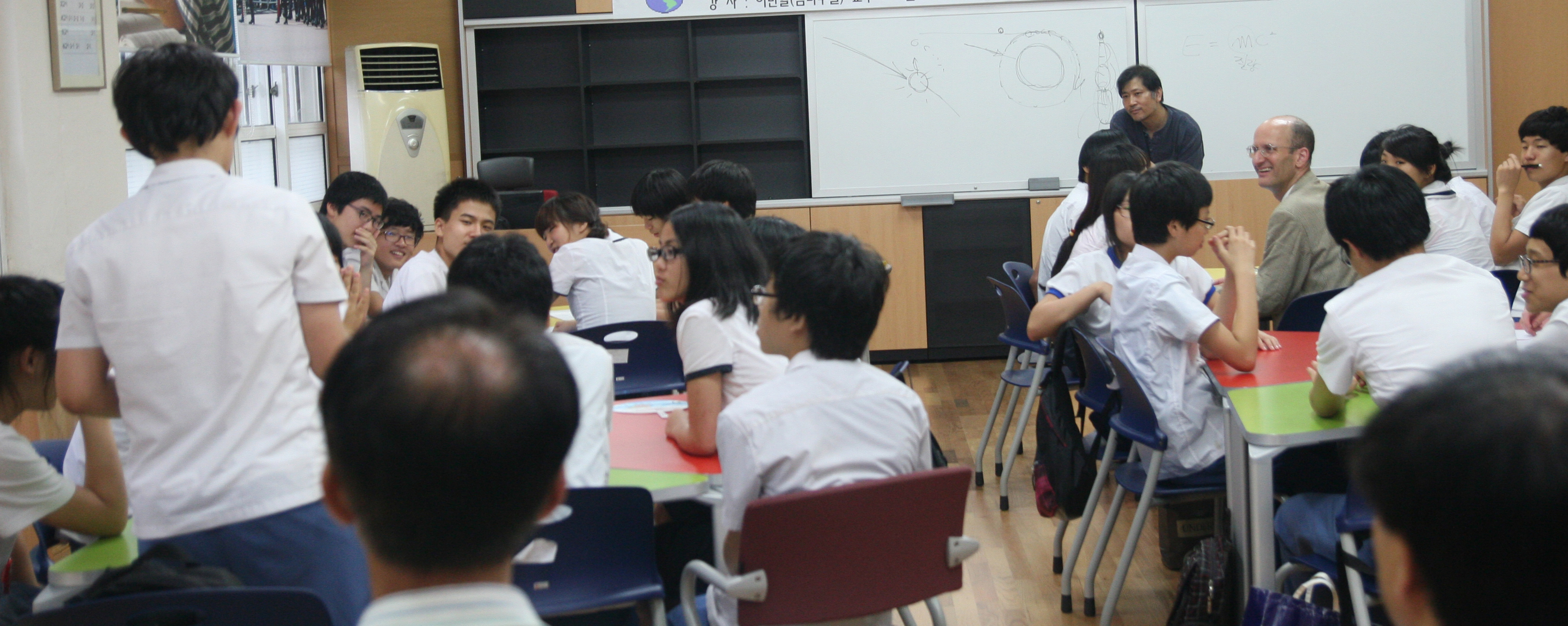
My close friend Gosan, with whom I have been working with on an alternative education project for the last six months, invited me to participate in one of his classes at Daeseong Middle School in Gochang, Korea. I travelled down yesterday and attended Gosan’s alternative class last night. There were about 25 students who had decided to use the time that they would normally devote to homework to attend this one hour class at six PM. First, The enthusiasm was palpable.


Gosan talked about the manner in which we assess problems and how we can make use of the knowledge we have to solve problems with which we are confronted. He broke the students into small groups of five or six (I was seated with one group) to discuss the topic.

 Gosan explained at length the principles of physics that the student had covered in their class. He then posed a rather unexpected challenge:

Read more

“Social Impacts of the Taean Oil Spill: An International Perspective” (guest report)

Senior associate of the Asia Institute Charlie Wolf produced this thoughtful report on the Taean Oil Spill and its larger implications which I think fits in nicely with my previous postings.

Charlie Wolf


Social Impact Assessment Center

(senior associate of the Asia Institute)

“Social Impacts of the Taean Oil Spill: An International Perspective”


Presented at the Taean International Environment Forum

“Lessons Learnt from the Taean Oil Spill & Marine Conservation”


Held at Anmyundo, Taean, Chungnam Province, Korea,


8 December 2008.


Taean Oil Spill Wolf Report

Emanuel’s proposal for a festival at Taean for Children (August, 2008)

The terrible Taean Oil Spill of December, 2007 caused such damage to the eastern coast of Korea that many were demoralized. Fishermen found themselves suddenly without a livelihood. That spill took place at the time I worked as advisor to the governor of Chungnam Province.

Of all the work I did with the province of Chungnam, I think the response to the oil spill was the most meaningful. I visited the headquarters for the clean up site, helped clean the tar on the beach and spoke with both residents and members of the local government team in charge. It was an opportunity to help coordinate the international response. But it was my visits to local elementary schools that made the deepest impression on me. Here were these children struggling to understand how their parents suddenly no longer had work as fishermen. They were gripped by an  invisible threat hovered over their communities. The teachers were quite frank about the psychological stress.

I worked with several people at the local level to make up this proposal for an international children’s festival that would bring new hope to the children. Here are versions in Korean, English and Japanese. Ultimately, there was just too much sensitivity about the oil spill and we could not actually hold it, but there were several figures in local government who did their best at the time.

 “The Delicate Little World of Taean”

A Festival for Children of Art & Music Celebrating the Environment

July, 2008

[proposal]

Emanuel Pastreich

A thick oozing sheet has coated the pristine coast of Taean in Korea since December of 2007, transforming once spotless beaches into a black crust lining a sea of death.

As the shock of Korea’s worst oil spill sinks in, we are forced to think about the terrible consequences of our dependence on oilnot only for the fishermen of Taean, but for the entire world.

We think about such matters most of all when we watch our children. After all, the implications of oil, from creeping pollution to climate change, gather like dark clouds on the horizon, dark clouds that we are fearful to speak of with our young ones.

The only way forward is to create a sustainable world.

To do that, we must change culture itself, and we can only achieve that goal if we first turn to our children and offer them a vision of how the world could be.

Delicate Little World of Taean (English)

Delicate Little World of Taean (Japanese)

Delicate Little World of Taean (Korean)

Plastic Surgery in Seoul (part 2)

I am not sure exactly what is going on, but plastic surgery means more than a bit of surgery in Korea these days. First, plastic surgery does not seem to be that optional anymore. The more attractive you are, the more likely you are to think you need it to be even more attractive. Just about all girls are under pressure to do so, and an increasing number of boys.

Moreover, it is increasingly an international business, bringing in people from around the world into Seoul. There are now plastic surgery complexes in Shinsa and Apgujeong, the heart of Gangnam, that are a combination of ritzy cafe, hotel, hospital and amusement park. People sip cafe lattes, flirt and lounge around between bouts with the knife. The “plastic surgery” total experience is not to be missed. And materials and advertisements are found everywhere in Chinese and Japanese. In fact, many of those working at the clinics speak Chinese and Japanese.

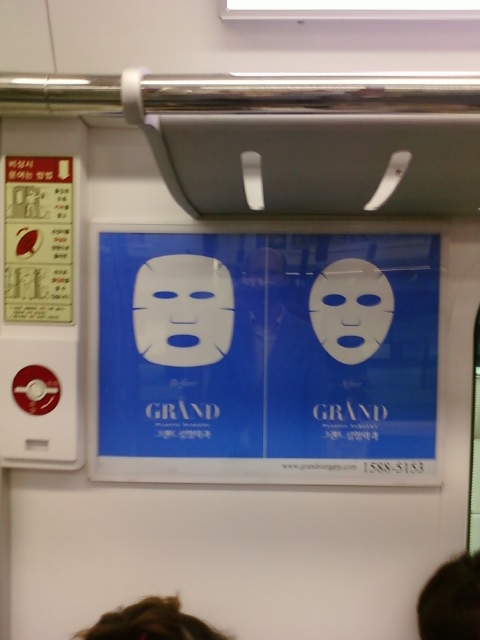
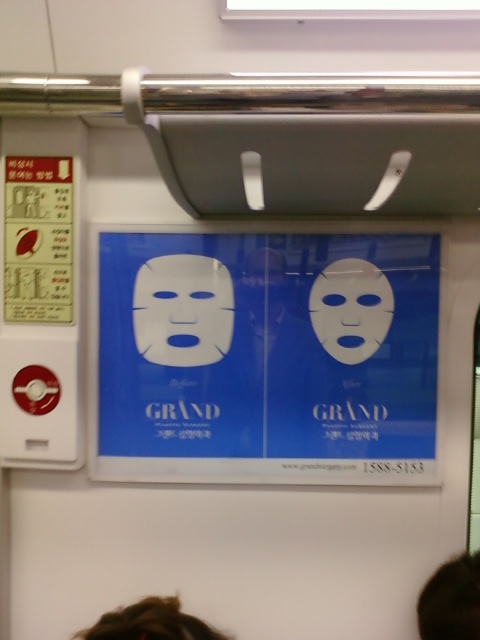
The first advertisement featured here shows two somewhat abstract faces. One is the before and the other the “after” picture. It is not hard to understand what is represented, but the interesting point is how much it looks like some sort of an online game.

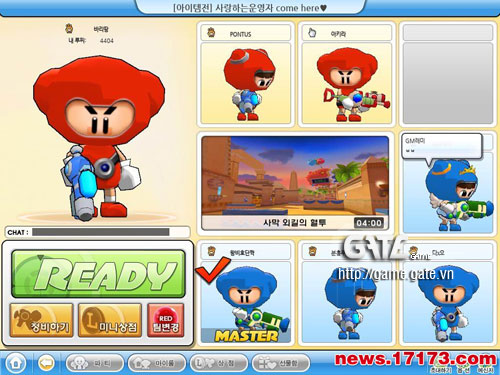
Young people tend to see, by analogy, their own bodies as somehow akin to the possible forms you can select in a video game. Look at this example from the popular kids game “Bubble Fighter” as an example.

The player picks what body type and characteristics he or she wants. So also with games for young girls in which one picks dresses and facial and body types. In an odd way, the consumer selection motif is being carried over to the body itself. As if the virtual reality on line were spilling over into daily quotidian life.

Of course the result is an illusion, for much in plastic surgery creates more serious problems in later life. We have a strange combination of a virtual on-line culture where the most recent event cancels out everything before with an unprecedented life expectancy that suggests most people will live much longer than they ever imagined.

The second advertisement is more artistic, following the general conflation between plastic surgery are art (the blending of the natural and artificial) that we see in East Asia. Compared with the United States, the cultural context for plastic surgery quite elevated. it is a topic that is discussed openly and which becomes a topic for real artistic expression–part of a high cultural and social register.

I know that in the technology convergence field, and “medical tourism” field, plastic surgery is seen as a growth industry for Korea. The assumption is that the IT component, the ability to employ advanced technology for the manipulation of information will give Korea the advantage over Thailand and other places strong in the field.

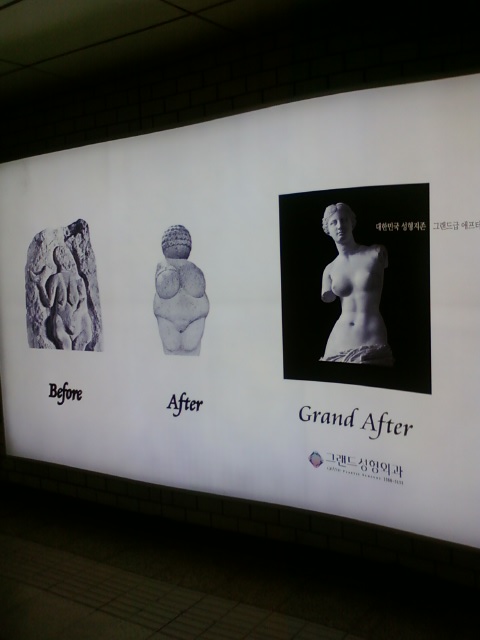
This ad starts out on the left with a cave painting suggesting a more primitive culture (and of course implying that some societies are more “primitive”). The central image is the famed Venus of Willendorf, also “primitive” but at the same time erotic. And the crescendo is the Venus de Milo. The evolution of the human body through technological modification is mapped on a pattern of increasing artistic sophistication. The reference is entirely Western.

We could almost say that the concept of the avatar from gaming has been carried over to the individual’s body, or maybe even the metaphor of the robot has been carried over. Suddenly, the body as an extension of technology, of customized technology, the blending of the carbon-based and silicon-based systems.