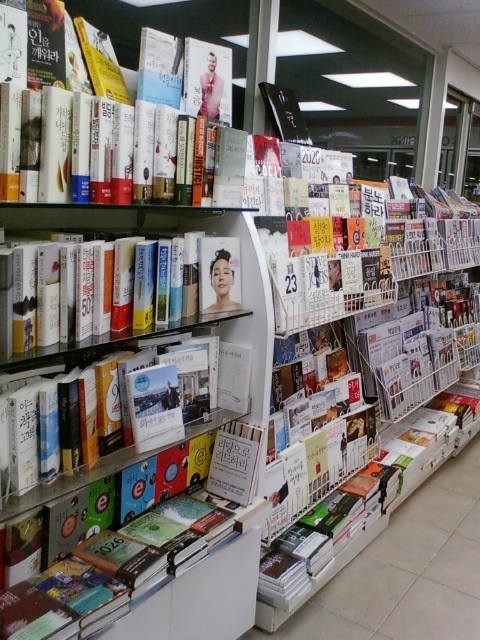
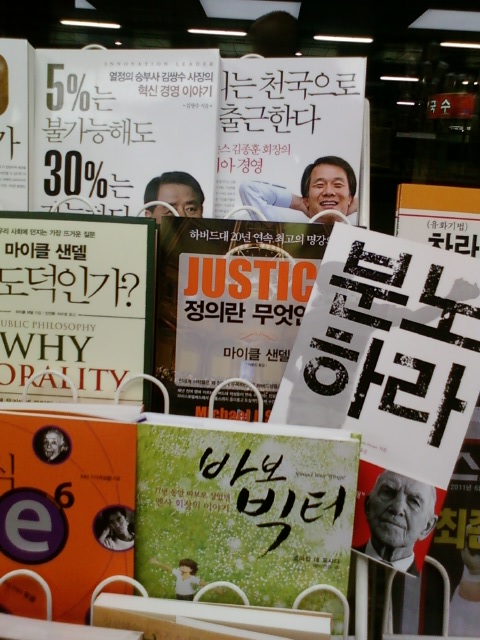
Books at Convenience Stores

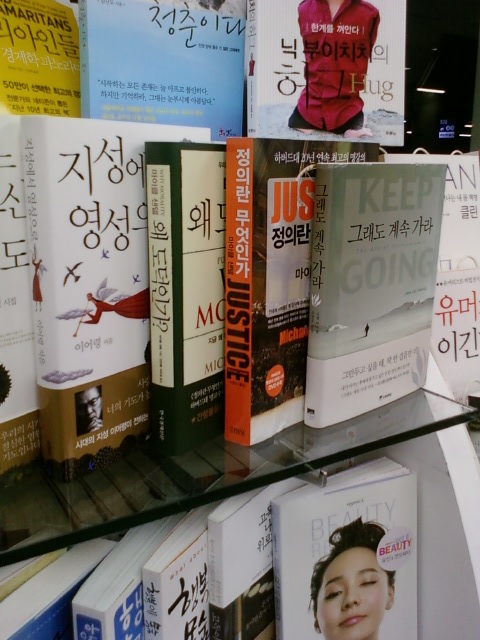
I mentioned the campaign to get Koreans to read in an earlier note. With the help of Professor Doh Jung-il and others, a consensus has formed that increasing the reading of books among citizens is the best way to take Korea to the next level.

I must admit, the first efforts seemed to be a bit primitive and from an American perspective, unlikely to succeed. But I am amazed to say that the number of people reading I observe is increasing rapidly. Here are some photos from a convenience store in the Seoul Metro. There was no such pile of books available in convenience stores even a year ago. Although imperfect, Korea seems to be able to set goals for national development in a manner that seems organic and convincing, and actually works.
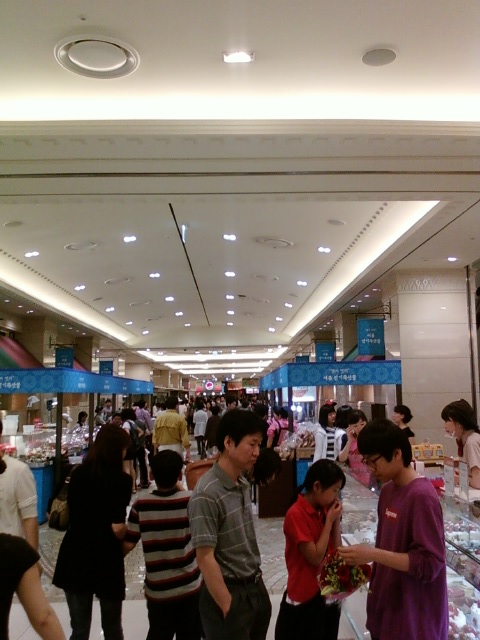
Gangnam’s remarkable Shinsegae Department Store

I remember that in the old days in Japan it was Takashima-ya in Yokohama that was the greatest department store in the world. What an assortment of foods and objects one saw when one wandered through its display cases.

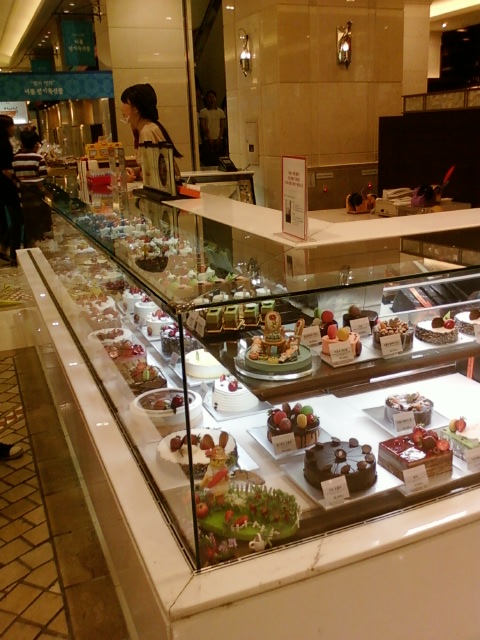
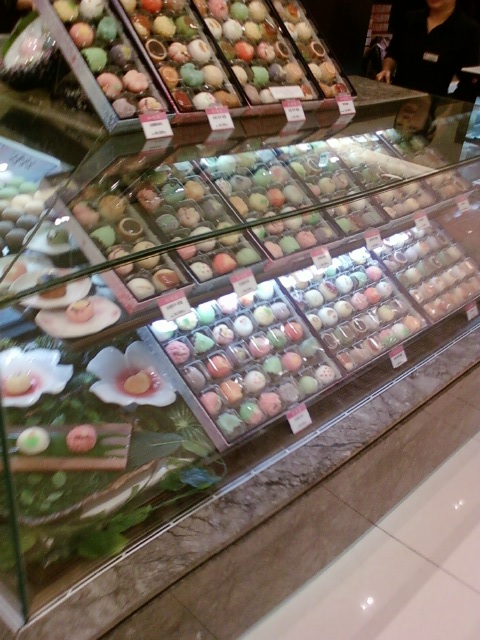
I recently had a chance to tour the Shinsegae Department Store in Gangnam, Seoul and I was impressed. The quality is as good as anything I have seen in Japan and in some ways the service even better. Here are a two pictures of the cakes and candies on display.

Multilingual Seoul

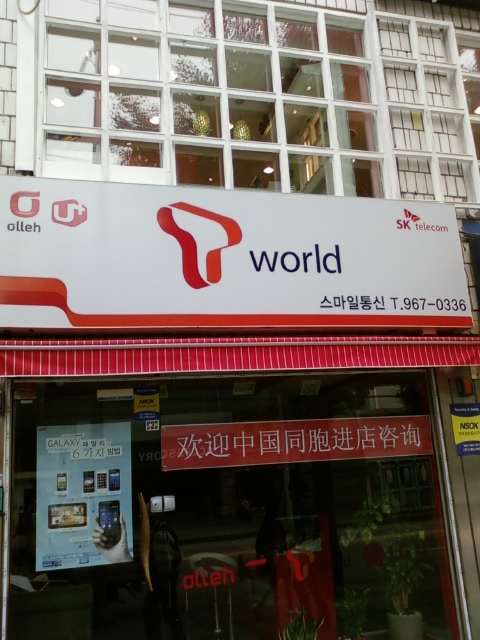
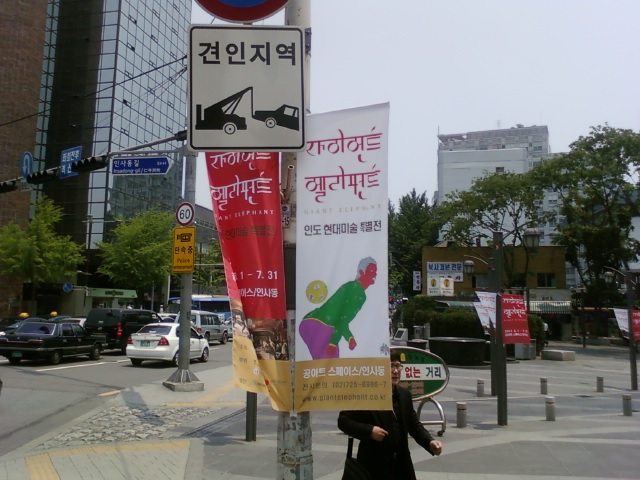
One sees a rapid increase in languages around Seoul other than Korean and English. Here are two notable bits of signage.

One is a mobile phone store with a sign in Chinese aimed at the increasing Chinese market in Korea. I am told that Chinese students have often more disposable income than Korean students at Korean universities. Have not conducted a study yet.

The other sign is for an Indian culture event. The poster does not assume a readership of Hindi, or maybe it does. In any case, Koreans previously had no tolerance for the Hindi language. That environment is changing quite rapidly.

Images of Daejeon

Here is a portfolio of beautiful Daejeon. I took these photographs over a period of six months for use on the Daejeon Compass site. I think they represent well what makes the city exceptional.


Creating a New Image for Daejeon

The four years that I spent in Daejeon were a remarkable experience. Among the various projects, I derived immeasurable pleasure from various projects aimed at raising Daejeon’s cultural profile. Some of that effort was related to work with the Daejeon Metropolitan City government, but much was spontaneous, growing from  my friendship with the artist Yoo Dongjo or my talks with my students. Friends from  Daeheung Dong district of Daejeon–where the artists gather–gave many ideas.

Daejeon means literally a “large field” and refers to to the fertile basin surrounded by mountains that makes up the city. Originally, the cultural centers of the area were around the two Confucian scholarly communities, one in the north in Hoedeok and one to the south in Jinjam. The building of the railroad station in the center and the creation of an artificial new town in the 1920s called Daejeon obscured much of those origins.

Read more

The Hot House Effect in Public Buildings

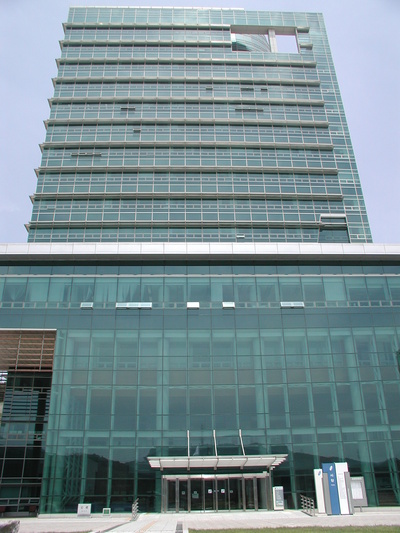
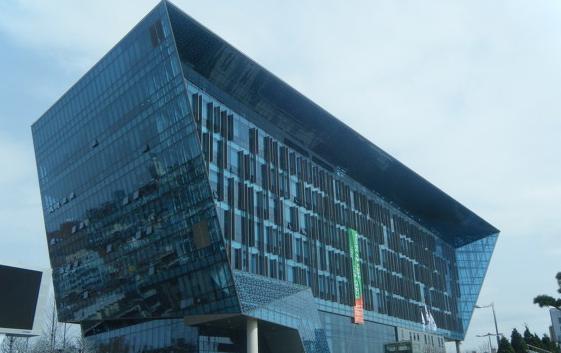
KBS News tonight featured a fascinating report on recent impressive public buildings in Korea that have been designed with little concern for environmental factors. The public buildings discussed include the Yongin City Hall and Yongsan District Hall in Seoul. These impressive towers of glass represent well Korea’s emergence as a cultural and technological power, but the mass of windows has turned parts of the buildings into saunas for employees. The report includes a scene with public officials using personal electric fans at their desks on top of the internal air conditioning.

The problem is one quite familiar to Americans, but we had hoped Korea might avoid this misstep.

June 30 Reception for the Publication of Two Books by SNU

Publication Reception 출판 기념회

Reception commemorating the release of two books from

Seoul National University Press written by Emanuel Pastreich (이만열 교수님)

of  Kyung Hee University’s Humanitas College.

The Novels of Park Jiwon: Translations of Overlooked Worlds

&

The Observable Mundane: Vernacular Chinese and the Emergence of a Literary Discourse on Popular Narrative in Edo


Time:  June 30th Thursday, 5pm–7pm

(초대일시: 6월 30일 목요일, 오후 5시-7시)


Place:  PAIK HAE YOUNG GALLERY


PAIK HAE YOUNG GALLERY

101-40 Itaewon, 1-Dong

Yongsan-Gu, Seoul 140-201

T. 82-2-796-9347  F. 82-2-796-9348

paikhy@paikhygallery.com

www.paikhygallery.com

Directions from Itaewon Subway Station(line 6) Exit #2
Walk toward till you see the Fire Station across and turn left at the Chosun Antique.

Walk up to the hill about 5 mins to the Grand Hyatt Hotel direction.

Follow the yellow line and you will see the white building of Paik Hae Young Gallery.

SEE ATTACHMENT for details and MAP 

SNU PRESS RECEPTION INVITATION

Visit to Beckman Institute at University of Illinois & West Campus at Yale University

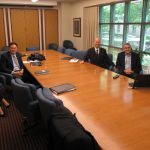
I visited University of Illinois, Urbana-Champaign and Yale University with Eugene Pak, director for research and development at Seoul National University AICT (Advanced Institutes of Convergence Technology) at the end of May (2011).

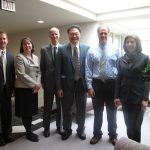
In the first picture, we pose with  Professor Scott Stobel, Vice President for West Campus at Yale University. Professor Stobel took time to show us the very impressive facilities at West Campus and to describe such new innovations as the Biodesign Institute. When Bayer decided to sell its primary research center in North America, Yale had the foresight to purchase it, and, in effect, double to size of its campus. We also toured the Yale Medical School.

The second photo is of a presentation at the Beckman Institute at University of Illinois, Urbana-Champaign, by Professor Kevin Kim. Professor Kim  introduced his work on drug delivery systems. The Director of the Beckman Institute, Dr. Art Kramer, also met with us to discuss future cooperation with Korea in convergence technology. I had a chance to see several close friends at University of Illinois. Also included in the picture are the associate dean of Electrical Engineering Bruce Vojak, and researcher Soo Choi.

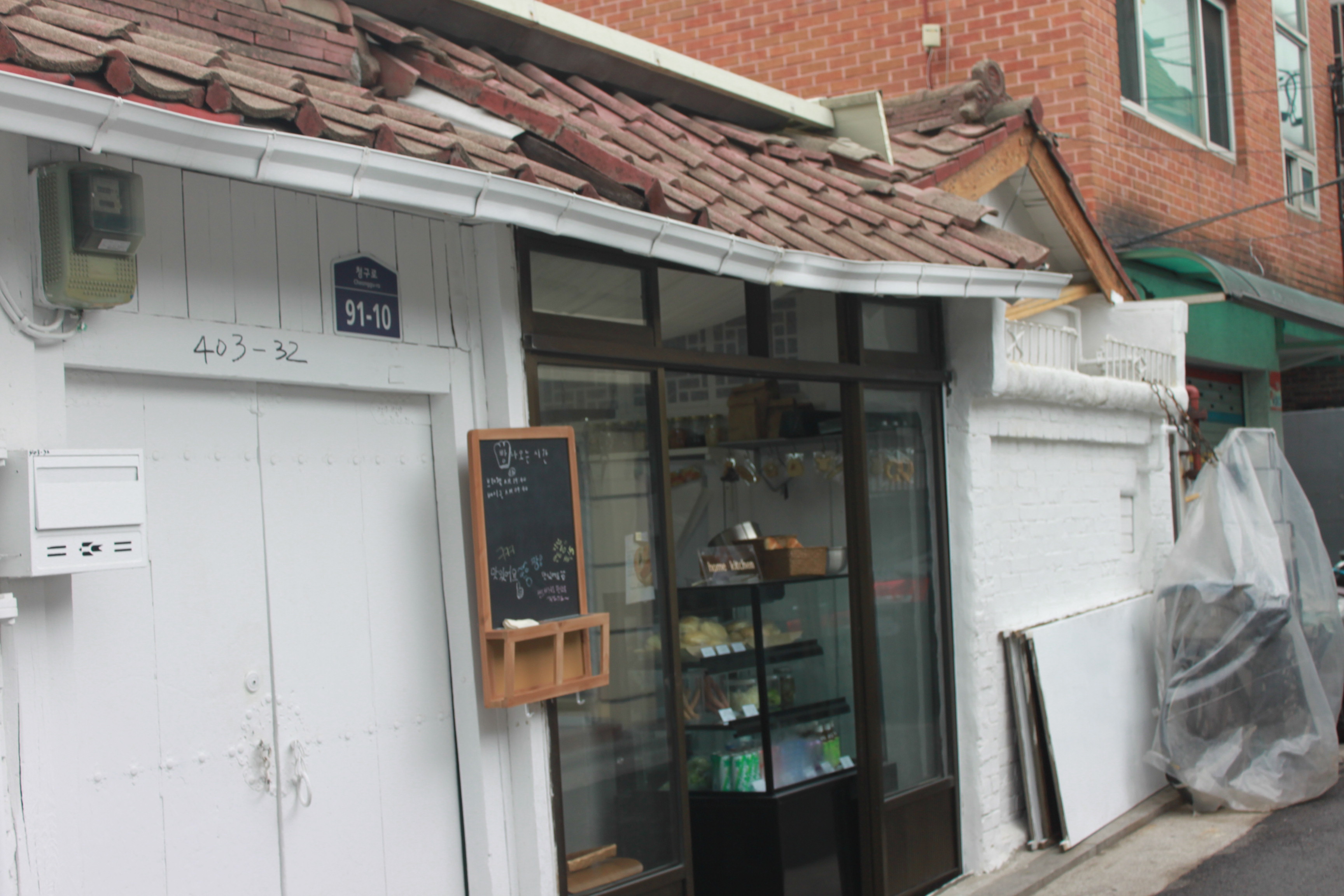
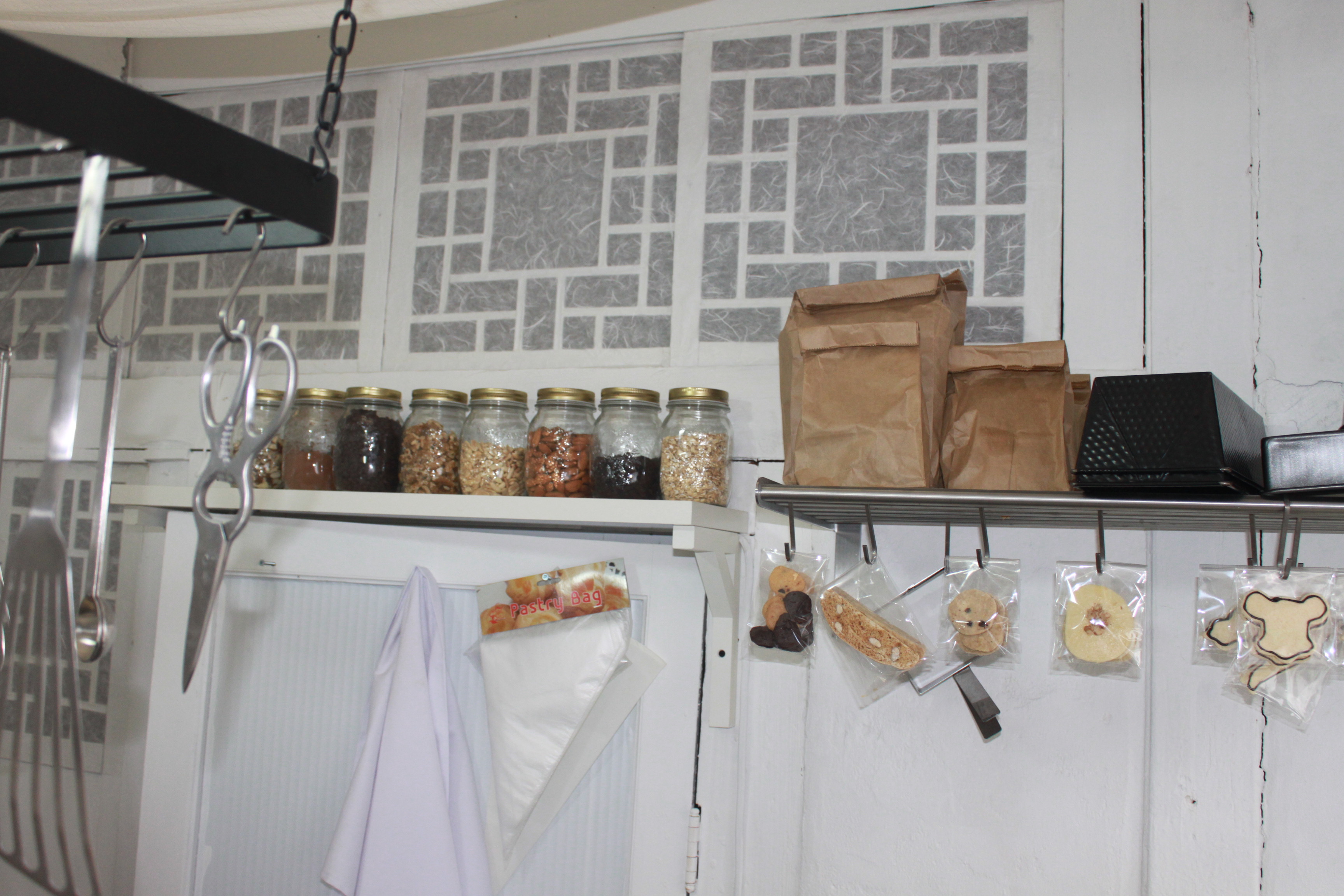
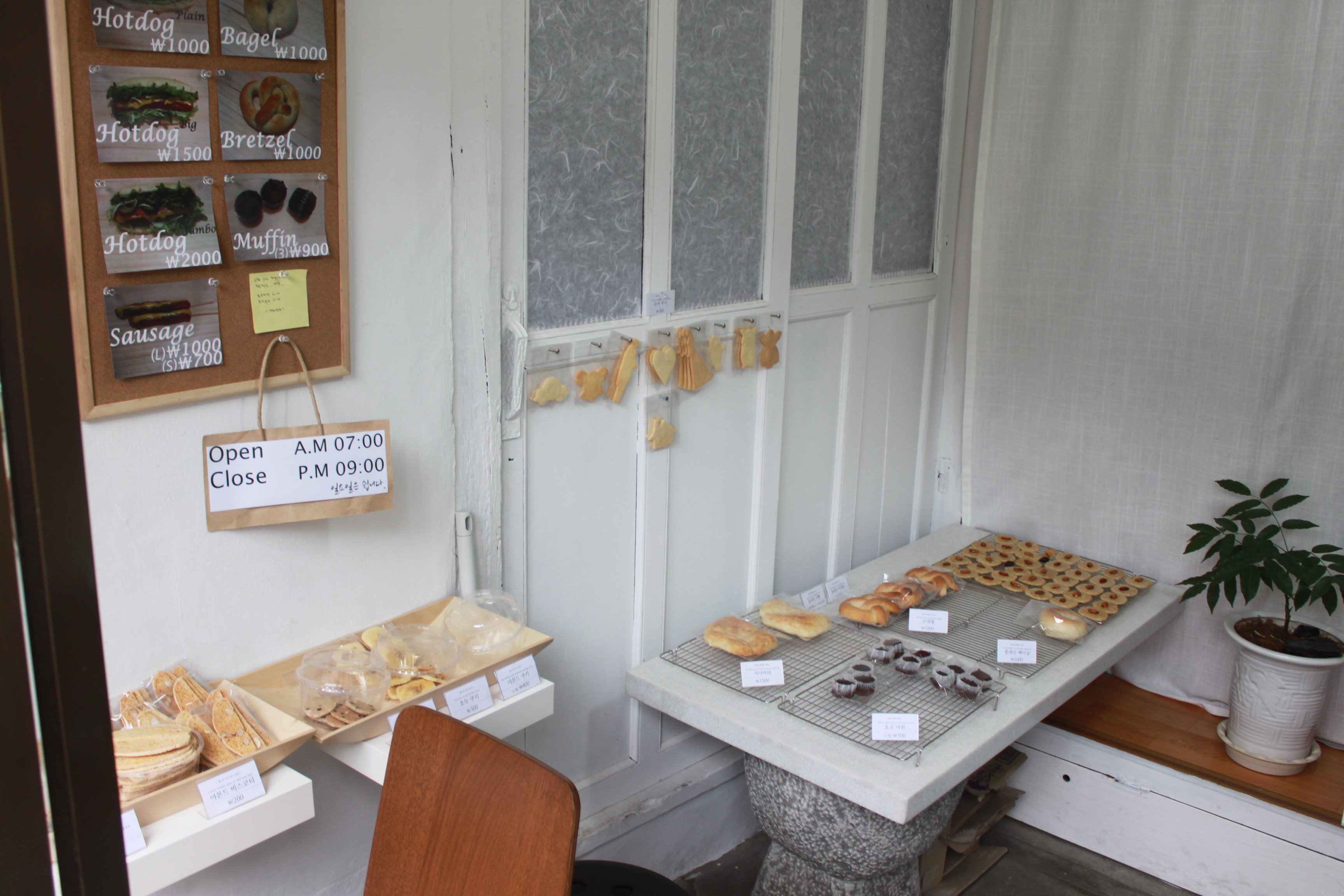
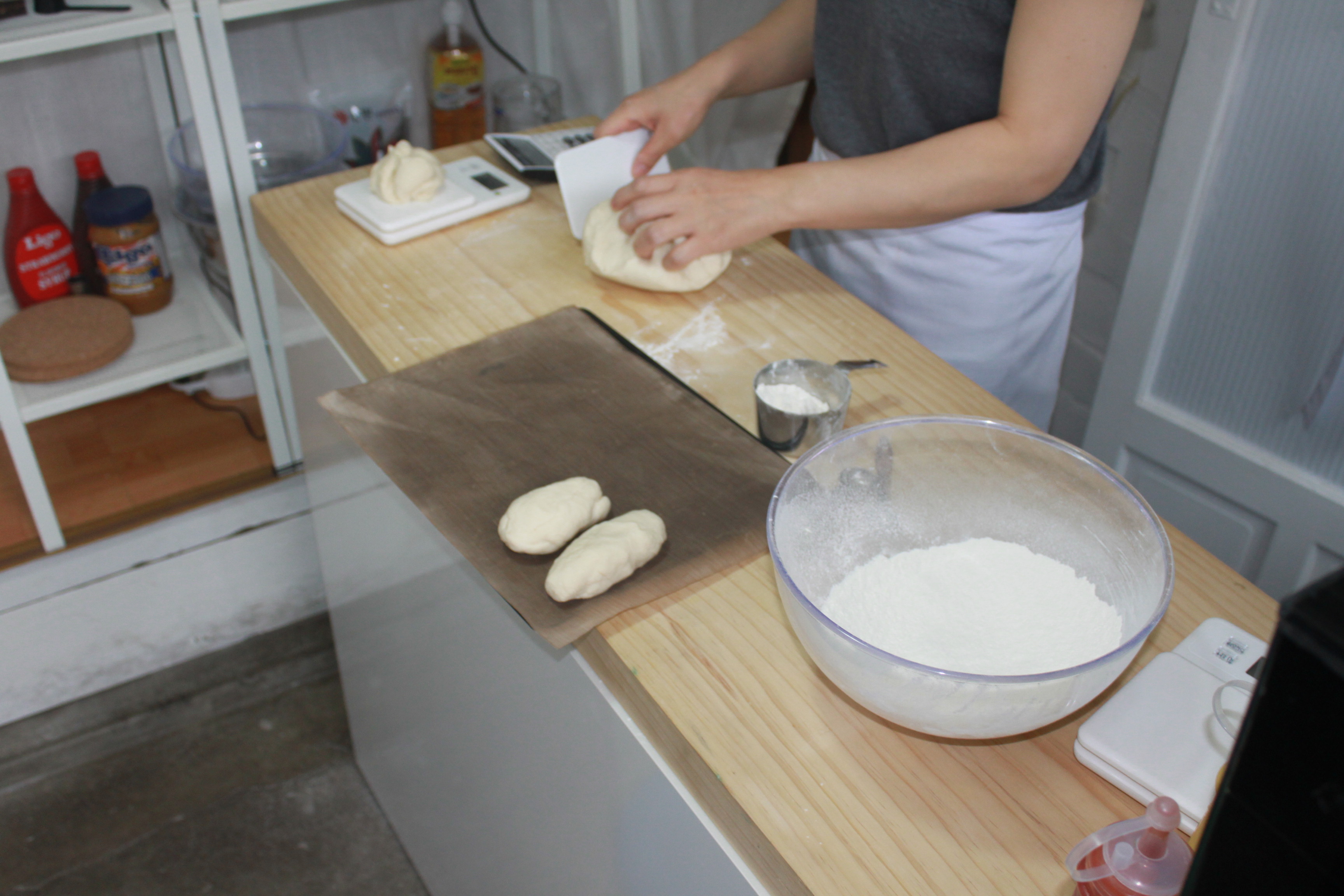
New Bread Shop in our neighborhood

Our neighborhood in Sindang is changing quite rapidly. One of the most striking changes was the opening of this new bread store. Whereas most boulangeries in Seoul are run by larger companies and the bread is merely delivered each morning, this new shop, founded by a mother and daughter team, makes all dough in the shop. They bake bread and cookies every day and have done an excellent job of fixing up the old home where they live. There is something reassuring about just walking buy on the way to work and seeing them at work.

I would have been hard to imagine such a place even five years ago in downtown Seoul, but times are changing. Just as we now have Koreans who leave the city to become farmers in rural areas and live a healthier life, we have some urban pioneers who are creating their own spaces in the city.

[twitter-follow screen_name=’epastreich’]