The Korean Ministry of Education, Science and Technology selected Kyung Hee University for a major award for its ACE (advancement of College Education) program on May 12 . Kyung Hee University was the only university in Seoul, out of ten major universities that were candidates, to be selected based on education innovation.
Today in Korea
Multiculturals
Today my son referred to the other international kids at Jangchung Elementary School as “Multiculturals.” The term has taken over in an incredibly short period of time. Suddenly the minorities in Korea are not “foreigners” but “Damunhwa” families and “Damunhwa” children. Korea is certainly stepping into the future quickly.
Poetry in Motion
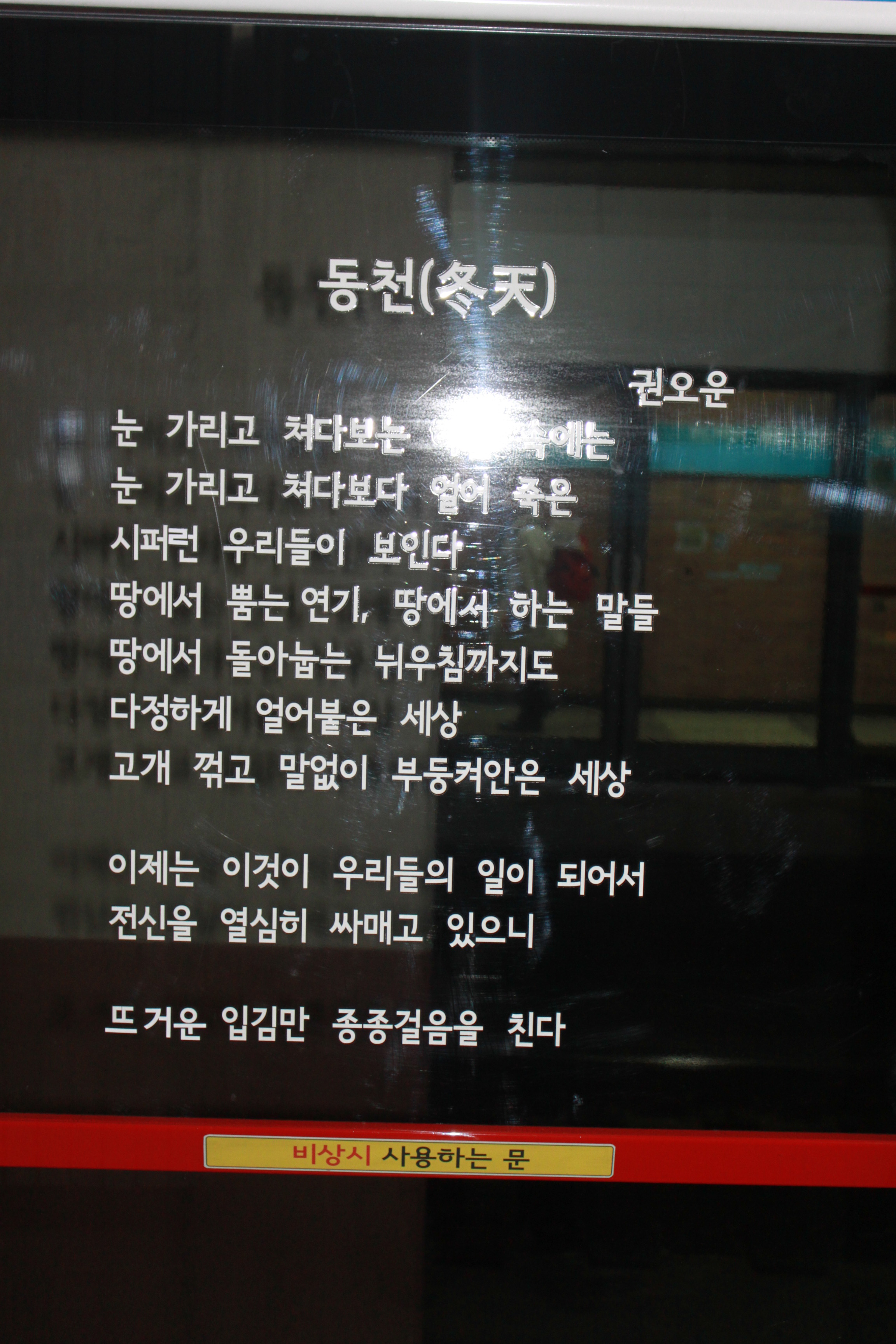
Poetry started appearing in Korean subways a few years ago. But such poems were poorly presented on back walls where they drew little attention.
Recently the glass doors between the platform and the subway car are adorned at some stations with poetry. The poems are there where every commuter will read them, often accompanied by classical music these days. A very effective campaign to transform Korean culture.
The glass doors are an added safety measure that has been implemented over the last year.
Creating a nation of readers
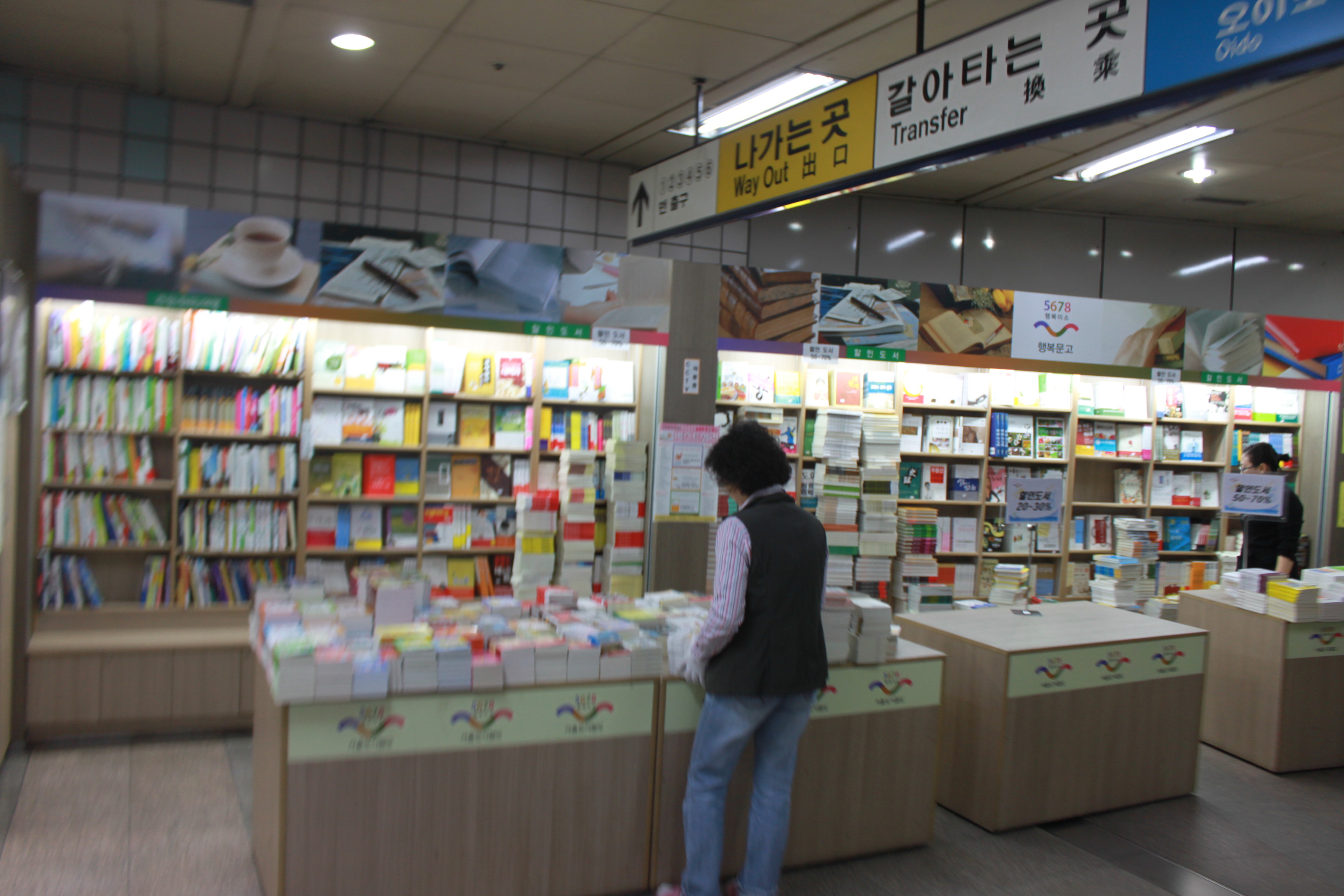
When Professor Doh Jung-il founded the NGO “Citizen Action for a Reading Culture” in 2001, no one took him seriously. But he has put together a strong alliance across the political spectrum for the creation of a “reading culture” in Korea. Five years ago even, I was struck by how many fewer people read books in Korea than in Japan. Although that is still the case, as we observe on the subway, the situation here is changing rapidly. We now see reading promoted everywhere in Korea and increasingly bookstores are popping up in subway stations.
For an American, I am struck by the ability of Koreans to actually change policy and habits. We lament problems in the United States, but we do not seem to be able to carry out such successful campaigns.
Even more improvements planned for Seoul subway
The Seoul subway is increasing its sophistication by leaps and bounds, well on track to go far beyond anything found in Tokyo or Singapore in terms of design, efficiency and cleanliness. This advertisement, with some young Koreans with a strong fashion sense, indicated some of the upcoming additions. 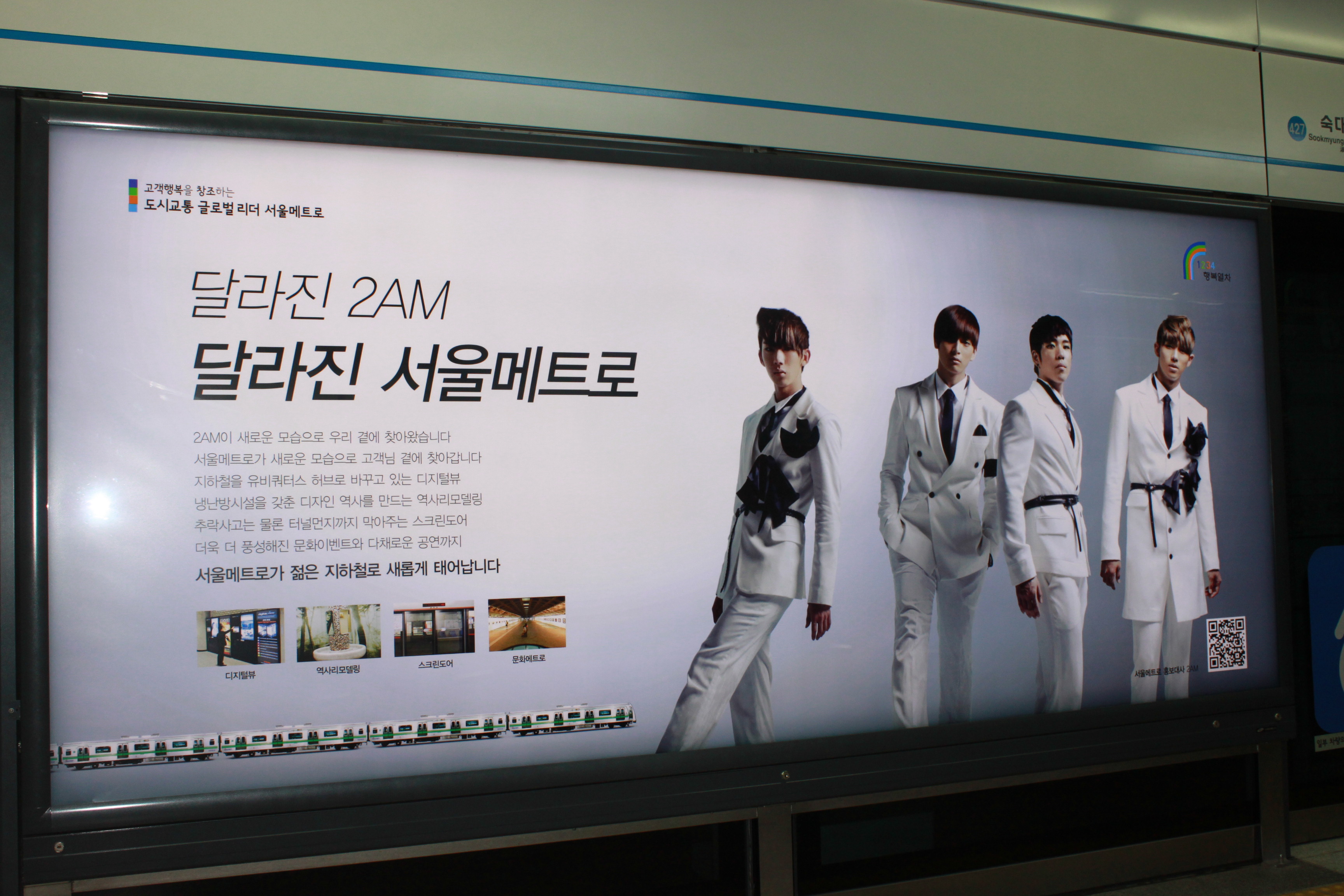
Technology with a Human Face
The remarkable thing about contemporary Korea is that is has so embraced advanced technology, but at the same time, when you make a phone call, a human answers the phone. It is remarkable combination
of human and technological elements. That combination may seem jarring, or even like an indication of a less advanced state of development, but in fact, it may be Korea’s saving grace.
One of Korea’s cultural appeals is that it is both high tech and human. but that state may not be a stable one. Just as Kenyesian economics were a product of the clash of capitalism and socialism in the 1930s, it could not hold up against the later ideological and economic shifts. But right now, Korea is on a roll.
Korea shifts its street address system
Korea is currently engaged in a massive project to convert all addresses from the Japanese do (block) system –dong in Korean–to street address-based system. The shift is massive and is the equivalent of the US shifting from English to metric measurements. But it is going forward like clockwork. Very impressive indeed.
Beautiful Seoul in the Yellow Dust
Seoul is rapidly becoming one of the world’s most international cities with a remarkable number of cultural amenities and beautiful walks. If it were not for the yellow dust blowing over from northern China, you might think you were in Paris. We see such paradoxes everywhere: Seoul rapidly becoming the world’s great capital at the same time that environmental demons raise their heads.