Teaching Korean Literature in English at Kyung Hee University

On Thursday, September 1, I gave my first lecture for a class on the novels of the Korean writer Park Jiwon for a class of undergraduates in the department of Korean Literature at Kyung Hee University. It was the first class ever at Kyung Hee University’s department of Korean literature that was explicitly designated for instruction in English and one of few such courses at Korean literature departments in Korea being taught in English.

The Ministry of Education, Science and Technology has recently pressed forward with new guidelines for increasing the use of English at Korean universities. Launching a course in English in the Korean literature department has great significance as Korean literature is perceived as the most immune to change and the most closely associated with concepts of cultural conservatism.

Read more

Insurance in Korea is Forever

I renewed my life insurance the other day here in Korea and in the process had a chance to glimpse a bit of the culture of insurance in Korea. One of the most striking aspects of private health insurance in Korea today is life expectancy. Samsung Life Insurance was willing to bet I could live to be a hundred,

Read more

“After Kimchi and Winter Sonata: The Intellectual Korean Wave” (article)

KOREA IT TIMES

After Kimchi and Winter Sonata: The Intellectual Korean Wave

August 16th, 2011

Emanuel Pastreich

The Korean Wave (hallyu) has swept the world. Korea’s romantic songs, thrilling movies and compelling television dramas have captured the imagination of a new generation-and quite a few from the previous generation. Although the mystique of Korean popular culture first took root in Japan and China, it has crept through Southeast and Central Asia and is now rolling into the Middle East and South America. Moreover, the Korean wave has extended to fashion and cosmetics, food and sports.

Nevertheless, although the Korean Wave has vastly enhanced Korea’s visibility, we find that further up in the food chain the Korean Wave has not started in earnest. The truth is that most intellectuals in the United States,

Read more

What is Unique about Korea and Technology?


To say that Korea is leading in technology is perhaps not the accurate term. In terms of basic research Korea does not have a definitive lead and there are plenty of others out there who have capabilities close to Korea’s. Even Mexico and Malaysia have some real assets. Rather there is something just more human about technology and its use in Korean society which makes it more acceptable within the community and allows for innovation in Korea that is harder in other countries simply because innovation in technology has come to mean a more inhuman society for so many.

Read more

July 28 Meeting of the Mirae Sotong (Future Communications) Forum

I made a presentation at the Mirae Sotong (Future Communications) Forum  on July 28, 2011 in which I described my thoughts on the “Intellectual Korean Wave.” I suggested that the time has come to go beyond the Korean Wave of pop songs, dramas and Kimchi and start to introduce the best of Korean artists, intellectuals and writers to the world in a serious fashion. See these materials for more in Korean on the talk.  “The Intellectual Korean Wave” is Forthcoming as an article from Korea IT Times and Munhwa Ilbo Newspaper.  The Korean language article follows after the break.

Read more

The Café Revolution in Korea

When first I came to Korea to study for a year back in 1995, you could walk a mile to find a cup of coffee in Seoul. In the morning, there simply were no places to go out and get coffee and no habit of meeting with individuals for coffee to talk, or simply to read a book.

If one drank coffee, even five years ago, the standard was to rip off the end of a round packet about seven centimeters in length and one centimeter in width. Inside was a delightful coffee mix, famous for its use of transgenetic fats. Then there were the dabang 다방, but those old coffee shops were the domain of men from a previous generation and not particularly welcoming to us.

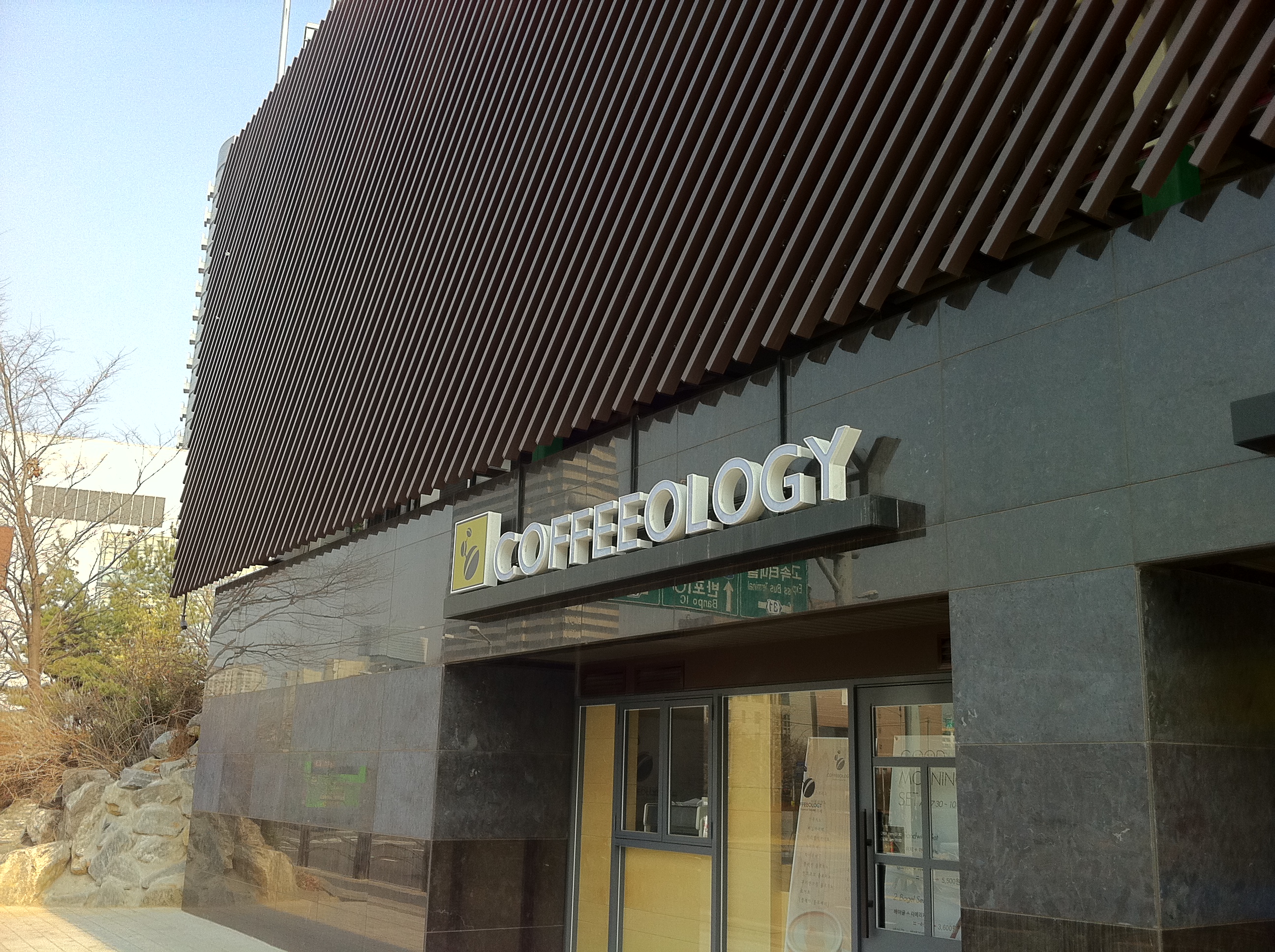
But now coffee shops are springing up everywhere and just about every coffee shop offers café latte and cappuccino—although the quality may vary. In some cases, there seems to be no economic logic to the number of cafes springing up. The pastries also have improved by leaps and bounds, now rivaling what is found in other major metropolitan centers around the world. What we can say is that the coffee shops often do not open until 8:30 or 9:00, so do not go too early.   This particular coffee shop took my fancy. Here we see the long-predicted “death of ideology” when the very concept of ideology becomes a consumer good, proper for a fashionable place to consume espressos .

Korea turns to Maps

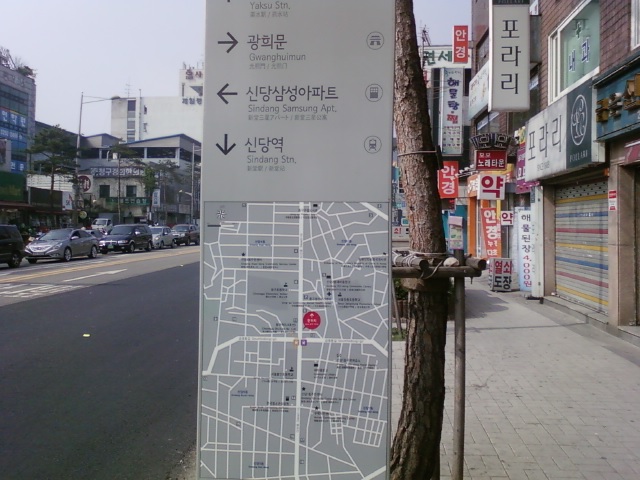
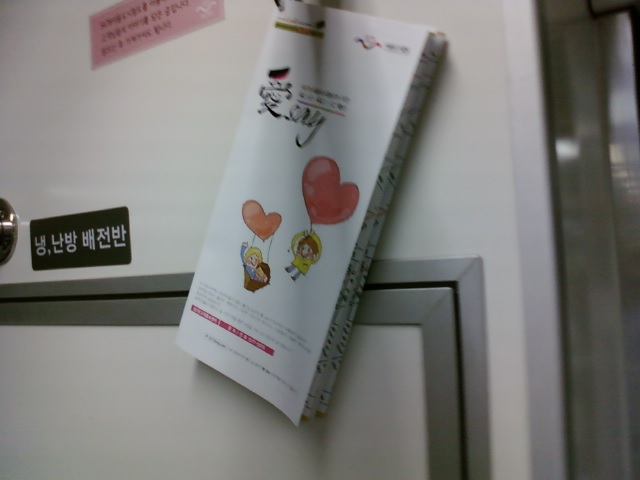
Koreans have not been so big on maps. Whereas in Japan highly accurate maps have traditionally been a mainstay for citizens and a symbol of good living, Koreans prefer to ask the way, or if necessary, use a navigation device. But that aspect of Korea is now changing as well. Rather well organized maps are going up around Seoul that are as good as anything one finds. In fact, several subway stops now feature both maps and photographs taken from above to allow the observer two means of understanding the geography of the neighborhood.  Seoul Metro also has come up with an innovative manner of providing maps to riders.


Emanuel Pastreich

Circles and Squares

Climate change and Homelessness

It is almost August and Seoul is lost in the most serious torrential rains I have ever witnessed. I was starting to grow my own vegetables at home and at work, but agriculture is rather negatively impacted by this level of rain, at least agriculture as we have known it. Needless to say, although climate change is everywhere in the media, I don’t hear anyone saying in daily conversation that this odd rain is related to climate change. Just not a polite thing to do, and so I do not mention climate change much either. Of course climate change is not a simple matter of CO2 emissions. After all, the climate change that turned the Middle East into a desert began before the massive CO2 emissions. But that the desertification of Saudi Arabia was linked to human activity is beyond doubt.

It would be nice if all the consumption that is so negatively impacting the environment were at least helping people to live better. But, unfortunately, there are homeless, and those who struggle to feed themselves, who wander around Seoul and of course many other countries, trying to make a living. The homeless are the most seriously impacted by the heavy, unrelenting rains. For many of them it is matter of survival. There are a large number of elderly in Korea who survive by pulling wagons on which they gather old newspapers and other recyclable goods. For these individuals climate change is a matter of life and death. Of course what impacts them today, may impact us tomorrow.