Seoul Metro strives to make commuters more civilized

One unique aspect of Korea is the degree to which government sees it as its job (often in a positive sense) to change culture and habits so as to create a more cultured, civilized, society. The most striking effort over the last two years is the push to get Koreans to line up to get on trains and to walk up and down staircases on the right side. The process has had considerable impact on Korea where people did not line up, or walk on the right side, previously.
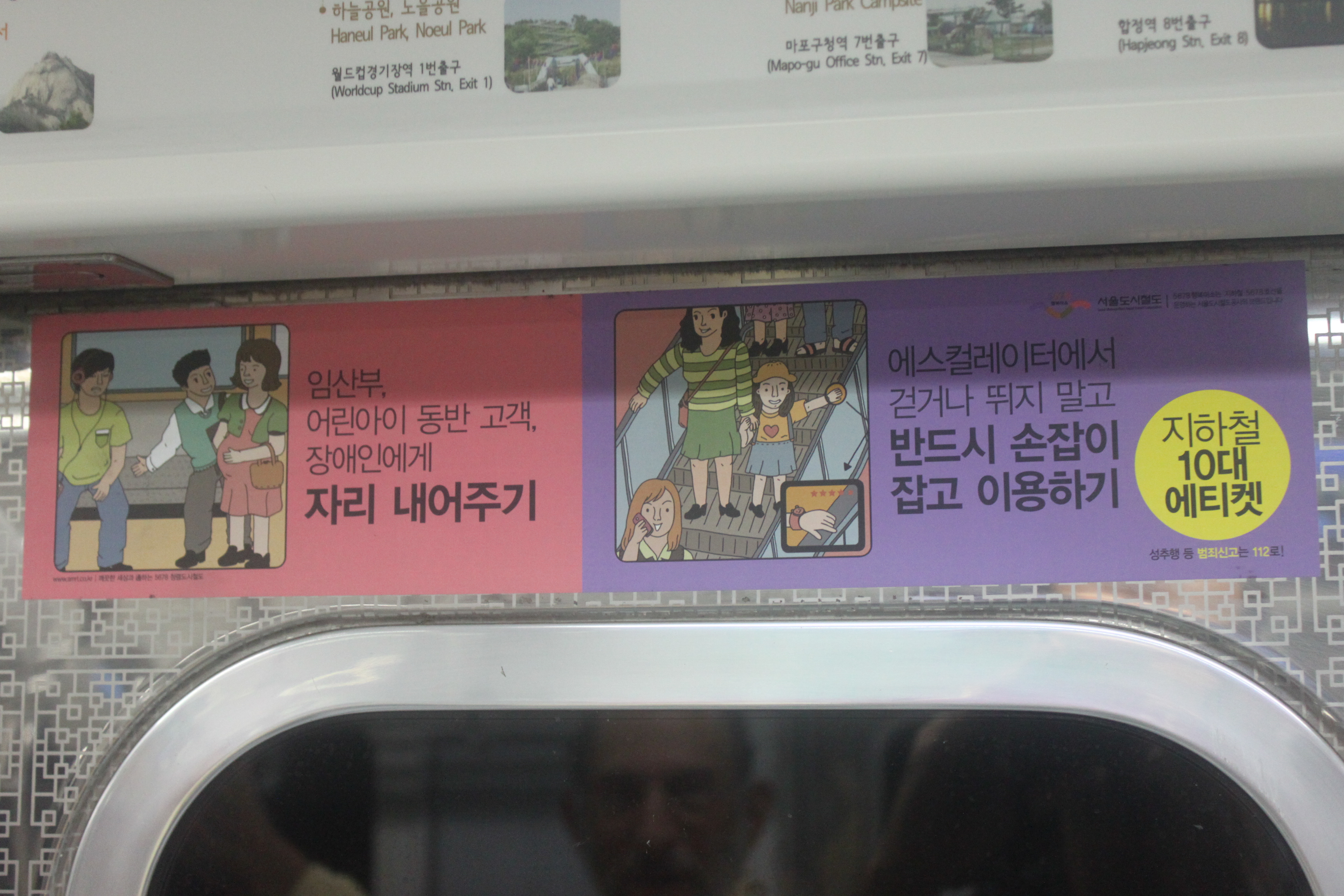
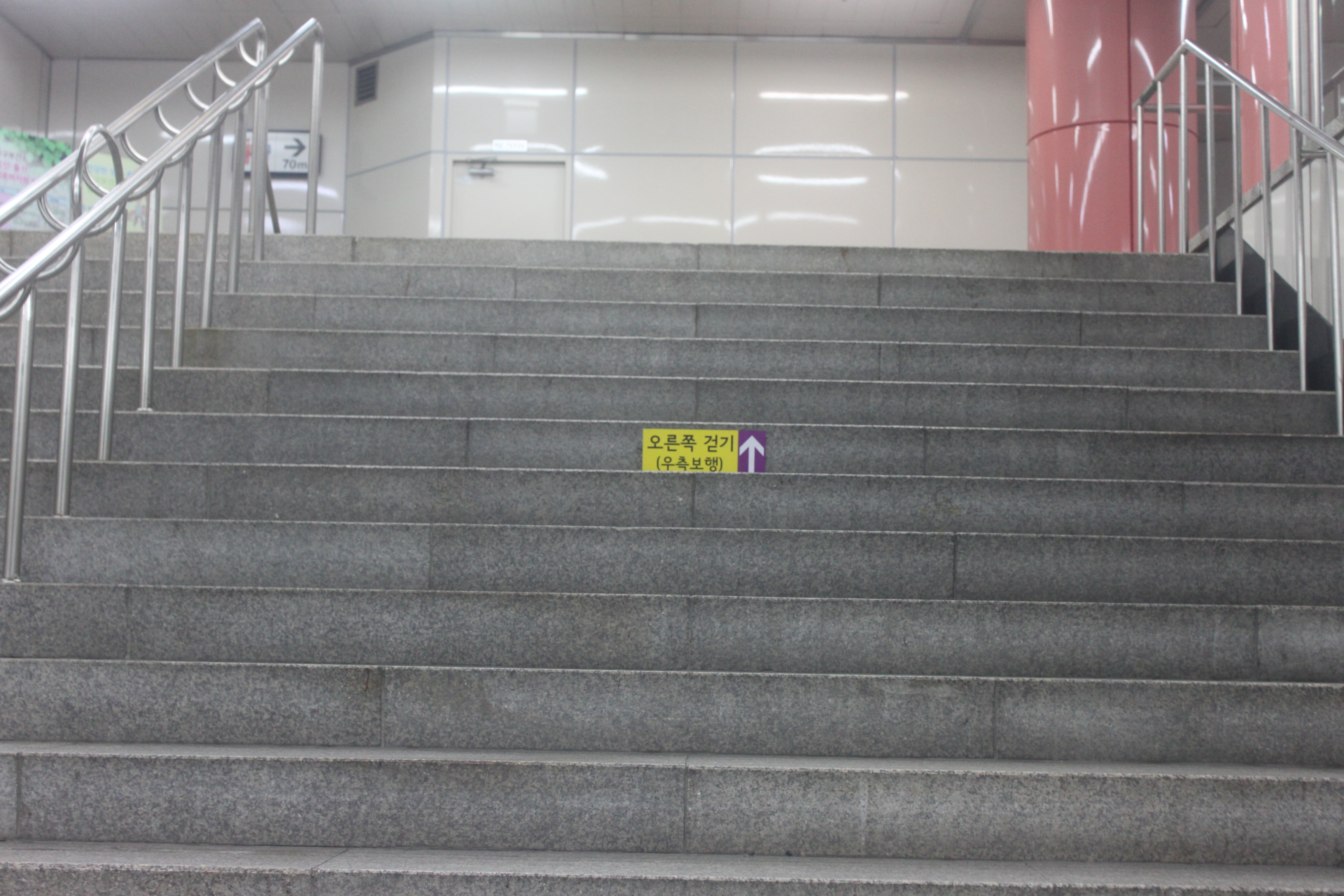
Attractive new signage in the Seoul Metro encouraging consideration for other passengers.

Read more

The New Political Culture of Intimacy: Ahn Chol-Soo’s Book “Thoughts of Ahn Chol-Soo”

I am currently reading Ahn Chol-Soo,s new book  “Thoughts of Ahn Chol-Soo.”

Ahn, who serves as Dean of Graduate Studies at the Institutes for Convergence Technology at Seoul National University, has been engaged in a remarkable political dance for the last year  concerning whether or not he will run for president. He  is someone  who has never held political office before. In the United States, this sort of a political game would  be impossible as no one  who is not committed early on could possibly be a last-minute candidate. With the Korean elections scheduled for December, it is astonishing that someone who has not taken the first step to start a campaign is being compared favorably at times with the conservative party candidate Park Kyun-hye.

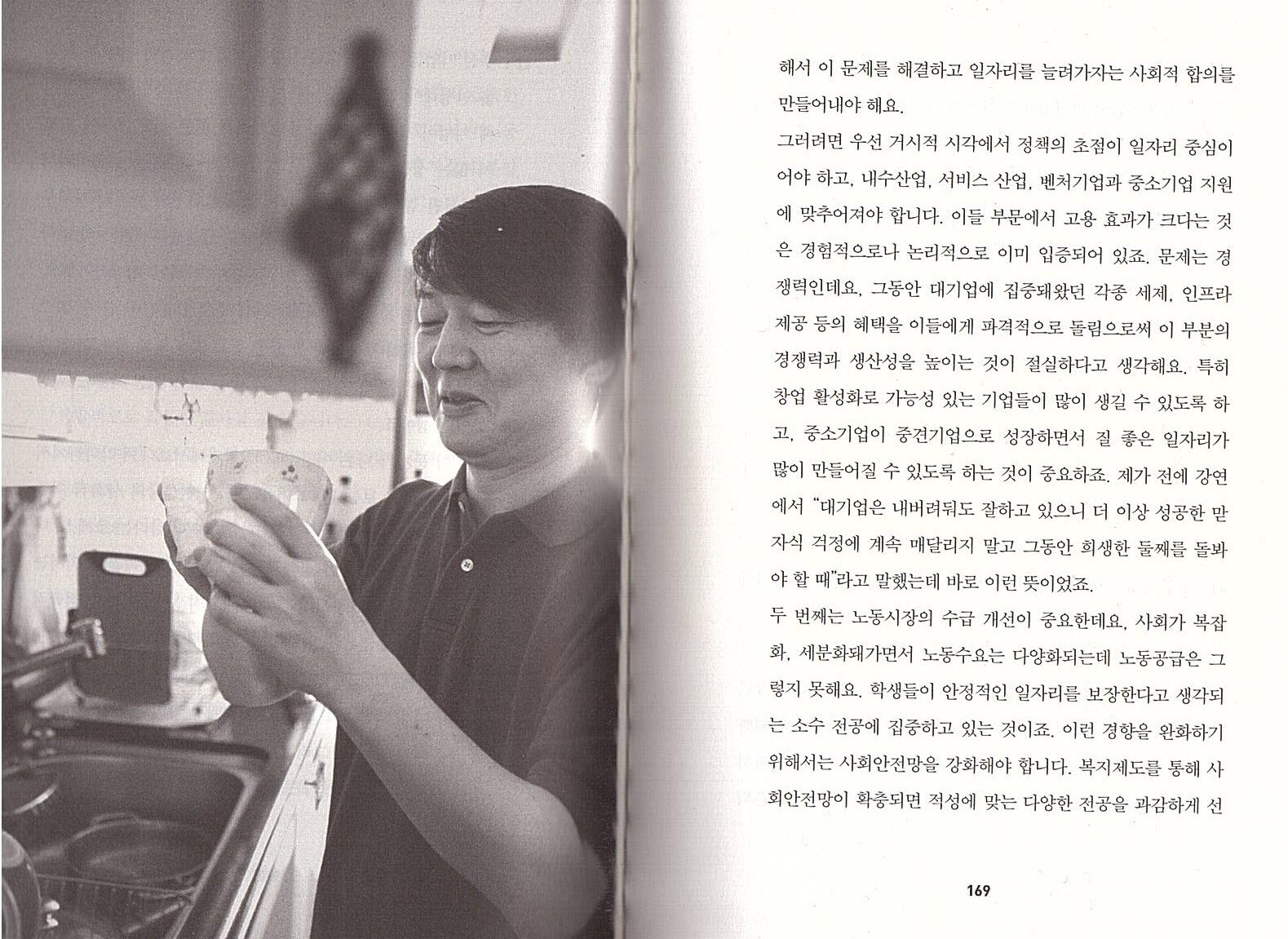
This photograph of Ahn washing dishes is one of many photographs of Ahn Chol-Soo that pepper his new best-seller “Thoughts of Ahn Chol-Soo.” The choice of dish washing is significant at several levels. Most political figures put most of their effort into building up their stature. Here Ahn attempts to create an accessible and intimate image as someone who is a successful businessman, but still perfectly capable of washing his own dishes.

Read more

“I am a selfish bastard” as media and cultural phenomenon in Korea (report)

Emanuel Pastreich

Report on Media in Korea

August 6, 2012

“I am a selfish bastard”

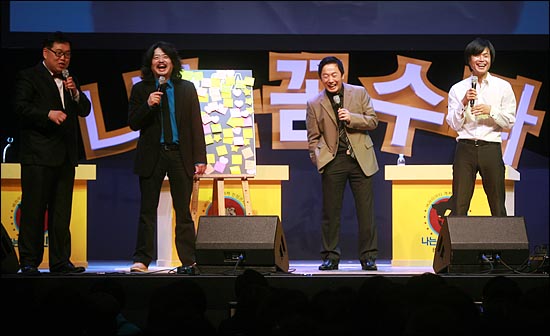
The rise of the podcast comic radio program “I am a selfish bastard” (“Na nun Ggomsu da”)was a profoundly important political event in Korea. The title “I am a selfish Bastard” phrase refers explicitly to President Lee Myung Bak in the most vulgar of wording. The show functions as something like the Korean equivalent of the Daily Show, making fun of the Lee Myung Bak administration without mercy, but there is more to the show than just comedy.

Members of “I am a Stupid Bastard” at their best.

“I am a selfish bastard” took an extremely original approach to media and news unlike anything Koreans had witnessed before.

Read more

Labor and the Korean Media (report)

Labor and the Korean Media

Emanuel Pastreich

August 6, 2012

The Korean media has been roiled by a series of strikes and labor campaigns since President Lee Myung Bak appointed or promoted close personal associates as CEOs for three major broadcast companies.

The main strikes against KBS, MBC and YTN were above all born of resistance against the control of broadcast company policy by President Lee Myung Bak.

The media is considered absolutely critical for the functioning of democracy and such attempt by the president to seize control of the public media was

Read more

Peace on the Peninsula through Art: Park Sidong’s Seokjangni Art Museum on the DMZ

Peace on the Peninsula through Art

Park Sidong’s Seokjangni Art Museum on the DMZ 

I first visited Park Sidong’s remarkable   Seokjangni Art Museum on the DMZ in March, 2012 after attending a seminar held at a military outpost overlooking North Korea. I was on a panel with artists and scholars discussing how an innovative residency for artists held right on the DMZ could serve as the first step towards bringing peace to the peninsula. The idea struck a chord with me. Could it be that rather than holding yet another seminar or writing yet another op-ed, just having artists practicing art could help facilitate the cultural and ideological shifts required to move beyond the current stalemate? I think there is that  chance.


The sculpture greeting the visitor


Read more

How Korean Science and Technology Succeeds in Global Competition

My friend Iwabuchi Hideki, currently working for the Ministry of Education,Culture,Sports,Science & Technology, published a very interesting book this month in which he and his colleagues offer an interpretation of Korea’s success in science and technology aimed at a Japanese audience, suggesting, in a sense, that Japan think of a “Korea as Number One.”

Read more

Lively discussion of cultural production in China and Korea

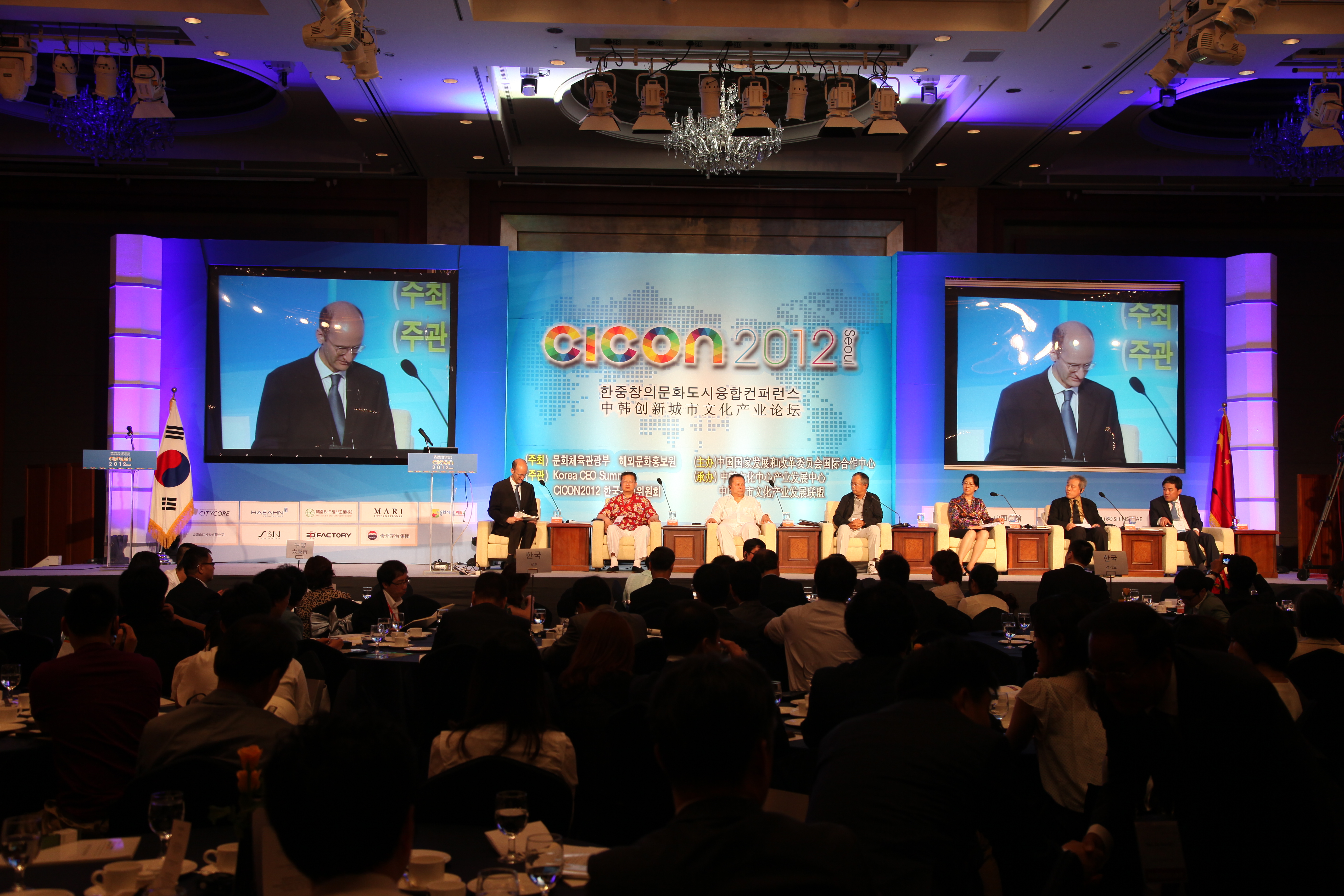
Emanuel was the MC at CICON (China-Korea International Conference on Cultural Innovation Cities; 한중창의문화도시융합컨퍼런스;
中韩创新城市文化产业论坛) on June 22, 2012. This conference, part of a series of events commemorating the twentieth anniversary of the normalization of relations between China and Korea, brought together important  figures from the arts of Korea and China for a thoughtful discussion of he future of cultural cooperation between the two countries.

Emanuel makes opening remarks at CICON.

Read more

日韓の未来を考えて 私には夢があります (パストリッチの一言)

この間日韓緊張の最中で自分の日本と韓国の関係に関する夢を述べました。「私には夢があります」という表現は 黒人人権運動の盛りにマーティン・ルーサー・キング牧師がした「私には夢がある」演説からとりました。

講演会「李承信の一行詩の力」

2012年7月5日

報告

韓 昇 洲氏(前韓国外交長官)

武藤正敏氏(日本駐韓大使)

エマニュエル・パストリッチ氏(慶喜大学人文学部教授)

エマニュエル・パストリッチ氏の挨拶

李承信さんの詩集『君の心で花は咲く』には、たいへん大きな文化的・歴史的な意味があります。まず李承信さんは、お母さんの孫戸妍の和歌の伝統を勇気をもって受け継いでおられます。すばらしいことだと思います。李承信さんは、日本語、韓国語の両方であらゆることを文学的に表現しておられます。私の場合は、日本の文学を長く勉強してきたものとして、日本古典文学をアメリカの大学で教えながら、まわりの人々に日本文学のよさを長い間説明してきました。韓国に対しても日本に対しても深い愛情をもっております。同時に、厳しい歴史の矛盾をも見つめてきました。民族の悲しい歴史に対する韓国人の心理もわかります。

今日はアメリカ人として正直にお話いたします。まず日韓関係を考えるとかやはりイエスの言葉が思い浮かびます。

「あなたたちの中で罪を犯したことのない者が、まず、この女に石を投げなさい」

Read more

Video of Professor Marc Shell at Asia Institute Seminar “The Past, Present and Future of Money”

April 27, 2012

Asia Institute Seminar  “The Past, Present and Future of Money” 

Professor Marc Shell, Irving Babbitt Professor of Comparative Literature at Harvard University, delivered a compelling talk at the Asia Institute Seminar “The Past, Present and Future of Money”  on April 27, 2012 in which he described the cultural, political, ideological and aesthetic aspects of money in historical perspective. 

Read more