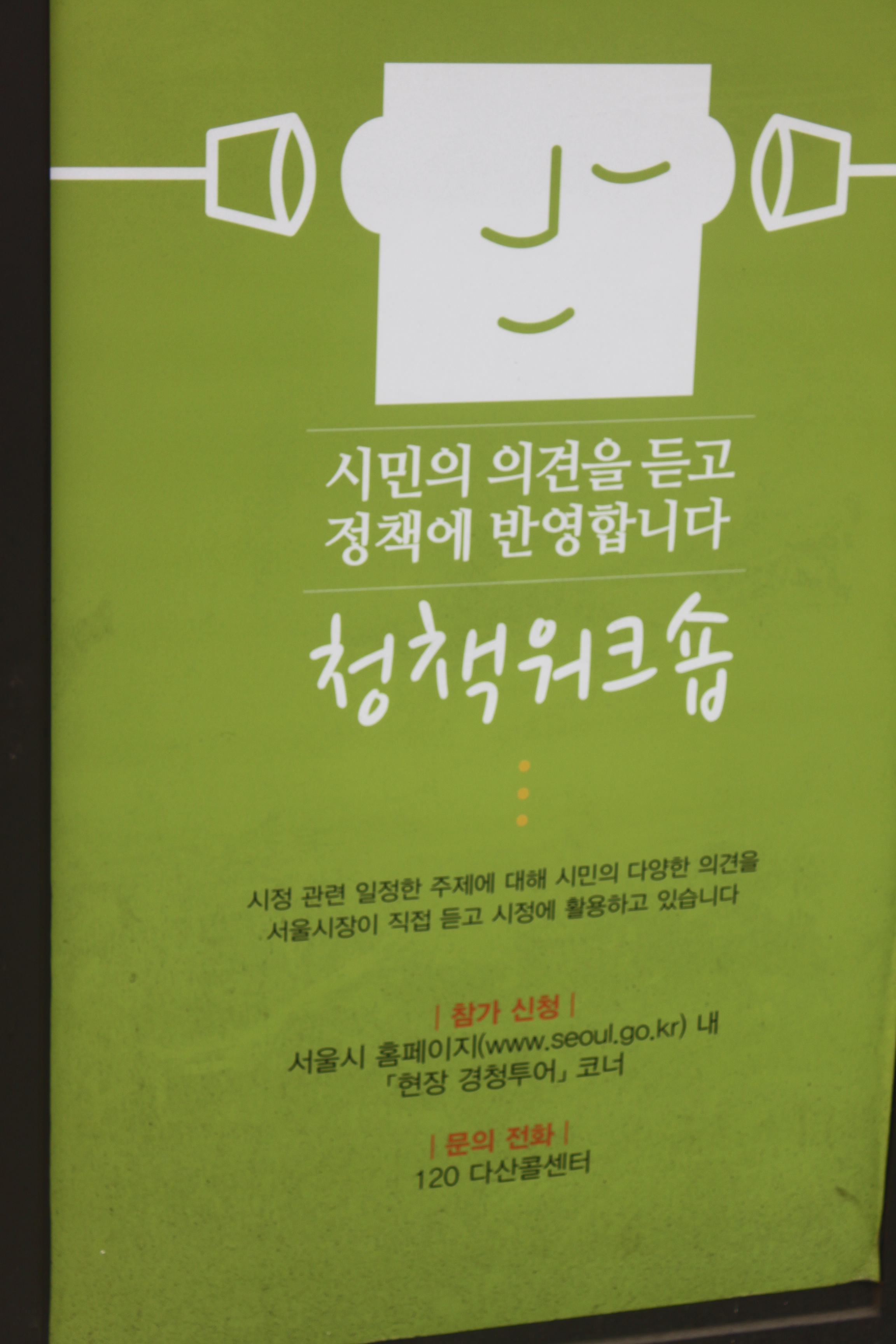
I am not sure what to make of these ads, but they certainly are unlike anything I have seen elsewhere: a call for Seoul’s citizens to participate in policy debate through workshops. I have not attended them, so I cannot say I know what actually happens.
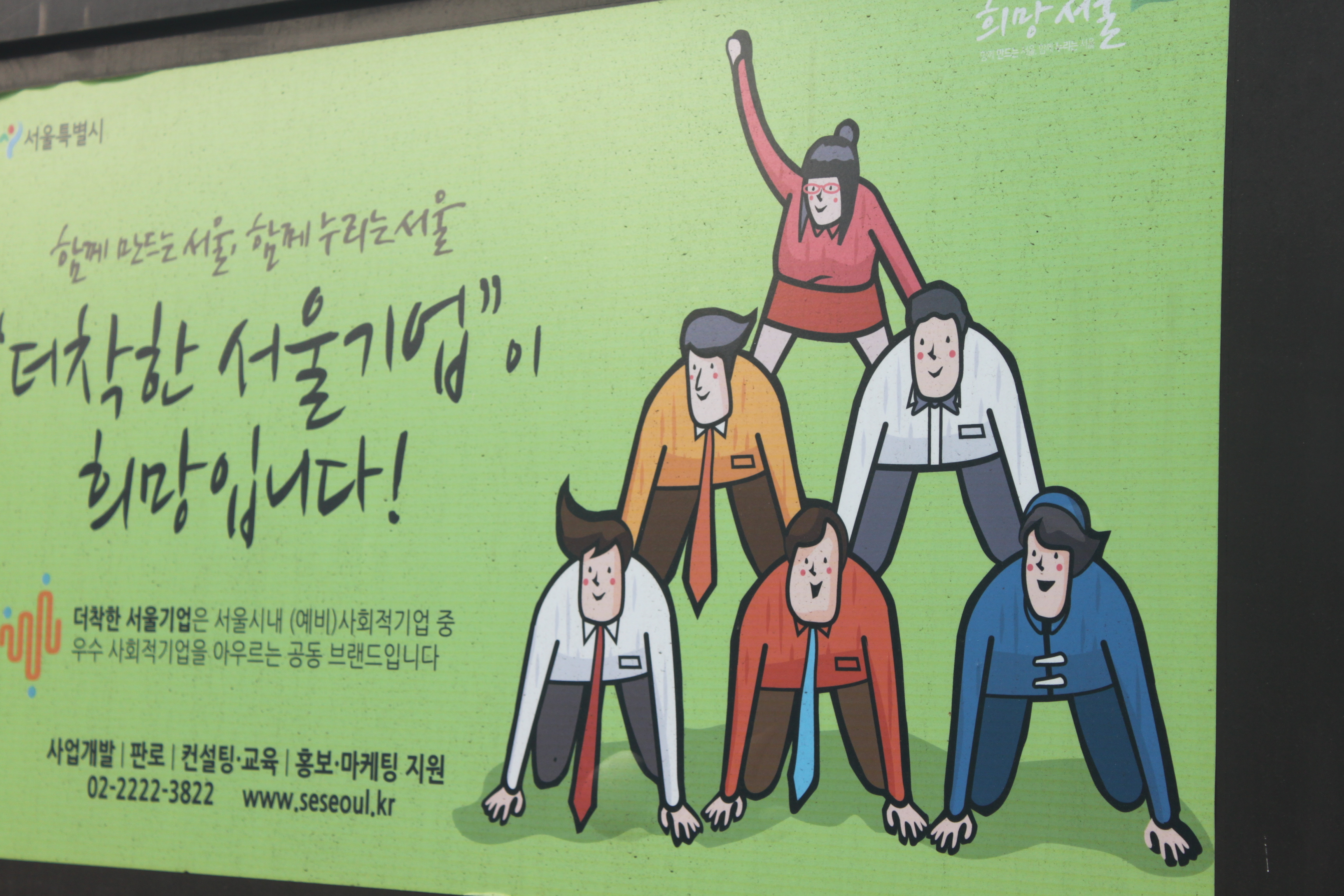
Advertisement for new program of social corporations that are “more kind.”
The status of women in Korea is a great mystery. Without any doubt, many of the most thoughtful thinkers are women and women show a assertiveness and determination in school that is striking. Yet within organizations, women have not fared that well.
Seoul City has launched several initiatives to improve the lives of women. Here is a sign that I saw today near my home.
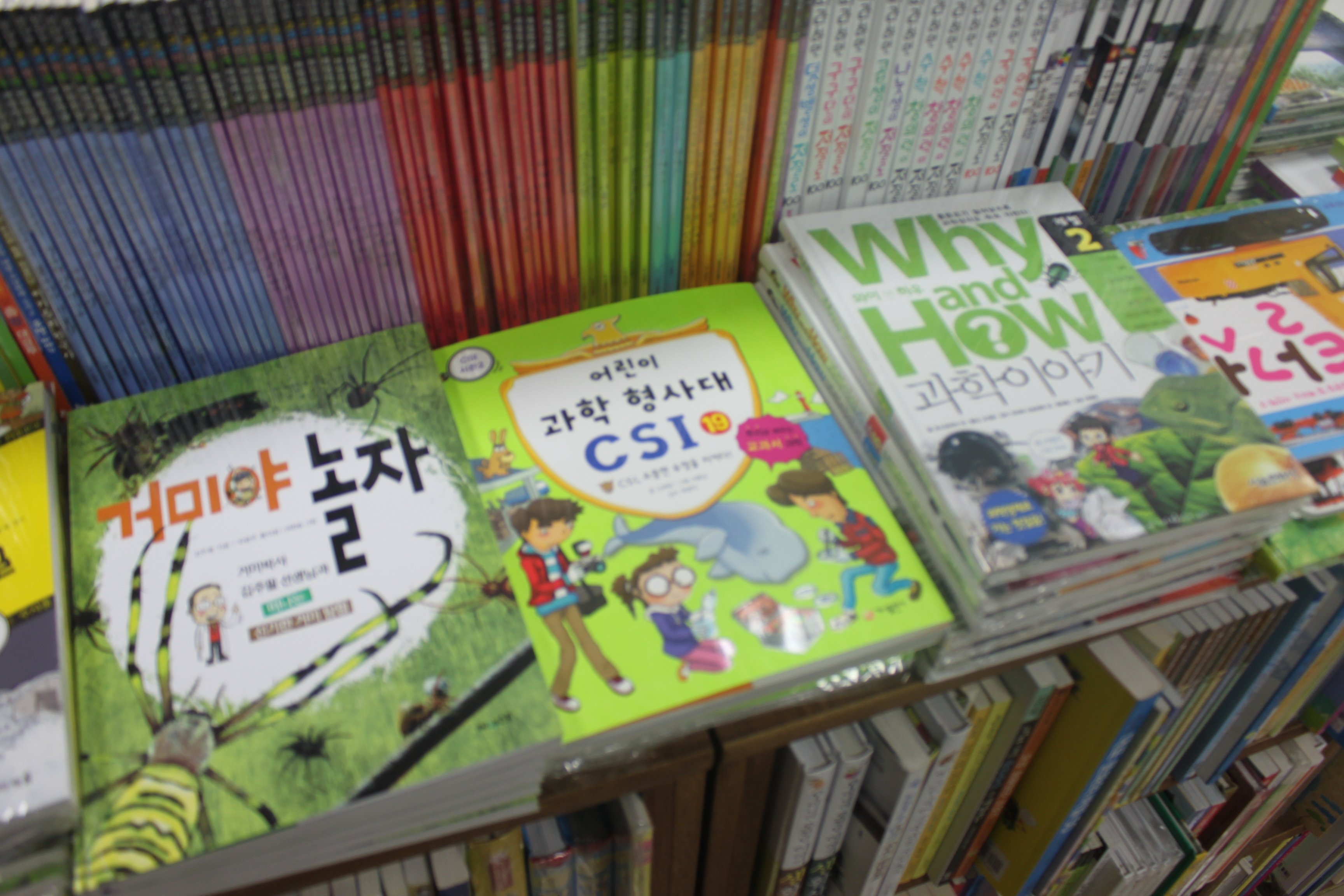
Here are a few more interesting educational comics, “manhwa,” from Korea.
These three comic books are devoted to investigating the world around us. “Spider, Let’s Play” introduces the world of arachnids and insects. “Science Investigation Team CSI” has the reader he is a detective solving mysteries of the natural world and “Why and How” relates intriguing scientific facts in an accessible manner.
“The Rise of Consumption and the Demise of Causality”
Emanuel Pastreich
There are two enormous challenges today that seem unrelated and yet perhaps can be directly connected through a more profound consideration of the impact of technology on society: the rise of consumption culture and the demise of causality in our thinking, specifically with reference to the impact of our actions on the environment.
The first challenge is the challenge of greed and consumption. There is a deep need among people to consume that has assumed a crisis level in advanced industrial nations, reaching a level completely out of line with either the economic situation (which is dire) or human needs. That need to consume is spreading rapidly. It is common to attribute this situation to “greed” without much consideration for what it is that generates greed, how that act has its own social, historical and even physiological aspects.
“A Paradigm Shift for Science and Technology: Prospects for Administrative Regimes”
Korean National Assembly
I delivered the keynote address at a seminar at the National Assembly of Korea entitled “A Paradigm Shift for Science and Technology: Prospects for Administrative Regimes” (과학기술패러다임의 변화와 행정 체제). The event was sponsored by
The event was sponsored by the Korean Congressional Research Service, the Korea Federation of Women’s Science and Technology Associations KFWSTA and Korea Advanced Institute of Women in Science, Engineering and Technology.
“The Great Green Wall and the Fight against Desertification in China”
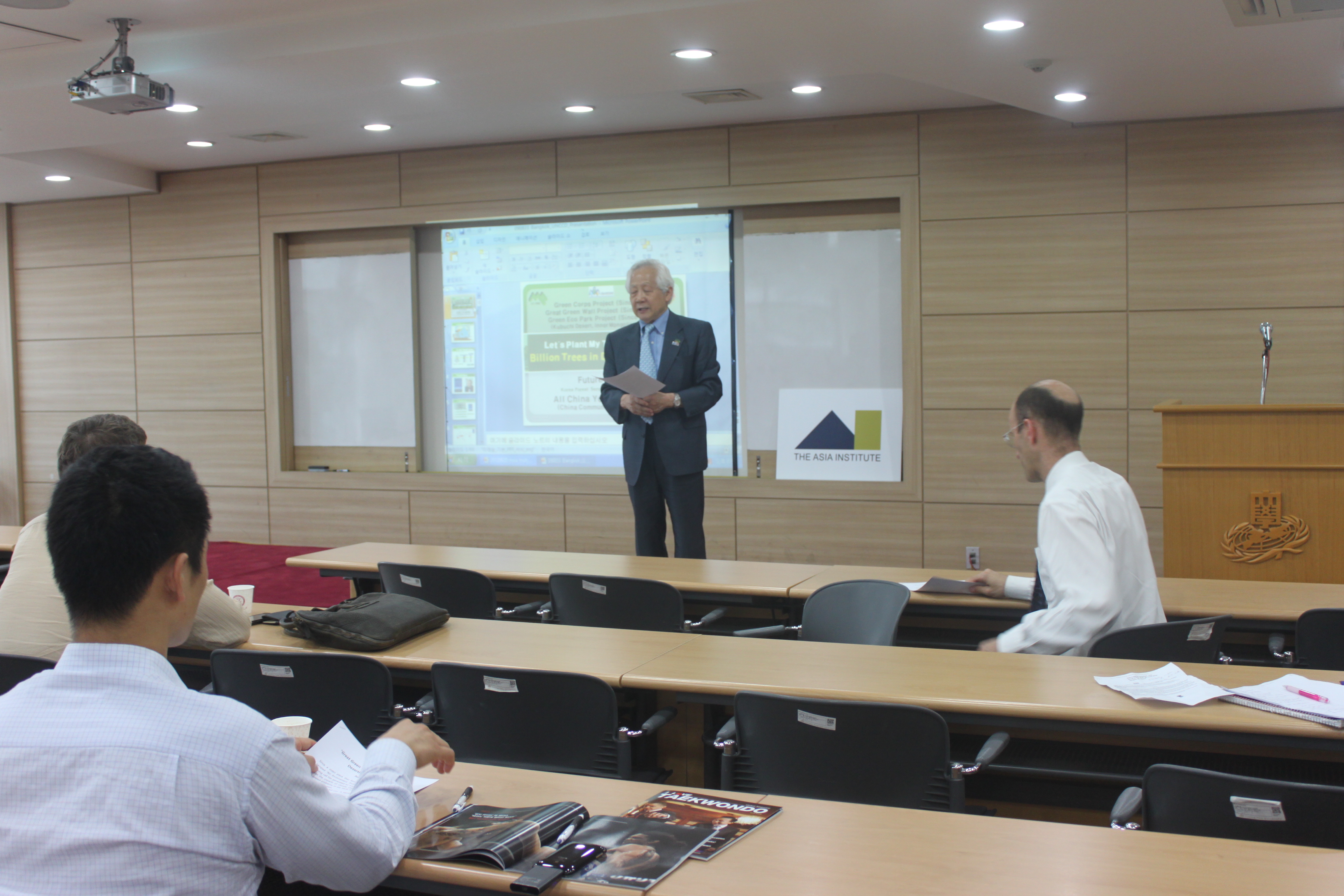
The Asia Institute seminar on the noble fight against desertification was a wake-call for all of us. I must admit that although I was pleased by the enthusiasm of the participants, I was shocked that we did not have a larger crowd. After all, the spread of deserts in China is perhaps the most serious challenge facing East Asia today and is a crisis that calls for a global solution.
Lecture by Ambassador Kwon
Yet attendance was less than for our seminar on nuclear power in North Korea—an important topic, but not anywhere as significant.
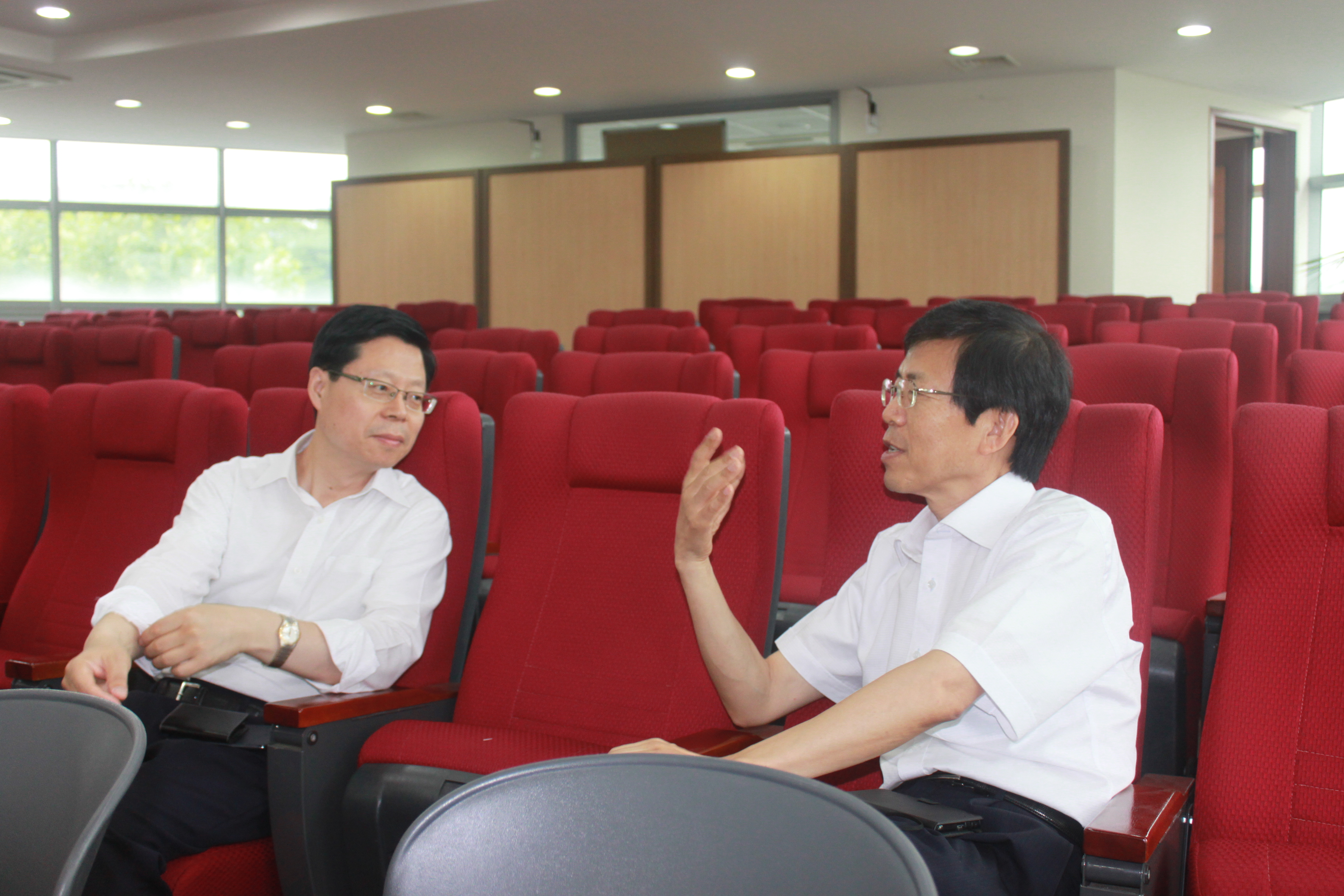
Kwak Sang-soo of Korea Research Institute for Bioscience and Biotechnology talks with David Seol, advisor to Asia Institute for external relations.
Ambassador Kwon Byunghyun spoke about his NGO Future Forest which
A leading figure in speech recognition technology with a focus on Asia, Professor Mark Hasegawa-Johnson visited Seoul for a series of meetings arranged by the Asia Institute. Professor Hasegawa-Johnson works at the Beckmann Institute at University of Illinois, Urbana-Champaign.
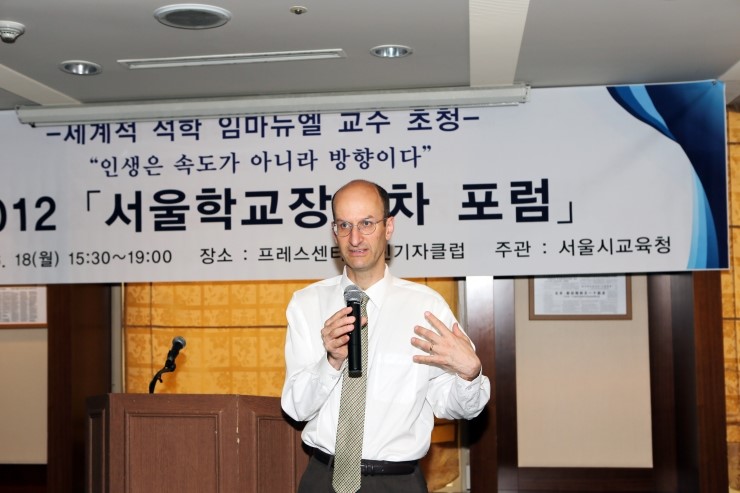
I gave a talk about education and culture on June 17, 2012 in front of a group of about one hundred principals of elementary and high schools in Seoul organized by the Seoul Metropolitan Office of Education (서울시교육청). This “Principals Forum” was the first of its kind, a voluntary gathering of principals from around Seoul to exchange opinions on how education can be improved in Korea.
Emanuel talks with prinicipals about culture and education