Korea Urban Agriculture EXPO 2013 @ Daegu

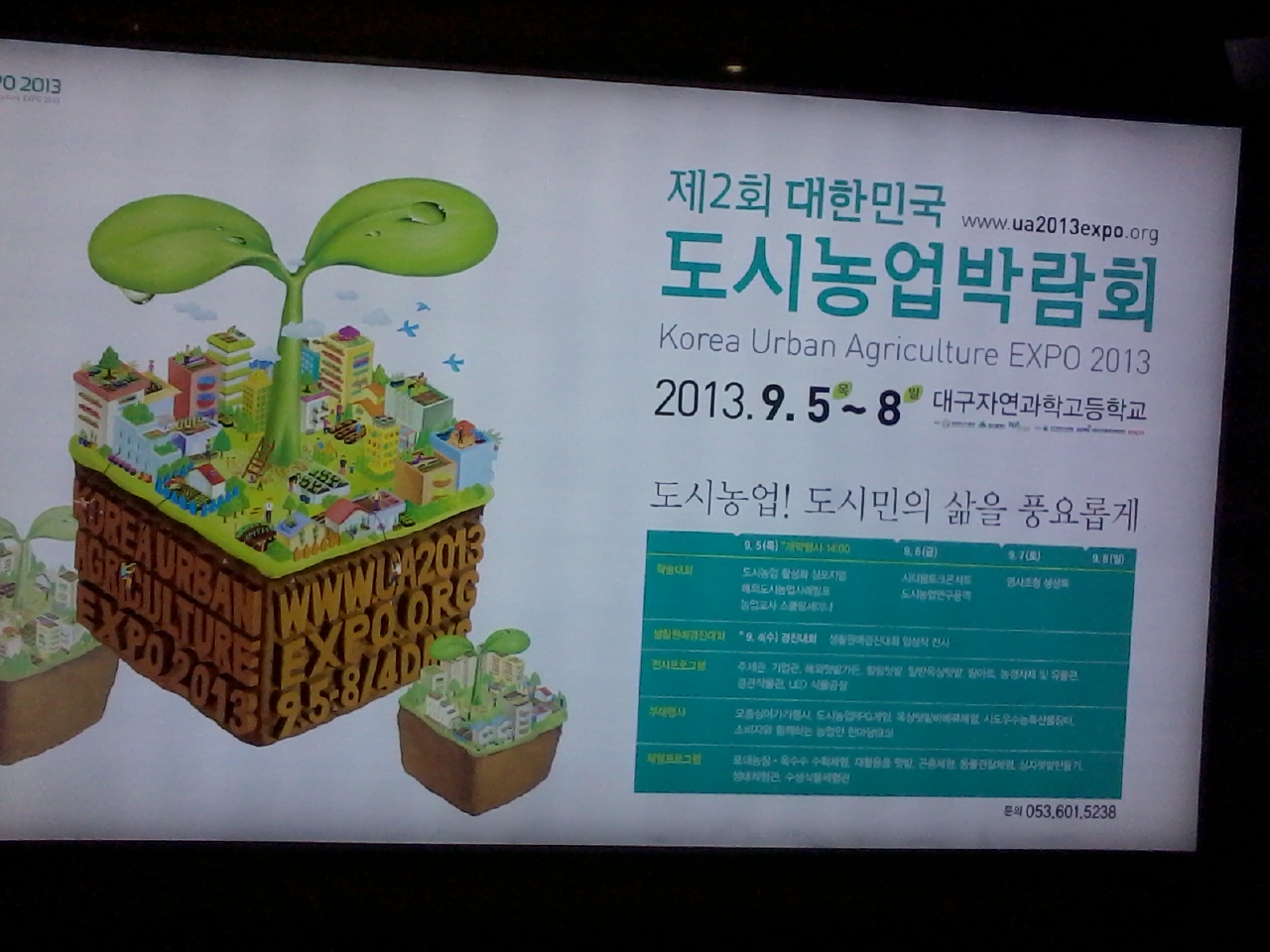
Korea will hold the Korea Urban Agriculture EXPO 2013 in Daegu (September 5-8, 2013).  I am delighted to see such emphasis on urban agriculture in Korea these days. Koreans have a secret love of agriculture, but they have suppressed it over the last few decades.


See


http://ua2013expo.org/


for more information.


korea urban agriculture expo


Pursuing opportunities with North Korea

I worry about North Korea and its future. But I also have high hopes for North Korea and its potential.

It is common sense that the way to solve the North Korean crisis is for North Korea to accept the norms of the international community and become a stakeholder.

But I would like to suggest that maybe the solution to the North Korean problem could also be the opposite approach. That maybe if we change our basic assumptions about international relations and security and how we address difficulties and disagreements, a solution can be found somewhere quite unexpected.

Perhaps the solution is for us to rethink the nation state as the basic unit of international relations, or to consider the environment, and other serious non-traditional threats, as the primary security issues for our future, and to redefine the role of finance, trade, technology and consumption in our society. Maybe the solution to the North Korean problem can be found in Peter Drucker’s famous adage, “Don’t solve problemsPursue opportunities.”

We should not be obsessing about how to solve North Korea’s intractable problems. Rather we should put forth a bold and inspiring vision for what possibilities are out there in Northeast Asia and encourage everyone to reach our for something beyond him or herself. When that happens, when a new hope takes root, the walls of separation will fall down, not because we tear them down, but because they no longer serve any purpose.

Seoul’s “The Big Ear” program to supply the basic needs for the permanently unemployed and impoverished

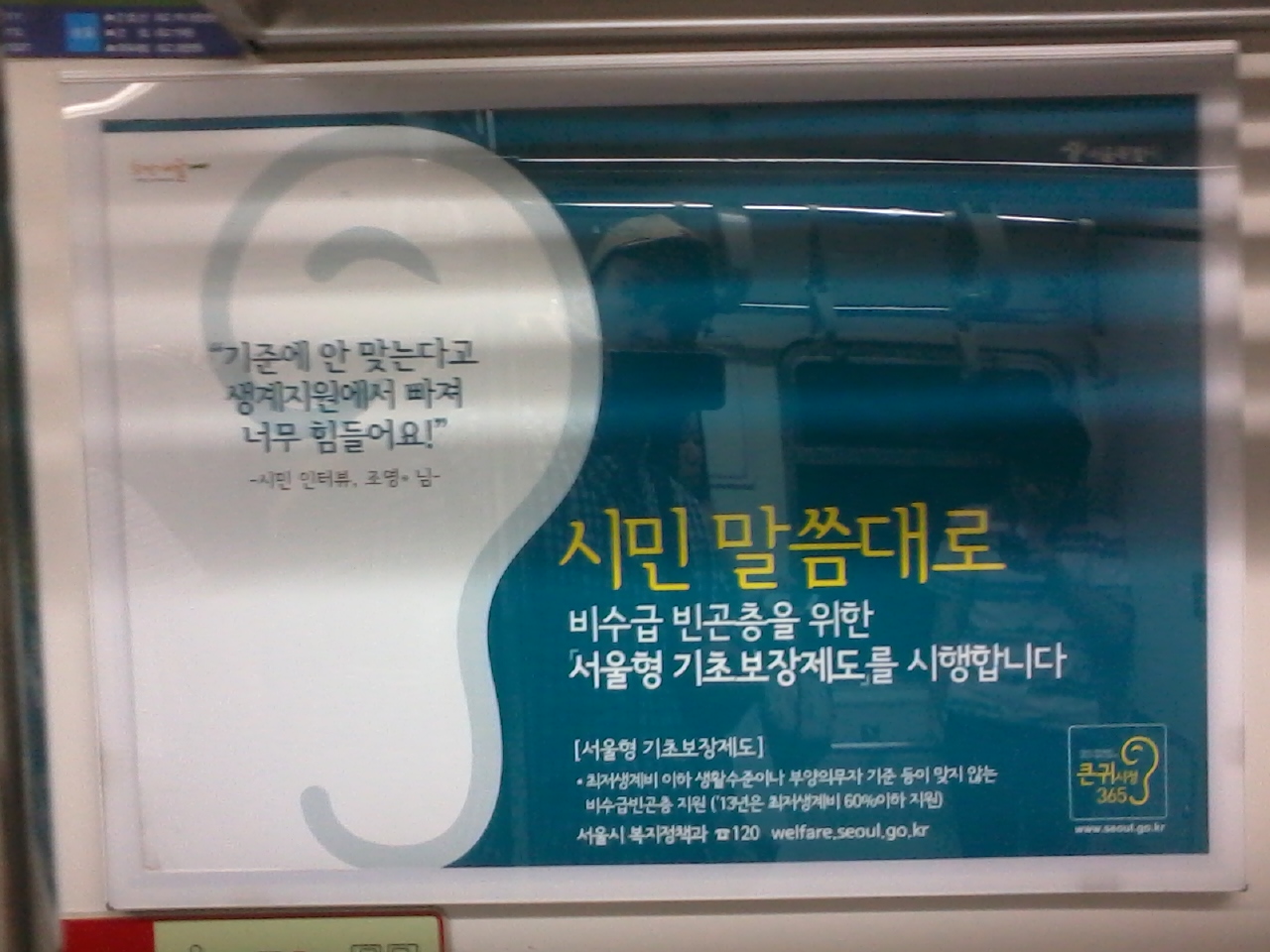
Sign for Seoul Metropolitan City's "The Big Ear" program in Seoul Metro.
Sign for Seoul Metropolitan City’s “The Big Ear” program in Seoul Metro.

Here is an ad for Seoul Metropolitan City’s “The Big Ear” program to help the poor in the city.  The “Big Ear” suggests a government that listens to everyone without exception.


The caption is translated below:


“I was told that I do not meet the standard and lost all economic support. It is just so hard!”(comments of citizen Cho Young-XX)

Following the words of citizens.


Seoul is carrying out a unique “Seoul Style” basic security system for all the unemployed and impoverished.

The program is known as “The Big Ear”


Korean

”American Professor Searches for the Future in Korea’s Forgotten Traditions” (interview with KOREA.NET)

korea.net


“American Professor Searches for the Future in Korea’s Forgotten Traditions”

June 17, 2013


Emanuel Pastreich, known around Seoul by his Korean name Lee Man-yeol, has lived in Korea for more than six years. He is a professor at Kyung Hee University’s College of International Studies and the founder of the Asia Institute. Pastreich started his study of Asia at Yale College and continued his education at Harvard University, the University of Tokyo, and Seoul National University. He developed a remarkable affection for Korean culture while doing his comparative studies and recently translated into English the short stories of the intellectual and novelist Park Ji-won (1737∼1805).

Pastreich has a passion for the culture and literature of the Joseon Dynasty (1392-1910) a period that has been, he feels, underestimated by Koreans in their headlong rush into modernity. He is now writing a new book in which he talks about how traditional Korean culture could play a role in contemporary society. This book, titled “Another Korea,” presents overlooked aspects of Korea that he feels are relevant to modern problems. The book will come out in Korean in July 2013.

I spoke with this blue-eyed American, someone who might be better called a “cosmopolitan of 21st century,” recently at a Seoul cafe that he frequents. This balding and bespectacled man, now approaching 50 years of age, related to me in fluent Korean his insights about Joseon-era narratives that most Koreans are unfamiliar with, not to mention Chinese pre-modern novels like The Plum in the Golden Vase (Jin Ping Mei) and The Dream of the Red Chamber (Hóng Lóu Mèng) and Japanese narratives such as the yomihon genre of the Edo period (1603–1867). The conversation showed his broad knowledge of the Korean tradition that ran from the thought and literature of the Joseon dynasty to the issues of contemporary Korean society.

Read more

Pastreich & Kurzweil at RISE Conference in Seoul

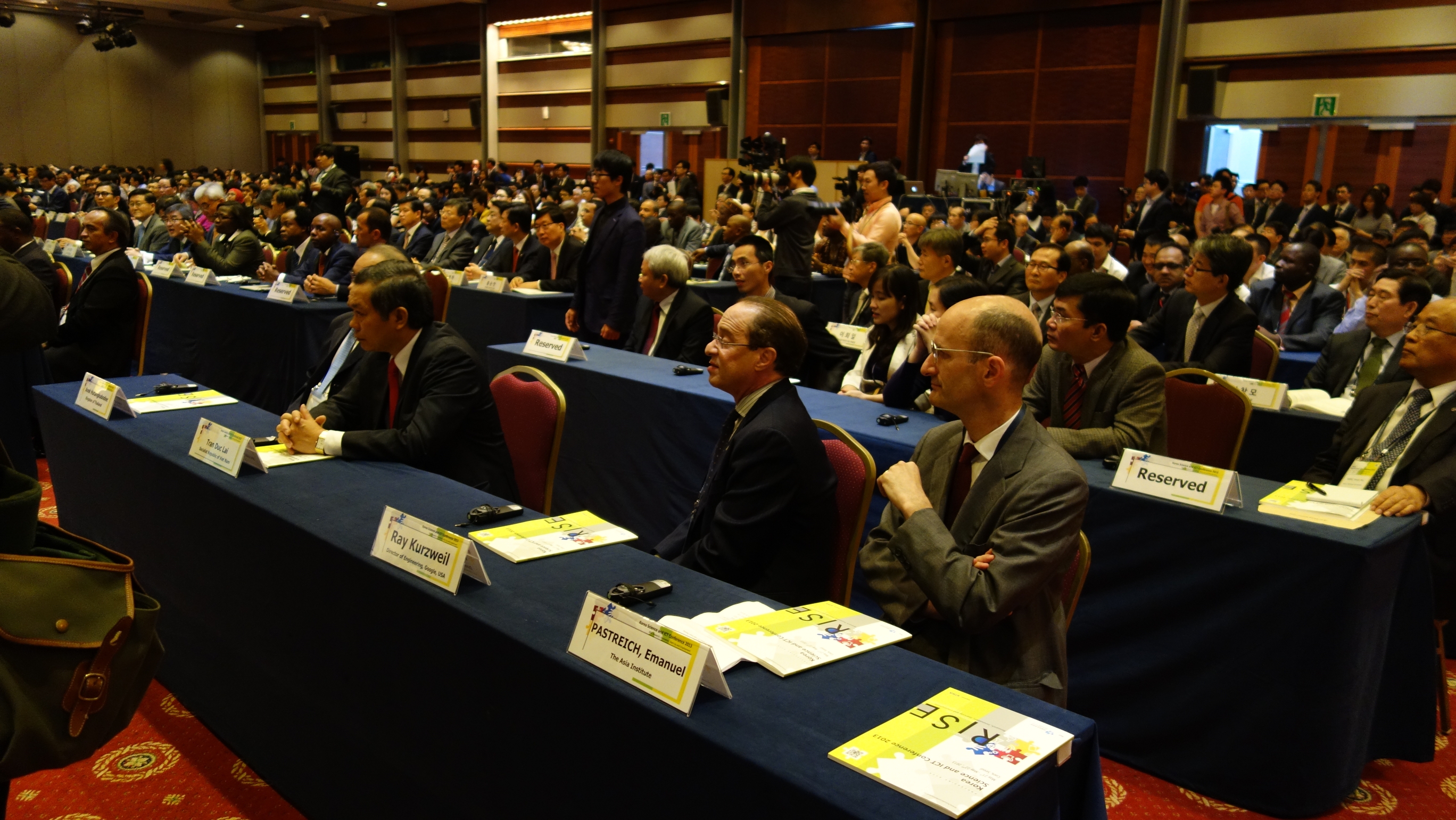
Director Emanuel Pastreich and Ray Kurzweil, author of The Singularity is Now and director of engineering at Google before their keynote speeches at RISE (research, innovation, start-up & employment), a conference held on May 21, 2013 at COEX Korea by the Ministry of Science, ICT and Future Planning.

2013 05 21 COEX pastreich kurzweil


Text of Pastreich’s presentation

Constitution of Information proposal


Emanuel Pastreich & Ray Kurzweil Deliver Keynote Speeches at RISE: Research, Innovation, Start-up and Employment Conference

RISE: Research, Innovation, Start-up and Employment

Korea Science and ICT Conference 2013

COEX, Seoul, Korea

Tuesday, May 21, 2013

Presented by

The Ministry of Science, ICT and Future Planning


Sponsored by

KOSA, AhnLab, SK Telecom, KT, LG U+, Samsung Electronics, KISIA, TTA, RAPA, KAIT, KICA.

The Ministry of Science, ICT and Planning will hold the Korea Science and ICT Conference 2013 on the theme of “Research, Innovation, Start-up and Employment” (hereafter “RISE”). The purpose of this Conference is to realize national growth and job expansion by encouraging the establishment of start-ups and ventures, and to lay a foundation for industrial development and economic growth through research and development in science technology and ICT.

Keynote Speeches

9:30-11:40 AM


First Keynote Speech

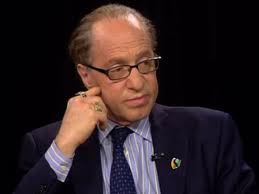
Ray Kurzweil, Director of Engineering, Google, USA

 ray k

RAY KURZWEIL is one of the world’s leading inventors, thinkers, and futurists, with a thirty-year track record of accurate predictions. Called “the restless genius” by The Wall Street Journal and “the ultimate thinking machine” by Forbes magazine, Kurzweil was selected as one of the top entrepreneurs by Inc. magazine, which described him as the “rightful heir to Thomas Edison.” PBS selected him as one of the “sixteen revolutionaries who made America.” Kurzweil was the principal inventor of the first CCD flat-bed scanner, the first omni-font optical character recognition, the first print-to-speech reading machine for the blind, the first text-to-speech synthesizer, the first music synthesizer capable of recreating the grand piano and other orchestral instruments, and the first commercially marketed large-vocabulary speech recognition. Among Kurzweil’s many honors, he is the recipient of the National Medal of Technology, was inducted into the National Inventors Hall of Fame, holds nineteen honorary Doctorates, and honors from three U.S. presidents. Ray has written seven books, five of which have been national best sellers. The Singularity is Near and Ray’s latest book How to Create a Mind have been New York Times Bestsellers. Ray was recently appointed Director of Engineering at Google.


Second Keynote Speech


Emanuel Pastreich

Professor, College of International Studies at Kyung Hee University

Director, The Asia Institute
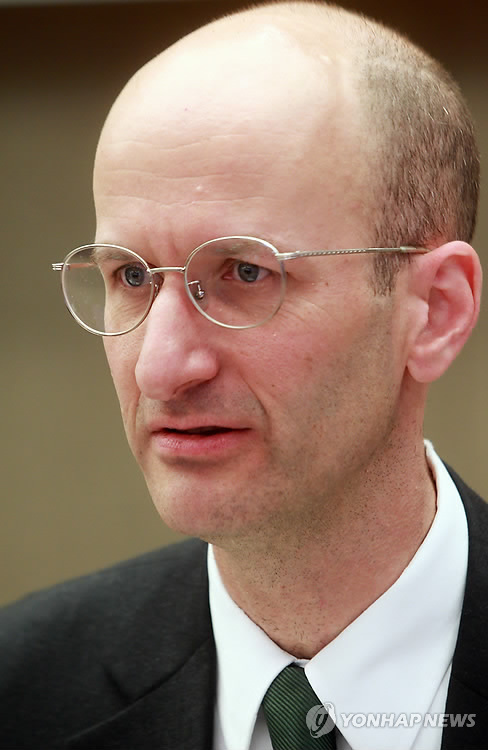
 lecture on literature

Emanuel Pastreich is professor at the College International Studies at Kyung Hee University and director of the Asia Institute in Seoul. His current research is divided between his work on technology and its impact on society and the impact of the Chinese literary tradition in Korea and Japan.

Pastreich founded the Asia Institute in 2007, a think tank that coordinates research between experts in Asia and the rest of the world on the intersection of technology, the environment and international relations. Programs run by The Asia Institute include: the Korea India Business and Technology Initiative (with the Indo-Korea Business and Policy Forum), the Biotechnology Initiative, the Nuclear Power Program, 3E (Environment, Energy, Economy) Program, the Asia Ecocity Coalition (with Ecocity Builders) and the Convergence Technology Program.


for registration and further information


“’여성대통령’ 시대의 한국 여성들 사회적 지위는 향상됐지만 아직도 과도한 소비문화에 사로잡혀 있어” (뉴스위크)

뉴스위크

2013년5월20일

“’여성대통령’ 시대의 한국 여성들

사회적 지위는 향상됐지만 아직도 과도한 소비문화에 사로잡혀 있어”

 (원문)

EMANUEL PASTREICH

‘대한민국 첫 여성대통령’ 박근혜 대통령의 당선이 한국에 의미하는 바는 심오하다. 박 대통령 당선 이후 여러 단체에 속한 여성들이 공식 석상에서 망설임 없이 의견을 표명하고 보다 자신감 있게 목소리를 낸다. 여성들은 우체국과 은행에서부터 대학과 대기업에 이르기까지 모든 곳에서 중요한 역할을 수행한다. 권위를 상징하는 자리에 임명되지는 않더라도 실무적 차원에서 큰 힘을 행사한다. 여성들의 공헌에는 의심의 여지가 없다. 종종 국장이라는 직책을 가진 남성 한 명이 컴퓨터 모니터를 들여다 보고 앉아 있는 동안 여러 명의 여성들이 여기 저기 돌아다니며 분주히 일하는 모습을 볼 수 있다. 여성들은 행정 분야에서 중심적 역할을 차지하게 되면 이런 모습도 사라질 것이다.

하지만 내가 이 글을 쓰는 이유는 한국이 이루어 낸 성과를 축하하기 위해서가 아니다. 이런 상황 탓에 몇 가지 심각한 문제가 발생한다는 사실을 시사하기 위해서다. 여성의 새로운 역할 획득을 축하하는 행위로 인해 어린아이부터 어른에 이르기까지 남성들의 심한 정신적 부담을 무시하는 상황이 발생한다는 사실을 인지해야 한다. 우리 앞에 펼쳐진 또 하나의 과제를 경시해서는 안 된다.

많은 여성이 지위상승에도 불구하고 집착적으로 물건의 축적을 부추기는 소비문화에서 벗어나지 못하고 있다. 이런 소비문화는 여성이 사회적 책임감을 잃게 할 뿐만 아니라, 이런 문화적 타락이 마치 교양의 상징이라도 되는 듯이 여기게 만든다. 여성이 세상을 지배하는 것은 전혀 문제가 될 일이 아니다. 하지만 여성이 자신에 너무 집중한 나머지 사회 문제에 관심을 갖지 않는다면 우리 모두는 이 문제로 인한 심각한 결과를 맞게 될 것이다.

Read more

“’강남스타일’을 넘어서려면 한국의 오랜 전통을 알릴 수 있는 콘텐트가 필요하다” (뉴스위크)

뉴스위크

2012년 4월 22일

“’강남스타일’을 넘어서려면

한국의 오랜 전통을 알릴 수 있는 콘텐트가 필요하다”

(원문)

EMANUEL PASTREICH

한국은 놀라운 경제개발을 이룩했지만 대다수 미국인은 아직 한국이 어떤 나라인지 잘 모른다. 필자 같은 40~50대 미국인들은 TV드라마 ‘매시(MASH, 야전 외과병원)’를 통해 한국에 대한 이미지를 확립했다. 한국전쟁 중 의정부의 한 군인병원에서 근무하던 외과의사 및 병원관계자의 모험담을 그린 드라마다. 1972부터 11년간 방영된 ‘매시’는 당시 미국에서 큰 인기였다. 문제는 극중 한국인이 대부분 진실하지만 무지한 농부로 묘사됐다는 점이다. 지식인은 단 한 명도 없었던 것으로 기억한다. 대다수 미국인에게는 최근에 방송되는 한국의 모습보다 그 드라마 속 이미지가 더 강하게 남아있을 것이다. 이들에게 한국은 난폭한 택시가 가득하고 마닐라와 하노이 못지 않게 길거리가 혼잡한 나라다.

가장 심각한 오해는 한국이 1980년대 기적적인 경제성장을 이루기 전까지 무지한 농부로 가득한 나라였다고 여기는 것이다. 아이러니컬하게도 이런 인식은 미국인에게 한국이 얼마나 발전했는지 설명하는 한국인 때문에 더 굳어졌다. 많은 한국인은 종종 한국이 아무런 배경도 없는 상태에서 50년 만에 IT강국이 된 듯이 이야기하곤 한다. 이런 줄거리가 외국인에게 인상 깊게 들리기는 하겠지만 동시에 한국이 1952년 문화와 교육 측면에서도 열등했다는 인식을 심어준다. 이는 사실이 아니다. 한국은 아주 오랜 학문적, 예술적 전통을 가지고 있으며 1830년대까지는 학문적으로 일본을 앞섰다. 가난에 허덕이던 한국전쟁 당시에도 한국에는 고학력 지식인이 적지 않았다.

Read more

”Put the Environment at the Center of the Global Economy: An Argument for the Eco-Currency” (The Hangyoreh, May 14, 2013)

The Hangyoreh

”Put the Environment at the Center of the Global Economy: An Argument for the Eco-Currency”

May 14, 2013

Emanuel Pastreich

The environmental challenges we face today, from spreading deserts to rising oceans compel us to reconsider the conventional concepts of growth and recognize that they cannot be easily reconciled with the dangerous implications of runaway consumption and unlimited development.

Above all we must get away from a speculative economy born of an irrational dependence on finance, which has becoming increasingly unstable as digital technology accelerates and financial transactions take place any objective review. We must return to a stable and long-term economy. In part that process concerns the restoration of regulation on the banking system but also the change must involve the very conception of finance and banking. Finance must be aimed at stable, long-term projects which have relevance for ordinary people.

Read more

Seoul Metropolitan City makes traditional markets a priority

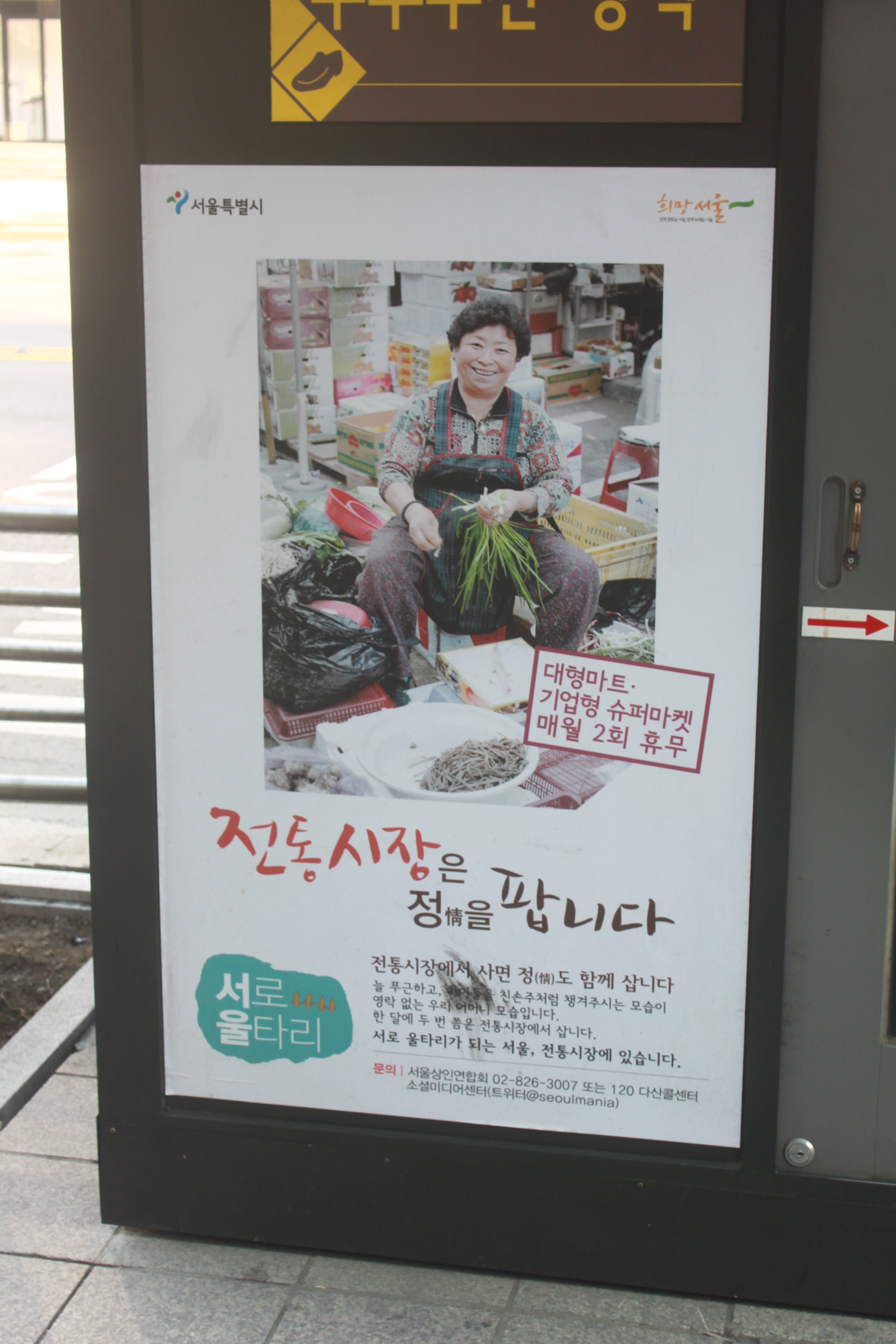
Seoul has made traditional markets and the lives of ordinary people who work them a priority in its planning in a remarkably far-sighted and enlightened move. This poster put out by the city government encourages people to buy at local markets from ordinary vendors (as opposed to large department stores, we can imply). Such an effort is yet another reason I feel Seoul is different from other mega-cities. Specifically, Seoul has set up a twice monthly vacation for large supermarkets to help local markets.

IMG_5642

Part of the text reads:

“Traditional markets sell affection”

[twice monthly holiday for large scale store and corporate supermarkets]

“when you buy things at traditional markets, you also buy “affection” (jong)”