“We need a ‘Seoul school’ Joongang Daily” (Joongang Daily)

We need a ‘Seoul school’

Joongang Daily

Emanuel Pastreich 

February 10, 2014


Korea is getting a lot of attention around the world, whether it is for the rise of Korean female golfers or for the promotion of Koreans to the top positions in the international community at places like the United Nations or the World Bank. Nevertheless, despite Korea’s rapid emergence on the world stage, there remain some glaring blanks in Korea’s impact on the world that suggest there are fundamental problems that hold Korea back and can be rather baffling for a long-time resident like myself.

Let me give an example. One of the greatest advantages for someone with a background in East Asian studies about living in Korea is the large number of experts in Chinese, Japanese and Korean studies from just about every field (history, literature, economics and anthropology) that you can find in Seoul. If you want to put together a seminar on the poetry of ninth-century China, Japan and Korea, you can find 30 people, often with considerable specialization, for an in-depth discussion.

It is a unique advantage for Korea because you could not put together that sort of a group of experts in Chinese, Japanese and Korean studies in Tokyo, Beijing or Boston. Although University of Tokyo and Harvard University produce excellent doctorate degrees in Asian studies, in terms of scale, and increasingly in terms of quality, there is no comparison with the number of Ph.D. students trained at the top Korean universities. And yet Korea has not become the center for Asian studies you might expect.

Koreans say that Korea simply does not have the quality of the scholarship in Korea on a par with the United States. Although the United States does have a few exceptional scholars, I simply do not agree. Korea has all the conditions to be the leader in Asian studies. What is missing is a distinct Korean methodology for Asian studies. The primary reason that

Read more

“From Joseon to cyberspace” Joongang Daily February 6, 2014

Joongang Daily

“From Joseon to cyberspace”

February 6, 2014


Emanuel Pastreich

The misuse of information is one of the most serious challenges for a society that depends on cyberspace. Such abuses threaten to create, in the not-too-distant future, a world in which the details of our lives can be easily collected and manipulated without our knowledge. The massive leaks of consumers’ financial information that have roiled Korean politics for the last week are just the tip of the iceberg in a shift in our society, which extends to the recent abuse of information by the National Security Agency in the United States and many other cases that have received less attention.

But it would be a mistake to judge the increase in both the abuse of information and the fabrication of information simply in moral terms. Although there is greed and arrogance among people, the stark fact is that the ability to gather and alter information is increasing at an exponential rate, in accordance with Moore’s Law. Although we can criticize people for being seduced by the power offered by exponential increases in IT technology, going after bad people will not address the issue.

Rather, we will need to create new systems to respond to this challenge by

Read more

Charlie’s Angels in the Joseon Dynasty?

“What should I see during new year’s?” reads the headline of this poster I found today. It advertises a soon-to-be released holiday film entitled “The Three Beautiful Musketeers of the Joseon Dynasty” set to open in Seoul on January 29. What an interesting film. The passive women of the Confucian Joseon Dynasty once renowned for their modesty and adherence to strict rules of propriety have been transformed into an active adventure seekers. It will be fascinating to see how Korean history and culture is entirely rewritten in light of the current rising status of women in Korean society.

IMG_0212

“Crisis and opportunity for K-pop” (Joongang Daily January 20, 2014)


Joongang Daily

January 20, 2014


“Crisis and opportunity for K-pop”

 Emanuel Pastreich


Let me apologize to my Korean friends in advance. I know how proud of Psy Koreans are, and how fascinated they are with the success of his “Gangnam Style.” I grant that his one billion hits on YouTube is impressive.

Nevertheless, the critical issue for Korea is direction, not speed. The speed with which Psy became a world icon is breathtaking. But if the direction is wrong, it is simply wrong. If the Korean Wave lacks ethical and aesthetic content, it simply will not last; if Korea puts all its efforts into cultivating a culture of lavish consumption, and of meretricious images that rush by, where will we be when the party is over?

Psy embodies a materialist culture of consumption, a narcissism that draws us to surfaces. Friends tell me that he is engaged in an elaborate parody of materialism, but that is not how he is understood by his followers around the world. They are drawn rather to his indulgence, to his compulsive behavior and to his prepackaged masculinity.

I ask you whether a handicapped girl will find inspiration in the prancing teens of K-pop bands to know that commitment, trust and belief are more powerful than appearances and fleeting thrills? Will youth find in the videos they watch an inspiration to give back to society and create a new global network to advance peace and to save the environment?

I doubt it. Gangnam is in danger of becoming a cultural desert. Not unlike the spreading deserts in China that now fill the air we breathe with dust and sand.

All the greater is the tragedy of this consumer interpretation of the Korean Wave, as its original appeal was based on the compassion, emotions and humaneness of Koreans.

Korea was the only country that has become a global power without the baggage of colonialism and imperialism, without the cultural elitism of other such powers. That is the true essence of the Korean Wave.

If the direction for the Korean Wave is wrong, the tragedy is one we will share with the entire world. If Korea’s youth throw garbage on the ground, waste natural resources and energy without even a thought, and pursue a personalized life of disposable paper cups and late-night drinking in which there is no room for parents and friends, let alone those who have had less advantages in life, we can be sure that youth in Southeast Asia, Central Asia, the Middle East and elsewhere will follow that model. That will lead to a true cataclysm for humanity in this age of limited resources.

And what about that traditional Korea that we have left behind? The Korean mother who saved every single grain of rice, was she so backward and uncultured? In an age of climate change, those traditional virtues of frugality, that concern for soil, water and nature should be at the core of the Korean Wave.

And what about those yangban scholars? Were they foolish and backward when they sat in simple unadorned rooms and read the Confucian classics all day, speaking of personal morality and of responsibility to family and society? Or did they grasp some truth about the need for a spiritual space in our lives and the importance of avoiding the mindless consumption that so damages the environment?

So what can the Korean Wave be? Imagine an African in a small village in Kenya who rises up to build a new drainage system for his people and fights to preserve his culture against the onslaught of international culture. He says, “I am the King Sejong of Kenya.” He finds inspiration in the greatness of the past, a universal past, which comes from Korea.

Imagine a woman combating drug gangs in Mexico City. She tries to bring together the community to pursue common interests and build a system that is inclusive. She says, “I am the Dasan of Mexico,” and she finds a model for action in a Korean intellectual who stood up for commoners and embraced a new vision for his country.

A Mexican can find in that Korean tradition something she can make her own. That is not a Korean Wave you will find in popular songs today. But it could be.

link

America’s Future Role in Asia (Chosun Ilbo, January 1, 2014)

Chosun Ilbo

January 1, 2014

 America’s Future Role in Asia

(translation of article published in the Korean language)

During his recent visit to Korea, Vice President Joseph Biden remarked, “America is a Pacific power – a resident Pacific power – and we are going nowhere.”

I could not agree more with Vice President Biden. The United States should be a “resident Pacific Power.” Since I started studying Chinese language at Yale University I felt that the future of the United States lay with Asia. I have had the opportunity to learn about that vision of a United States committed to a Pacific age from such Asia experts as Edwin Reischauer, James Laney, Donald Gregg and Ezra Vogel.

But as I imagine the future role of the United States in Asia, I am reminded of what my father told me as a young boy. My father said repeatedly, “Never do the same job for more than one year.” He did not mean you should quit your job every year! What he meant was that although one has the same title in the same organization, one must constantly innovate, transforming how one works and adapting to new issues and circumstances. That advice applies to the role of the United States in East Asia today. That role is vital and increasing in importance. But the nature of that role must shift fundamentally in response to demands of this age.

Read more

“Can light be a form of pollution?”

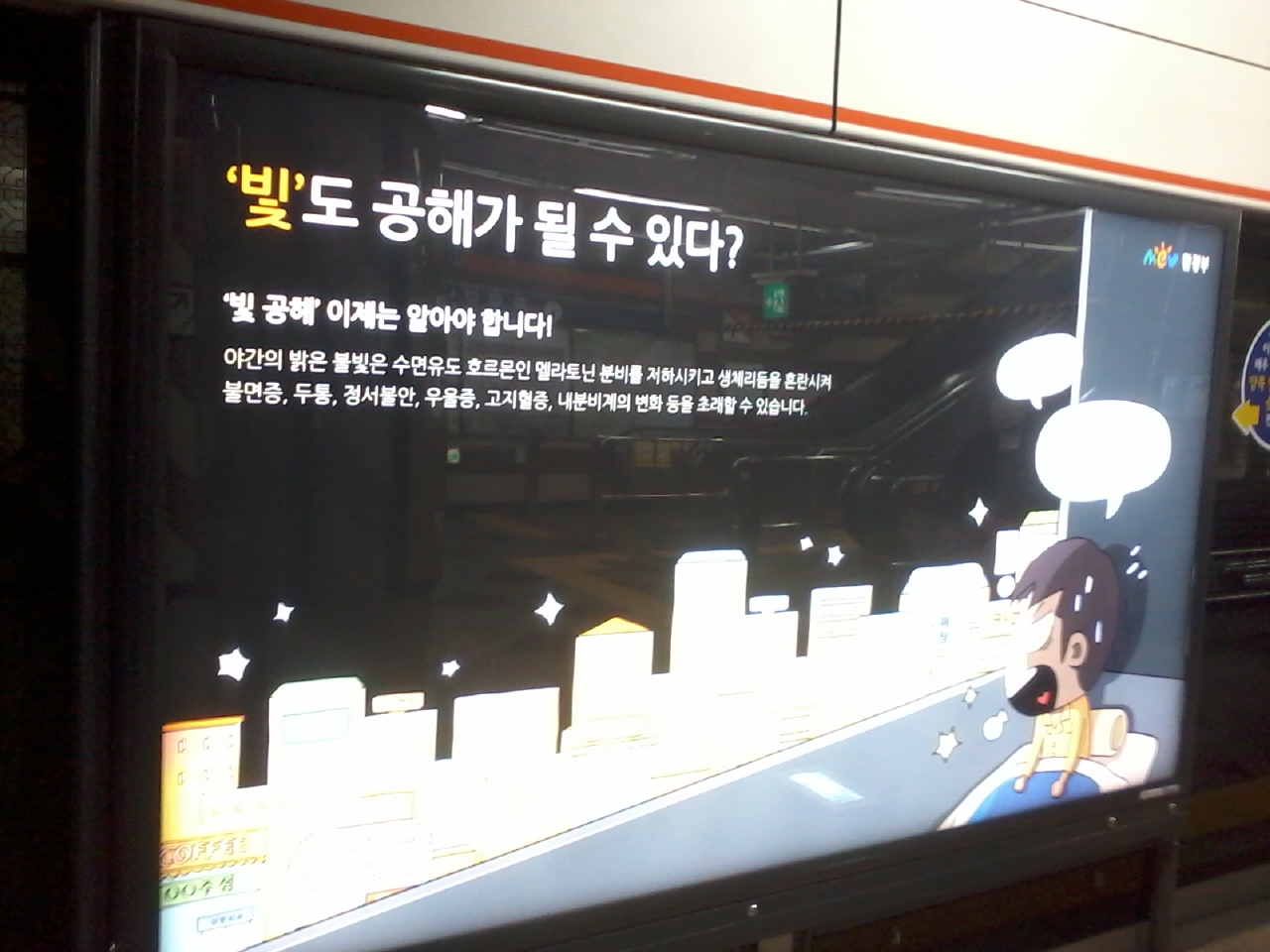
I was very impressed by this recent poster put up by the Ministry of Environment here in the Korea which calls for a greater awareness of light as a form of pollution. As Koreans are often completely unaware of the tremendous waste of energy, and the negative impact on daily life of the needless use of light. I am delighted to see a consensus at last emerging on this critical point.

Subway poster put up by the Ministry of Environment draws attention to light pollution and the waste of energy.

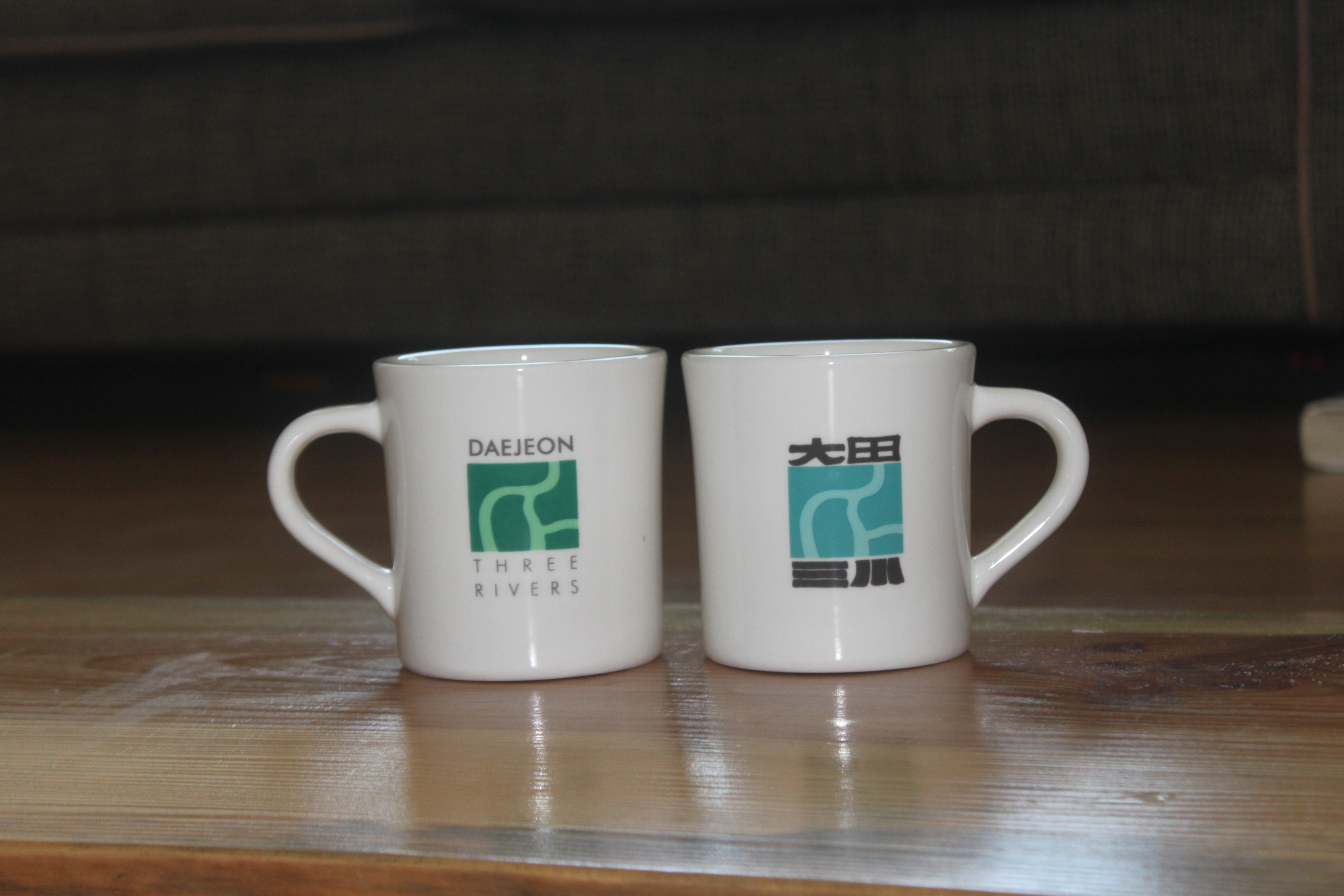
The Daejeon Mug Cup

The Daejeon Mug Cup, produced in commemoration of Daejeon’s remarkable ecological foundations as the intersection of the Gancheon River, the Daejeoncheon River and the UDeungcheon River, is now available in two colors (front in English; back in ideographs).


The price is 10,000 Won per mug.

We encourage all interested parties to use our logo to create your own mug cups and other commemorative materials. Just let us know.

Daejeon mug cup 2014

The Open Closet in Seoul

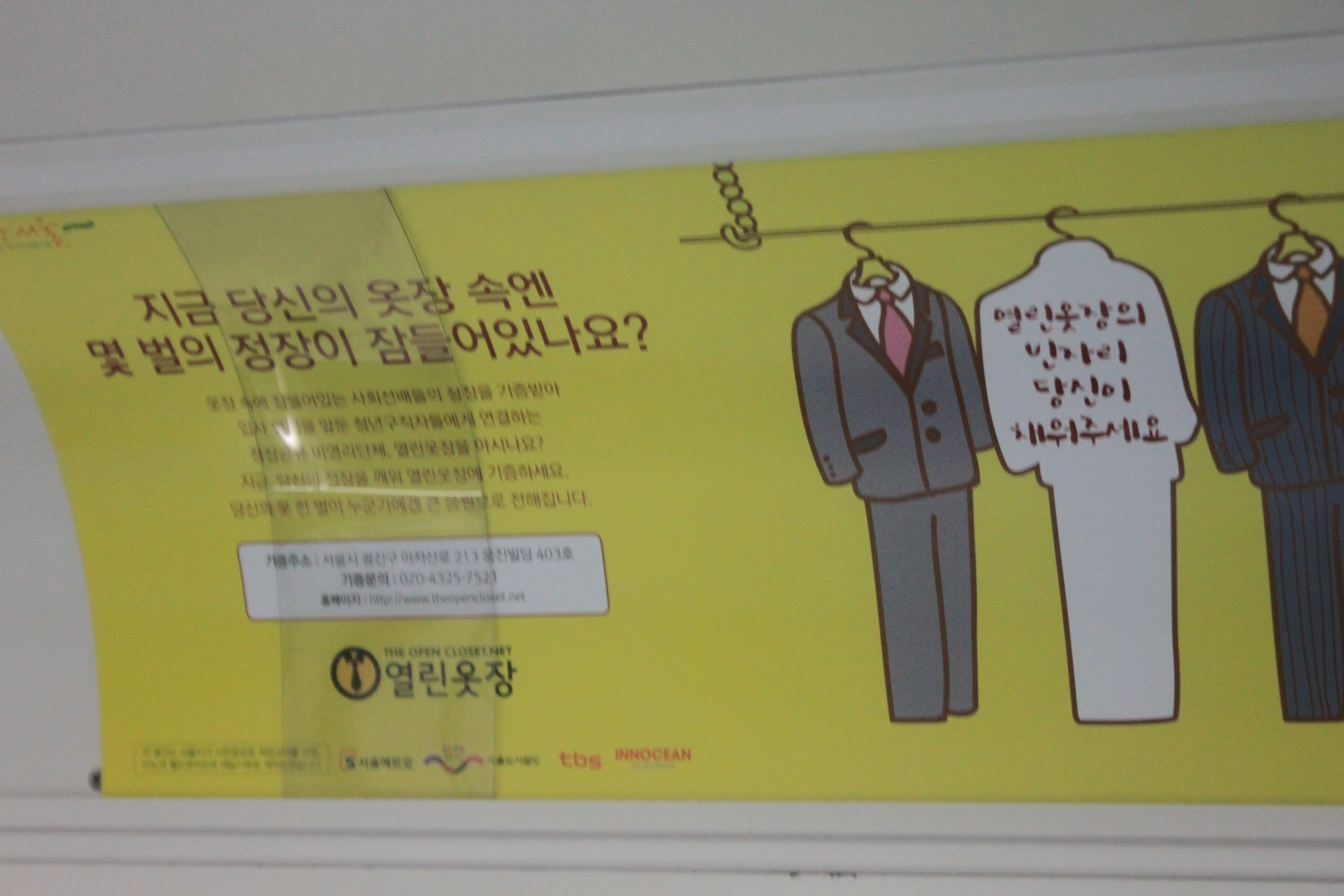
The Open Closet is an NGO that has recently been set up in Seoul, with support from Seoul Metropolitan City to allow people to share clothing that they do not need every day. The focus starting out is on formal clothes that young people may need for job interviews.


The description on the website of the Open Closet explains.


“The ‘Open Closet’ started from the idea that people could just open up their closets and simply share all of their clothes. But we realize that the concept of a ‘common economic system’  is so ambiguous in Korea that just saying people will share all their clothes is just not feasible. So we reduced the range of the clothes to be shared. We thought, what sort of clothes are most crucial, and for which people? When we pondered the question, what came to mind naturally was formal clothing for interviews. Many believe that formal clothes that they buy they will continue to wear even after they are successful in their application, but we have observed that often those close are just kept in the closet. A donation of those formal clothes that ‘sleep in the closet’ can help out youth who are seeking employment these days in these difficult times.”

The Open Closet is an NGO run together with support from Seoul Metropolitan City that permits people to share clothes with each other. The present focus is on providing formal clothes for youth who are interviewing for jobs.

The DMZ as Prelude

The DMZ as Prelude


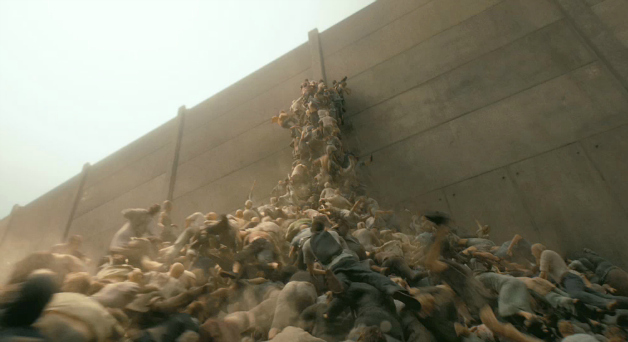
Although it is common in the media, and in books about Korea, to refer to the Demilitarized Zone (DMZ) that rudely rips the nation in two as a “remnant of the Cold War,” I have argued on several occasions that  the DMZ is not a remnant, but rather a prelude to a new geopolitical reality: the forceful separation of different economic systems by barriers. This building of walls to keep economic systems, and even classes and ethnic groups separate,  is increasing around the world and we may well find that the DMZ is not a relic of past ideological battles, but rather the precursor of a new global phenomena.

The most striking parallels to the DMZ are without a doubt the walls recently erected around Gaza in Israel/Palestine and the militarized wall between the United States and Mexico. However, a recent special feature in the Guardian has drawn attention to a group of other notable walls around the world. Needless to say, similar walls are emerging at the urban level throughout all the cities of the world. Perhaps this proliferation of walls parallels the border-less society that is evolving at another level.

Recently, at an Asia Institute seminar in Seoul, John Feffer made a challenge to the Korean people, he said, and I paraphrase,


“For Korea to achieve reunification is to set forth a model for the entire world of how we can overcome  the economic and cultural gaps between the developed world and the developing world. Korea will have to wrestle with tremendous problems, but it can give hope to the world, and concrete best practices, through its successful reunification that will have meaning far beyond the Korean Peninsula.”

The DMZ is best seen in the context of this larger challenge for our age.


“Our Walled World” 

The Guardian

November 19, 2013

Our Walled World


World War Z
World War Z


Our Walled World


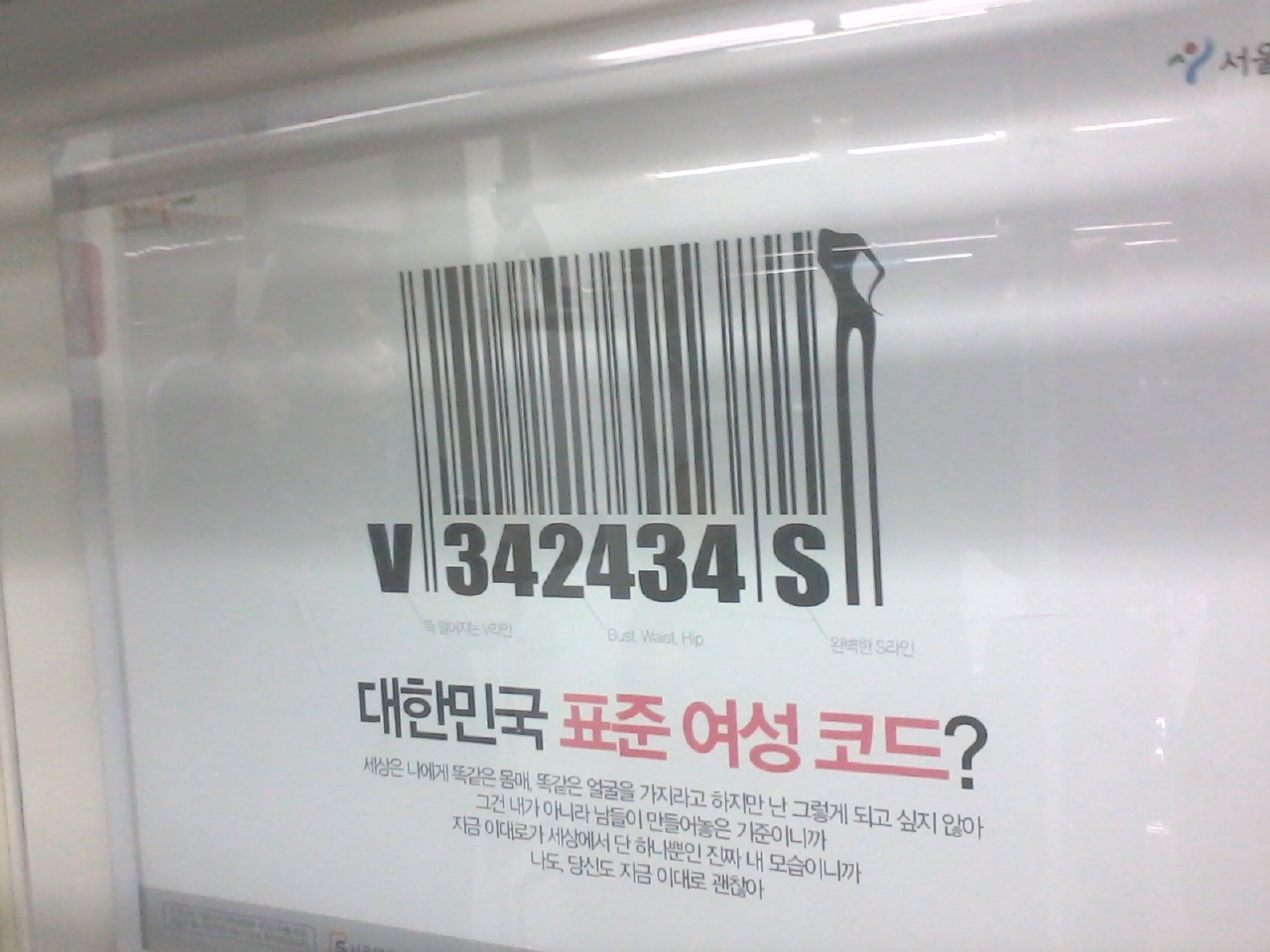
“The standard code for women in the Republic of Korea”

“The standard code for women in the Republic of Korea” 


This remarkable public advertisement has appeared recently in the Seoul Metro and sponsored by the City of Seoul. The graphic is a modified bar code which is referred to as “The standard code for women in the Republic of Korea” beneath.

the “V” is glossed as “V Line” the following numbers are glossed as “bust, waist & hip” and the “S” as “a perfect S line”

The text below reads

“Society tells me i must have the same body, the same face, as everyone, but I do not want to be like that. To do so to conform to a stardard made not by myself, but by others. The way I am now is the one and only true form for me. It is just fine for me, and fine for you, to just be the way we are.”

The ad is remarkable in part because of the striking creativity of employing the bar code image as a symbol of the oppressive domination of women by images and the resulting usage of plastic surgery and other techniques as an artificial means to conform.

The ad is also noteworthy because the city government produced it as a means of playing a positive role in society and offering up an alternative discourse for women in opposition to the dominant one of consumption and indulgence. It seems like a positive model for the role that government can play in society.


being human