“The next chapter in social media” (JoongAng Daily September 1, 2015)

JoongAng Daily

“The next chapter in social media”


Emanuel Pastreich

September 1, 2015


It has always saddened me that although Korea led the development of social networks early on, it failed to make its flagship Cyworld into a global leader.

Unfortunately, Cyworld had no vision for itself as a global player and only belatedly launched an English-language version. It ultimately pulled out of the American market in 2010, and today Facebook, launched in 2004, has become the most favored social network worldwide, including in Korea.

But today we are on the edge of a new revolution in social networks, and Korea once again has an opportunity to establish itself as the global leader. Social networks are becoming extremely popular in countries like Vietnam, Mongolia and China. Yet, Facebook is not properly customized to the needs of local cultures and takes a one-size-fits-all approach to social networking.

The next generation of social networks should be run as a utility administered by a consortium of nations in the same way that a highway is run by local and central governments. Social-networking companies should use that infrastructure to build creative content.

A global consortium of governments for social networks can provide the large-scale investment needed to lay down the foundation for something beyond the means of any one corporation. Because the infrastructure, including the administration, will be built as a public service, we can be sure they will be developed with a long-term vision to address important societal issues.

Read more

“Korea’s Unique Position for Military Reform” (JoongAng Daily August 10, 2015)

JoongAng Daily

“Korea’s Unique Position for Military Reform”  

August 10, 2015

Emanuel Pastreich


The United States Navy’s Pacific Fleet in Pearl Harbor hosts the biannual RIMPAC (Rim of the Pacific) Exercises in June and July, an immensely successful program that encourages global military cooperation and helps to reduce regional tensions in East Asia

The RIMPAC Exercises invite representatives of military forces from the entire Pacific Rim to participate in military exercises that promote enhanced interoperability between forces and improve readiness for a wide range of military scenarios. The most important result of the RIMPAC Exercises has been the growth of personal relations and practical military-to-military partnerships throughout the region at the working level.

Significantly, the People’s Liberation Army Navy was invited to participate in the 2014 exercises, marking the first time China has joined a large-scale naval drill organized by the United States.

In spite of headlines in newspapers about a “new cold war,” multilateral military cooperation remains a strong trend globally, in part because emerging security threats, like cyber warfare, by their very nature are complex and demand multilateral responses.

This new environment offers a tremendous opportunity for Korea as a middle power to become a leader in military innovation and reform. Korea is no simple middle power, after all. Korea is perhaps the first country without a tradition of imperialism to reach such a level of influence in technology, trade and culture. And Korea does so while maintaining good relations with all the major powers and with many developing nations.

Korea should organize a new variation on RIMPAC that will bring together working-level officers from Pacific Rim nations for exercises that will build a new level of trust in the region and make military exercises an opportunity for unity, rather than creating new tensions.

Such a new RIMPAC exercise should focus on emerging security issues and could extend participation to include the nations of Southeast and Central Asia.

The overwhelming security threat for Asia today is climate change and the new role of the military in mitigation of climate change. Adaptation to the resulting broad security threats would be an ideal theme for a Korean-led RIMPAC exercise.

In light of the recent report on the rapid rise of sea levels by the renowned NASA scientist James Hansen, formulating a global response to the threat of climate change has become a priority for all militaries, particularly the navy.

The Climate Change RIMPAC exercises would focus on drills for the response to security challenges related to climate change including, but not limited to, evacuation, disaster relief and reconstruction following storms and floods. Recent super-typhoons like Nargis (2008) and Haiyan (2013) demonstrate that climate change is overwhelmingly the greatest threat to security in Asia, and such storms will increasingly inch north as climate change progresses.

In addition to military exercises, the Climate Change RIMPAC should include global competitions by militaries of Asia for new environmentally friendly technologies.

The example of the U.S. Department of Defense’s “Smart Power Infrastructure Demonstration for Energy Reliability and Security,” or SPIDERS, program is a good example of what could be done. The SPIDERS program conducted in 2013 the world’s first-ever test of a micro-grid handling an input of 90 percent renewable energy.

The military representatives at the Climate Change RIMPAC could compete for prizes for new technologies in fields like solar and wind power, electric batteries, power grids, environmental conservation and the use of intelligence and surveillance technologies to monitor and respond to the changing state of the oceans using a multilateral platform.

Such competitions will have even more impact if they are held together with an international conference, where the invited militaries can present papers about their advances in fields related to climate change. Topics like recycling, energy efficiency, water security, electric motors and the prevention of desertification could be subjects for presentations.

Such a Climate Change RIMPAC could be an excellent topic to bring at the Barack Obama-Xi Jinping summit in November this year. When President Obama visited Beijing last year, the two leaders firmly stated their commitment to closer military cooperation and a joint response to climate change. The Climate Change RIMPAC would be a concrete step to bring together both issues.

The proposal for a Climate Change RIMPAC could segue to the Paris Climate Change Conference planned for December, where world leaders will be pressed to come up with concrete responses to the growing fears of climate change’s impact on the entire world.

Finally, a Climate Change RIMPAC could also be an opportunity to establish an international think tank in Korea dedicated to this emerging topic: the military’s role in the mitigation of, and adaptation to, climate change.

Although this topic is guaranteed to attract increasing attention in the years ahead, there is no such think tank in existence. Because of the global consensus on climate change, a think tank focused on military reform as part of a response to climate change would offer a neutral space in which military leaders could meet for discussions on a variety of topics without any fear of political fallout.

Considering the Green Climate Fund and Global Green Growth Institute are here in Korea, the country has unique credentials to host a Climate Change RIMPAC and set up a think tank focused on military reform and the response to climate change.

Korea needs to take advantage of its technical expertise, its military know-how and the geopolitical positioning necessary to respond to a rapidly growing threat.


 

“An African American’s Perspective on the Korean Wave” (Chosun Ilbo July 9, 2013)

Mariesa Ricks
Mariesa Ricks

Chosun Ilbo

July 9, 2013

“An African American’s Perspective on the Korean Wave”

Emanuel Pastreich

I received an unexpected email in February 2013, from a young woman who was studying public health at Harvard University. Mariesa Lee Ricks explained that her mother was Korean and that she had a great interest in Korean culture. Mariesa said that she hoped to find out how K-Pop and Korean social media can play a role in bringing positive messages to youth around the world.

Mariesa added that she hopes to visit Korea to carry out research. I wrote back to her telling her that I would be in Boston soon for a business trip and we agreed to meet up while I was there.

I did not recognize her at first. I was taken aback for a split second when she introduced herself because she turned out to be African American, and I had imagined a half-Korean, half-Caucasian woman who looked like my daughter Rachel. I was impressed that Mariesa did not display the slightest sense of discomfort or uncertainty in the few seconds that it took me to get over my embarrassment. She was clearly an extremely mature and composed woman with a strong sense of herself.

We sat down at the café for a cup of coffee and muffins and Mariesa started to tell me how her research was far more than academic interest, but part of a vision for her own cultural and ethical mission and an extension of her experiences since childhood. The Korean Wave was an essential part of a search for greater diversity and acceptance of both herself and others. She imagined it as something far larger than just the catchy songs of Psy.

Read more

“The future of Korea’s rural towns” (JoongAng Daily July 22, 2015)

JoongAng Daily

“The future of Korea’s rural towns”

July 22, 2015

Emanuel Pastreich


I was recently taken on a trip by a friend to a tiny village nestled in the mountains near Kumsan, South Chungcheong. We drove along winding roads lined with pine trees for some time until we found ourselves standing in front of a cluster of modest houses built in the late 19th and early 20th centuries.

These wooden houses lining the ridge of a mountain were not well-maintained. Rusted pipes and broken windows were visible between the thick underbrush and vines that threatened to swallow them. But even more striking than the state of the disrepair of the buildings, was the age of the villagers. Villagers in their 70s helped those in their 80s and 90s with their groceries and cleaning because there simply was not anyone younger around. The lack of proper maintenance was because cleaning was too strenuous a task for them.

Read more

“Breaking Out of the Rut: Broadening the Spectrum for Engaging North Korea” Seok-Hyun Hong (Global Asia)


GLOBAL ASIA SUMMER 2015 (Vol. 10, No. 2)

Breaking Out of the Rut:

Broadening the Spectrum for Engaging North Korea

By Seok-Hyun Hong


ALTHOUGH THERE was much speculation that a breakthrough in North-South relations might be in the offing after high-ranking North Korean officials made an impromptu visit to the Asian Games at Incheon in October 2014, tensions of late have ratcheted up again, especially after the United States imposed further sanctions in response to allegations that North Korea was behind the hacking of Sony Pictures. Now, with talk of designating North Korea again as a spon­sor of terrorism, there is concern that another period of heightened tensions is about to begin.

But might it not be a smarter strategy to create a virtuous rather than a vicious cycle, one that could turn this all-too-predictable process around? The true lesson of the recent uptick in tensions is not that we should increase pressure on Pyongyang, but rather that we have to move beyond the current approach to engagement with North Korea.

For the last 20 years, South Korea and its partners have engaged North Korea through a variety of limited forums such as the Six-Party Talks, reunions for family members separated on either side of the DMZ and limited humani­tarian activities by non-governmental organi­zations (NGOs). As the world is rapidly trans­formed by globalization, the tremendous poten­tial of East Asia is being slowed down by this inability to fully integrate North Korea into the international community. The time has come for a creative and broad approach to engaging North Korea that can move beyond the current stalemate and open up new vistas for a peaceful and integrated Northeast Asia.

As China emerges as a truly global power and the US tries to define its rebalancing in Asia, this is a critical moment for creating a broad dia­logue with Pyongyang that includes more actors, and offers more potential directions for future development. This essay provides an overall analysis of the current situation and presents a few concrete proposals for innovative engage­ment that can change the way current problems are perceived. By changing these perceptions, the foundation can be laid for a more fundamen­tal institutional integration of the region that reflects the economic realities of this century. The first step is to change the manner in which we engage North Korea.

Read more

“Unveiled, Inclusive Korean Culture Needed in Korean Multinationals” Business Korea

Business Korea

“Unveiled, Inclusive Korean Culture Needed in Korean Multinationals”  

18 June 2015


Emanuel Pastreich


Korean multinational corporations have reached a level of global prominence that positions them well as pacesetters for the future of business. Yet we find that often Korean companies have tremendous trouble attracting and retaining the best global talent. Although the best and the brightest can be recruited to work at Korean firms, often their loyalty is not much deeper than the competitiveness of their compensation package.

Having spoken with many internationals who work at Korean multinationals, I can say with certainty that the essential problem that they encounter is clear. There is a fundamentally different culture for Korean employees than for international employees. The cultural divide is clear, so clear that I even know a Korean who lived many for many years in the United States as a child and has become a priceless member of his company, serving as a bridge between the Korean and the international groups in his firm. This role should not be necessary within one company’s culture.

Most Koreans explain this odd state of affairs as a consequence of the immaturity of Korean companies. They tell me that Koreans are simply not sufficiently global in their thinking to create a truly world-class work environment.

Although I certainly would not deny that Koreans have a long way to go to develop a corporate culture that is welcoming to employees from different cultures and experiences, I disagree with the common assumption that Korean companies need to become just like Western multinationals if they want to attract and retain international talent.

If anything, the challenge for Korean firms is not to give up the Korean culture, which has served as the core of their remarkable growth an innovation, for some bland and predictable Western corporate culture. Rather, the challenge is to make that same Korean corporate culture readily accessible to everyone, universal in implication, and inspiring to people from every walk of life.

Read more

Don’t have a camel? Try a giraffe

Here is a poster that I saw today (June 13, 2015) at City Hall, Seoul.


kirin

It reads:

“Instead of a Camel, Ride a Giraffe”

1) the shape is similar

2) the feel of the ride is similar

3) the fuel they for both is similar

4) you will not get MERS.

We have prepared fuel efficient giraffes for you. Please email us at

naktanonono@gmail.com


Read more

“한국 문화가 한국 기업의 최대 자산이다” (중앙일보 2015년 6월 6일)

중앙일보

“한국 문화가 한국 기업의 최대 자산이다”

2015년 6월 6일


임마누엘 페스트라이쉬


한국의 다국적기업들은 글로벌 업계를 선도하는 수준에 도달했다. 하지만 세계 최고의 인재들을 채용해 이들을 계속 근무하도록 만드는 방식에 심각한 문제가 있다. 한국 기업들은 어떤 구체적인 단기적 목표 때문에 외국인을 채용하는 것 같다. 회사에 대한 그들의 충성심 확보에는 관심이 없는 것으로 보인다.

나는 한국 회사에서 근무하고 있는 많은 외국인과 이 문제로 대화를 많이 했다. 그들에게 최대의 문제는 회사가 한국인 직원과 외국인 직원에게 각기 근본적으로 다른 기업문화를 기대한다는 것이다. 대부분의 한국인에 따르면 한국 기업들이 아직 미성숙하다는 게 이런 이상한 상황의 원인이다. 진정으로 세계적인 업무 환경을 마련하기에는 사고방식이 충분히 글로벌하지 않다는 것이다.

물론 세계의 모든 문화권 사람들에게 적합한 기업문화를 발전시키려면 많은 시간이 필요할 것이다. 하지만 통념과 달리 나는 한국 기업이 서구 다국적기업의 복사판 같이 돼야 한다고 생각하지 않는다.

미래에 한국 기업들은 사양이 더 많고 더 저렴한 제품 덕분이 아니라 세계 각국 기업들이 재현할 수 있는 ‘코리안 스타일’의 경영 기법을 창출함으로써 성공할 것이다. 또 외국인 직원들이 높은 급여 때문이 아니라 그들에게 혼을 불어넣는 기업문화 때문에 회사에 남아 있게 만들어야 한다.

한국인들은 서구식 경영의 모든 측면을 수용했다. 딱 한 가지 예외가 있다. 자신의 습관과 문화를 경영·협상, 비즈니스 에티켓의 국제적인, 보편적인 표준으로 발전시켜 세계 모든 나라 사람들이 누구나 사용할 수 있게 만드는 전략이다. 서구 기업들은 서구적 접근법을 보편적으로 만들었기 때문에 성공했다. 한국인 또한 한국식 접근법을 보편적으로 만들 수 있다.

한국 기업들이 아무리 글로벌화해도 문화 유전자는 한국 소속이다. 한국 기업들이 최상의 한국 문화 요소를 직원과 고객에게 전략적으로 제시하지 않는 것은 잠재력의 극대화를 스스로 포기하는 행위다. 아시아 문화는 서구인에게 점점 더 큰 인기를 끈다.

한국인 직원이건 외국인 직원이건 무형의 가치, 즉 회사의 미션에 깔려 있는 근본 가치에 충성하도록 만들어야 한다. 한국인과 외국인 직원이 한 팀을 이루는 데 필요한 것은 영어를 잘하는 게 아니라 가치를 공유하는 것이다.

불행히도 외국인 직원은 자신들이 일하고 있는 회사의 역사나 문화에 대해 거의 아는 게 없다. 회사가 추구하는 가치와 목표를 소개하는 영문 문헌을 보면 번역이 엉성할 뿐만 아니라 내용이 진부하다. 회사의 철학과 가치, 비전을 시적(詩的)이고 우아하며 힘있는 영어 문장으로 표현한 문헌을 만들어야 한다. 그래야 직원에게 영감을 주고 그들을 변화시킬 수 있다. 하지만 책 자체가 회사를 변화시키는 것은 아니다. 회사의 핵심 가치를 매일 매일 회사에서 경험할 수 있어야 한다. 외국인 채용에는 연봉보다 핵심 가치가 더 중요하다.

기업문화는 그 구성원으로 하여금 그들이 전통의 일부라고 느끼게 해줘야 한다. 모든 사람을 포용하며 미래를 제시하는 전통이다. 제품은 사람들의 삶을 개선하는 게 목표다. 하지만 제품의 밑바탕에는 더 나은 세상을 위한 비전이 깔려 있어야 한다. 회사의 전 직원은 미래를 만드는 작업에 자신이 참가하고 있다는 친밀한 감정을 느낄 수 있어야 한다.

Read more

“What It Will Take to Make Korea the Center for Think Tanks” (Huffington Post May 22, 2015)

Huffington Post

“What It Will Take to Make Korea the Center for Think Tanks”

May 22, 2015

Emanuel Pastreich


Governance is perhaps the greatest crisis we face today. Governments are run by bureaucracies and corporate clients which are not accountable to the citizens and they are most influenced by media corporations that serve to distract and entertain, rather than to inform and to challenge. There is literally no space for the citizen to engage in the debate on policy and many have simply given up.

The think tank today is a double-edged sword. There are think tanks that honestly offer an opportunity for citizens to participate in a discussion on policy. Such organizations as the Korea Federation of Environmental Movements and People’s Solidarity for Participatory Democracy are representative of this movement. Nevertheless, even the most progressive of those think tanks are often dominated by an inside circle of influential figures and are not so welcoming to outsiders. Equally important, they tend not to be as international in their outreach. Progressive think tanks do have their partners around the world, but they rarely hold seminars in English, or produce reports in English, let alone Chinese or Japanese.

On the other hand, there are massive spaces for the discussion of policy like the Asan Institute for Policy Studies that bring together leading figures for seminars and publish numerous policy papers aimed at policy makers. And yet such think tanks as the Asan Institute are not meant as places to debate policy, but rather for experts, often from the far right, to kindly explain an agenda that has already been decided. These think tanks feature many events that are invitation only and they take pride in their exclusivity, limiting meetings with important public officials to VIP guest lists.

Read more

Conversation with the mother of a victim of the Sewol Ferry sinking

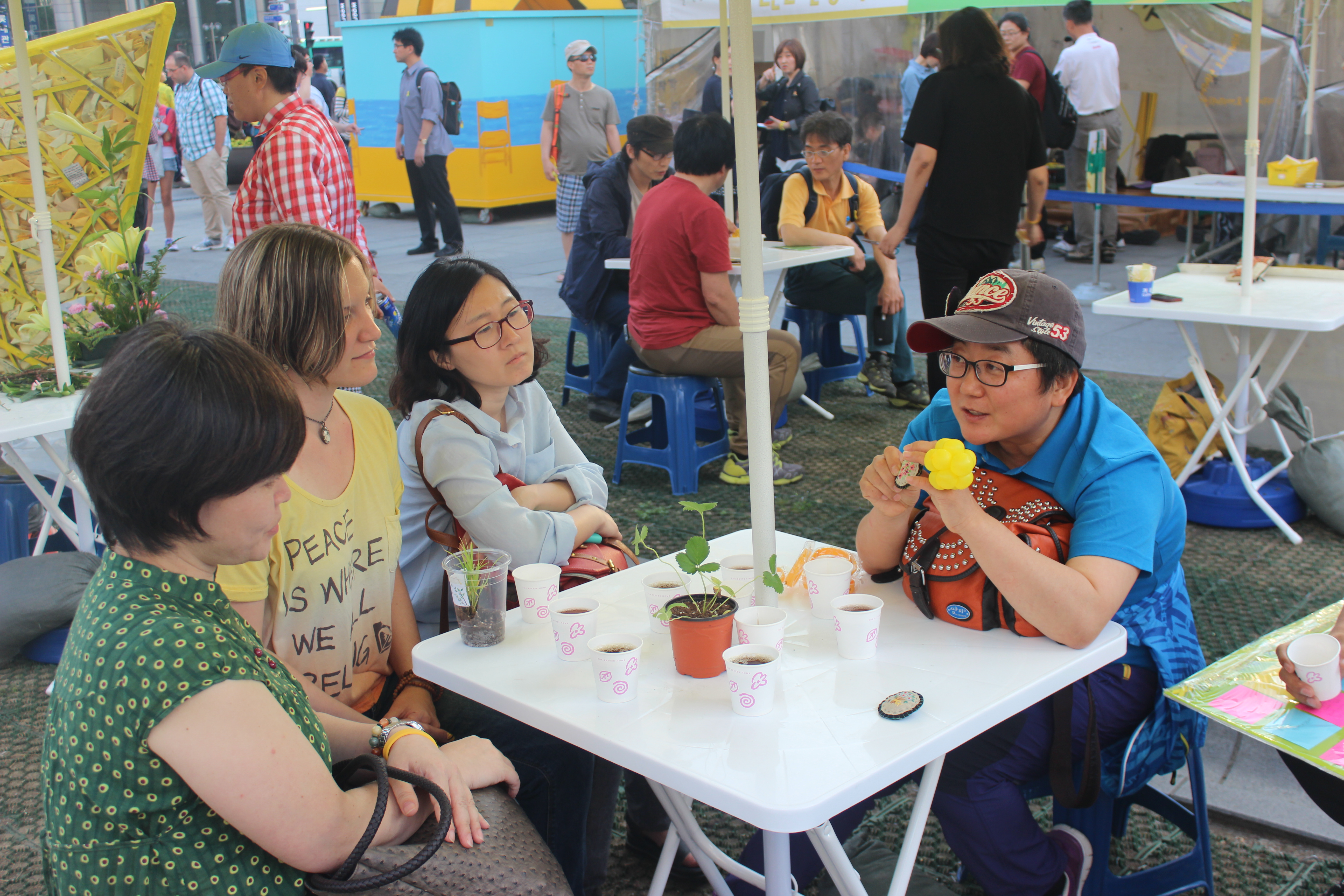
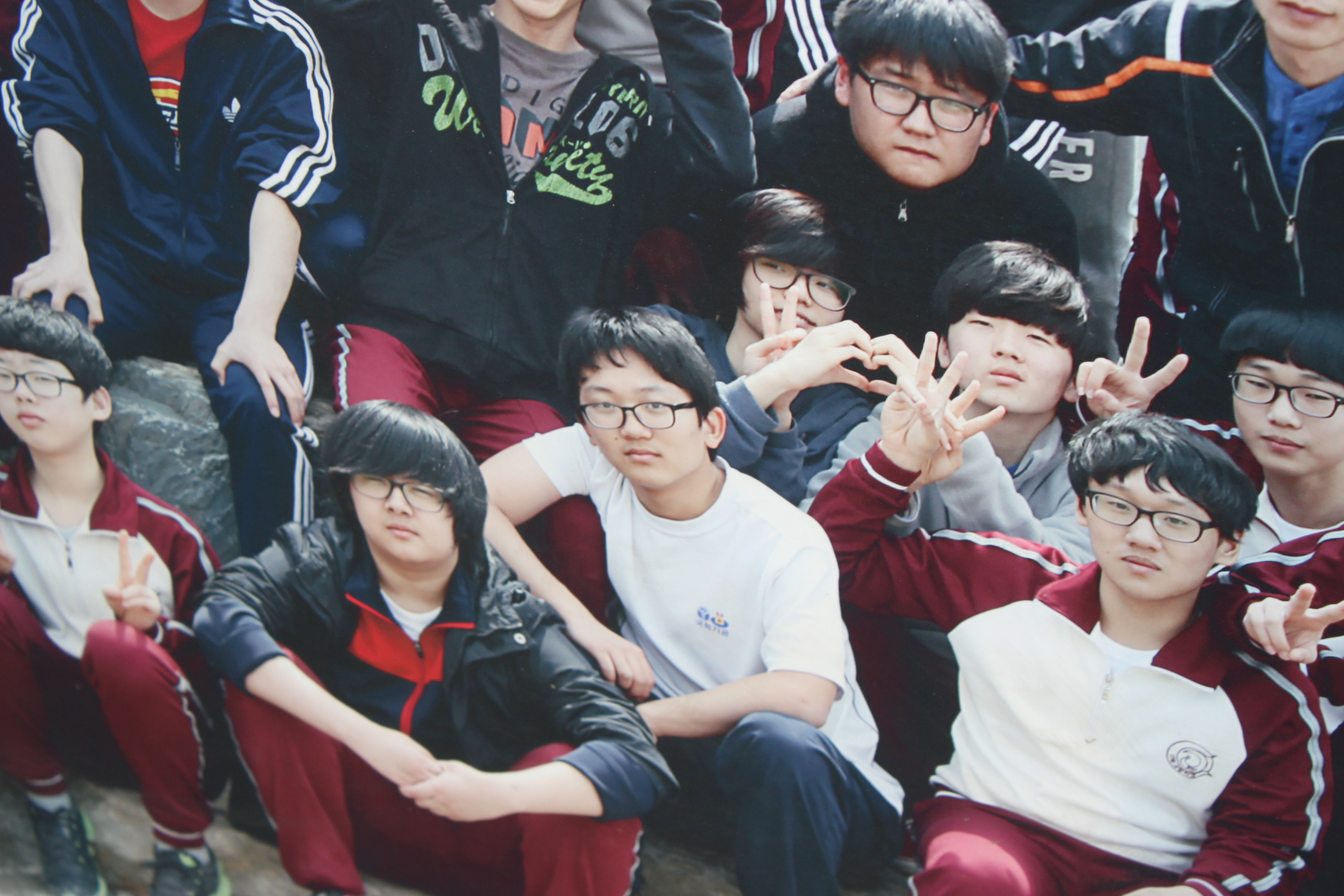
I had the chance to speak with Ms. Hong Yong-mi 홍영미 the mother of one of the Lee Jae-Wook, a victim of the Sewol Ferry sinking. She was out at the Sewol Plaza today and I had a chance to speak with her. She spoke with great honestly and affection about her son.


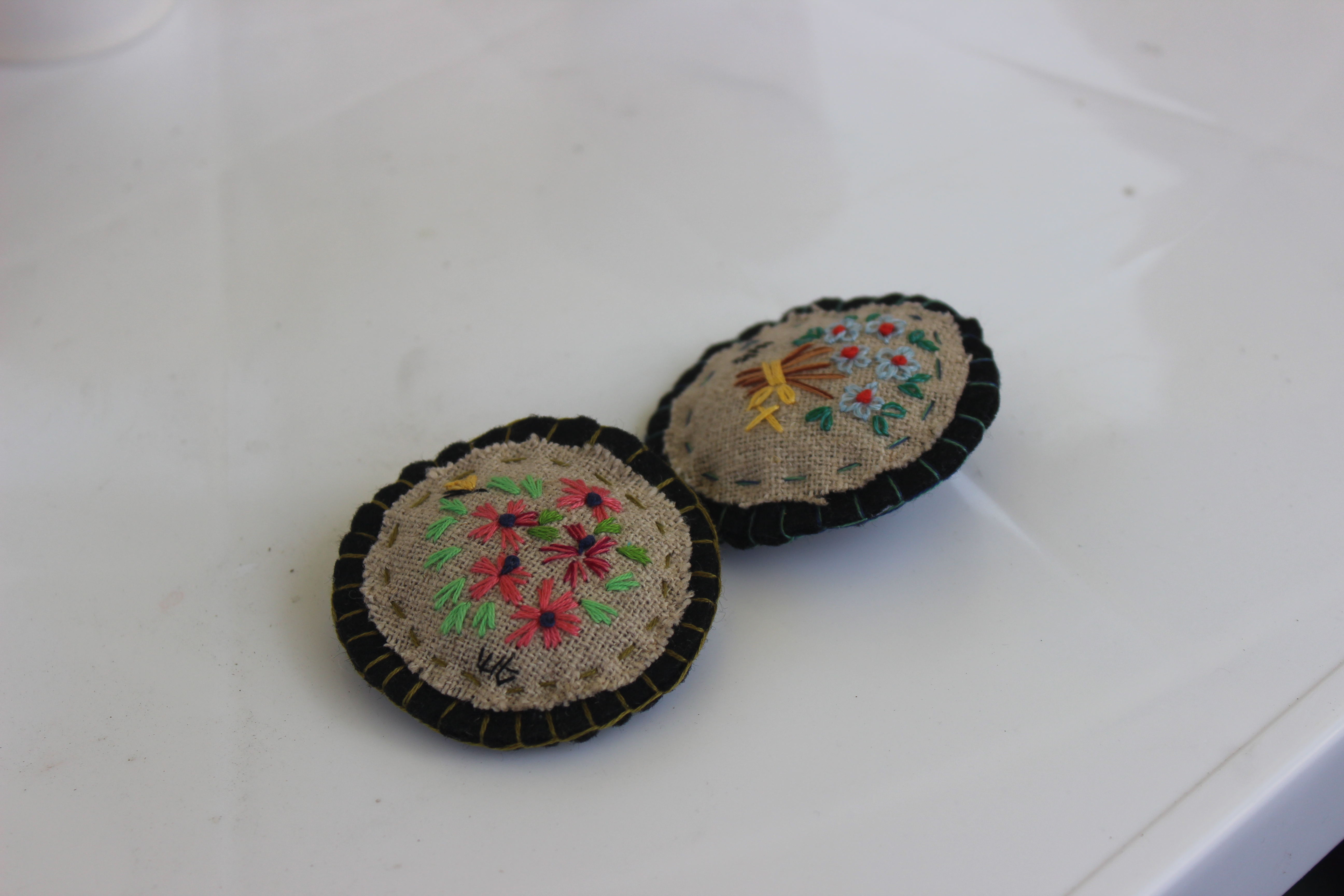
The stitched buttons that Ms. Hong has made by hand to give vistors to Ansan.
Ms. Hong speaks about her son Lee Jae-Wook with great affection

IMG_3073