“A new kind of scholar breaks ground in Korea” in Asia Times

The Asia Times

December 1, 2012


“A new kind of scholar breaks ground in Korea”
By Subadra Arvind

An American expat has found an odd niche in Seoul as a commentator on Korean culture, history and policy not for foreigners, but for Koreans. His name is Emanuel Pastreich, and he writes books in Korean and lectures to government and business leaders about how Korea can make full use of its remarkable assets from organic farming to traditional houses.

Pastreich is employed as a professor at Kyung Hee University and is the founder of The Asia Institute, a think tank based in Seoul. In his best-selling book, Scholars of the World Speak out about Korea, he interviewed leading intellectuals like Francis

Read more

“Prospects for Korean as an International Language” (Guest Report)

“Prospects for Korean as an International Language”

 Craig Urquhart

Guest Report for Circles and Squares  

November 29, 2012


Living in Korea, I often hear things like this from boosters or those within institutions:

l  “Hangeul should be used by more languages around the world. It’s possibly the most regular and best alphabet ever invented. I predict that one day it will be used everywhere.”

l  “Korean can become a true international language.”

l  “Korea is moving up, and one day we’ll be number one!”

l  “Don’t you think Korean food is the best in the world?”

l  “Korea is the most convenient country in the world. It’s the best.”

Often, when these themes are framed as questions, there’s an implicit assumption that if you disagree, you’re a critic, and critics of Korea who aren’t accepted as ideologically proper Koreans are dismissed or viewed with hostility. The opinions of many questioning Koreans, let alone foreign-born Koreans and foreigners, are often not welcome. From a foreigner’s perspective, I’ve found that in personal life, it’s socially dangerous to be anything but hopelessly positive about Korea or Korean culture. In theoretical or academic discussions, a similar veil descends over many people, blinding them to what seems to be something more accurately approaching reality.

Read more

Emanuel’s article in Korea times: “Taking Korean language global: Start with dictionaries”

KOREA TIMES


November 25, 2012

Taking Korean language global: Start with dictionaries

One needs to look no further than the Korean-English and English-Korean dictionary to see where we must start if we want to truly internationalize the teaching of Korean language. Most English-Korean and Korean-English dictionaries (all dictionaries that I have ever seen) are written in a manner that discourages foreigners from learning Korean. I think that it would be easy to create truly foreigner-friendly dictionaries and the investment could revolutionize the status of Korean language around the world.

Most Korean-English and English-Korean dictionaries are difficult or impossible for foreigners to use for the simple reason that they were designed for native speakers of Korean. Such an approach creates a tremendous barrier to learning the Korean language. For example, if you pick up an English-Korean dictionary and look up the word “happy,” this is what you will find: The word “happy” in English is followed by definitions of its various usages in English, given entirely in Korean. These definitions are incomprehensible for a beginning student and even difficult for an intermediate student. These definitions are useless as the international student does not want to know what “happy” means, but rather how to say it idiomatically in Korean.

Read more

The Problem of Introducing Korea Overseas (essay)

The Problem with how Korea is Perceived in the United States
Emanuel Pastreich
November 17, 2012

I worked at the Korean embassy in Washington D.C. for two years from 2005-2007. During that time I served as the editor-in-chief for the official magazine of the Ministry of Foreign Affairs online newspaper “Dynamic Korea” and also as the director of a think tank in the Korean Embassy, known as the “KORUS House,” that ran a very successful lecture series for diplomats, reporters, scholars and businessmen. The experience was tremendously exciting and I much enjoyed the time I spent in that wonderful little room on the fourth floor of the Culture center. There was a small window with a delightful view out over Rock Creek. It was my first time working with Koreans in a serious manner. At the time I was determined to help in the effort to make Korea better understood among policy makers in Washington D.C.

Read more

Emanuel’s talk on the problem with islands: Solutions for the Senkaku-Diaoyu Conflict

“The Problem with Islands:

Long term solutions for the Sengaku-Diaoyu conflict”


Emanuel Pastreich

Director

The Asia Institute

November 2, 2012


The Senkaku Islands (Diaoyu Islands in Chinese) are a set of uninhabited islands not far from Taiwan, the coast of Fujian, People’s Republic of China, and the Japanese island of Yonaguni in Okinawa that have become the site for remarkable dispute between China, Taiwan and Japan. The collision between the Chinese fishing trawler Minjinyu and a Japanese coast guard vessel on the morning of September 7, 2010 (and the subsequent detention and release of the captain of Minjinyu) made a long-brewing dispute over territory into a cause célèbre in China that has taken the form of a series of protests in both China and Japan of a severity not seen in since the Cultural Revolution.

The announcement by the City of Tokyo that it would buy the Senkaku Islands from its private owners, thus conflating private real estate with national territoriality, set off an even more virulent set of protests in China in 2012 that have created a sense of distrust and foreboding in Asia at a time when many looked forward to an age of increasing economic and cultural exchange. 2012 was slated for a series of celebrations to commemorate the fortieth anniversary of the normalization of relations between Japan and the People’s Public of China. All of those events have been cancelled or postponed. In fact, even an innocent conference of comparative literature to which I had been invited was abruptly cancelled. On the Japanese side as well, protests are planned and emotions have run high—a marked contrast to previous demonstrations that were widely ignored in Japan.

[more]

Link to original paper

“The Moral Equivalent of War: Joining with our Chinese Neighbors to Stop the Spread of Deserts in Northeast Asia” by Ambassador Kwon Byung Hyun

This article by Ambassador Kown Byung Hyun, the founder of Future Forests, explains vividly the effort to get youth in both Korea and China involved in the enormous project of confronting the threat of desertification. Future Forests is a close partner of Asia Institute and this article presents quite well the important work that Ambassador Kwon has undertaken.


Ecocity Media

November 2, 2012

link to original article


The Moral Equivalent of War: Joining with our Chinese Neighbors to Stop the Spread of Deserts in Northeast Asia

By Ambassador Kwon Byung Hyun
Former South Korean ambassador to China
Founder & President Future Forest


It seems as if we are constantly preparing to fight the last war and completely unprepared for new challenges. But one needs only travel to the edge of the Kubuchi Desert in Inner Mongolia to see that mankind faces threats on an unprecedented scale that call our for our united action. We must use the full extent of our imagination to come up with solutions to this crisis through new global alliances that require us to completely rethink terms like “security” as we create a new civilization that can lead humans from the dark night of endless consumption to a hopeful future.

My engagement in the long-term effort to stop the spread of deserts in China started from a very distinct personal experience. When I arrived in Beijing in 1998 to serve as ambassador to China, I was greeted by the yellow dust storms. The gales that brought in the sand and dust were very powerful and it was no small shock to see Beijing’s skies preternaturally darkened. I received a phone call from my daughter the next day and she told that the Seoul sky had been covered by the same sandstorm that had blown over from China. I realized that she was talking about same storm I had just witnessed. That phone call awakened me to the crisis. I saw for the first time that we all confronted a common problem that transcends national boundaries. I saw clearly that the problem of the yellow dust I saw in Beijing was my problem, and my family’s problem. It was not just a problem for the Chinese to solve.

Read more

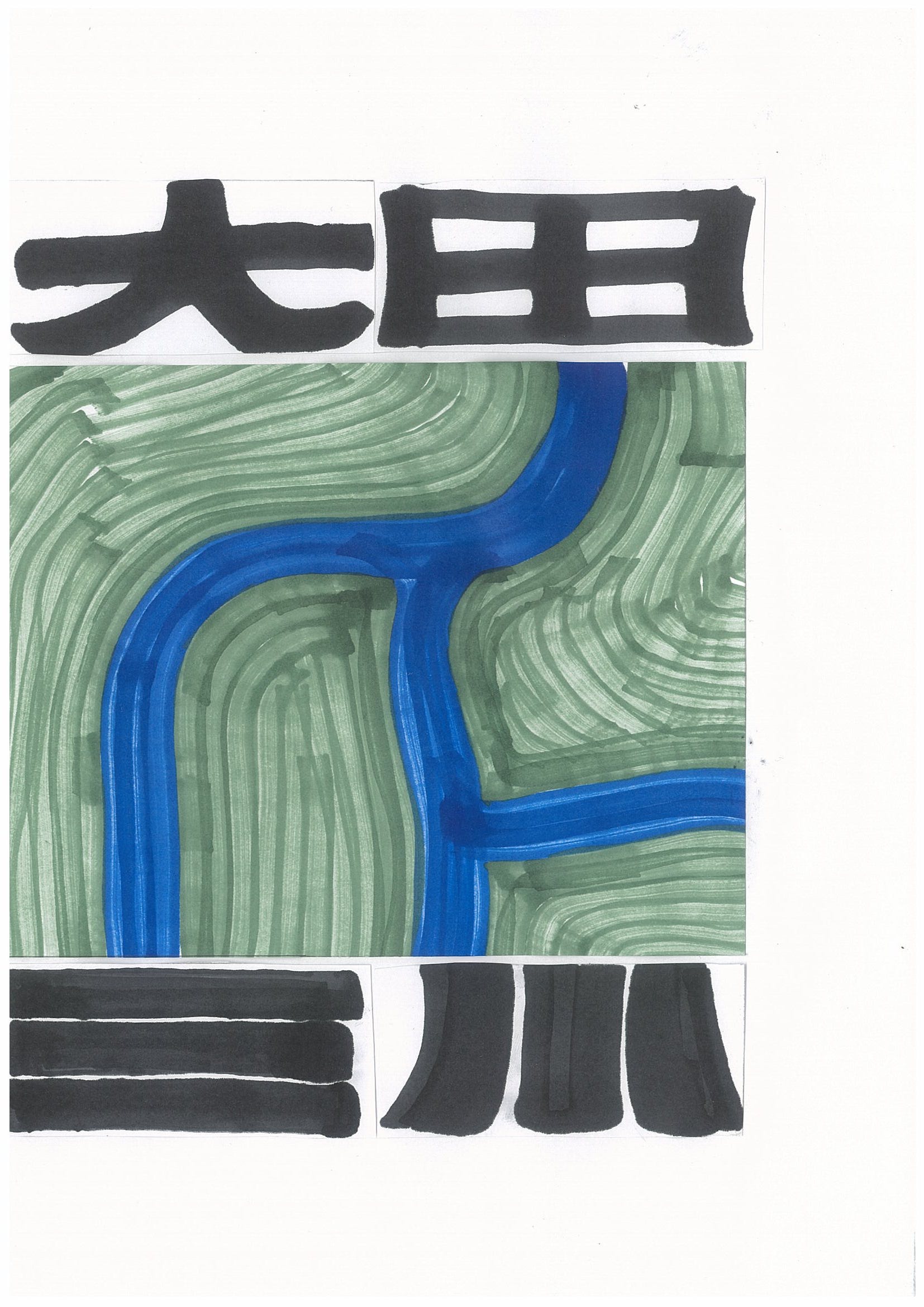
New Version of Daejeon Logo

I recently revised the logo for Daejeon that I designed some two years ago. This time we have gone back to the heavier form that I used in the very first trials. I plan to make mug cups again and will offer them to anyone who is interested.

The three rivers that define Daejeon’s ecosystem: the Gapcheon River, the Yudeung River and the Daejeon River are set against the original green fields that defined “Daejeon” (literally, “big field”)

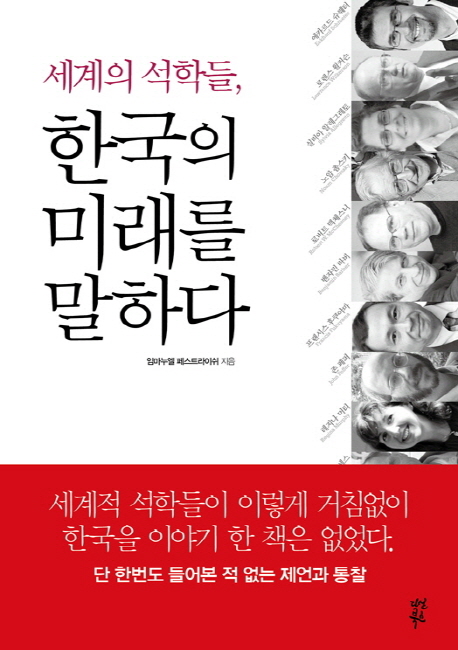
Scholars of the World Speak out about Korea’s Future from Dasan Books

Scholars of the World Speak out about Korea’s Future
Dasan Books
October, 2012
Edited by Emanuel Pastreich

Scholars of the World Speak out about Korea’s Future is a book in Korean language that presents the insights of distinguished scholars from around the world concerning contemporary issues in Korean politics, society and the economy. Released six weeks before the Korean national election, it treats issues such as education, social welfare, populism and North Korea that have been raised in the course of the campaign.
For the first time, a group of international experts present their views about the specifics of Korean society and the relationship of Korean domestic issues to larger global trends. Emanuel Pastreich, associate professor at Kyung Hee University and director of the Asia Institute, interviewed Benjamin Barber, Noam Chomsky, Francis Fukuyama, Lawrence Wilkerson and other important figures in an effort to give Korean readers an insights into how the problems they are faced are linked to larger global trends.

Read more

Upcoming Asia Institute Seminar: “Approaches to the Resolution of Conflict The Role of the Global Civil Society in Constructing a Peaceful Community” November 2, 2012


GCS and Asia Institute

International Peace Seminar to Commemorate

The 31st Anniversary of the UN International Day of Peace


Friday, November 2

10 AM – 12 PM


Topic:

“Approaches to the Resolution of Conflict

The Role of the Global Civil Society in Constructing a Peaceful Community”


The world faces a remarkable number of conflicts today that call for a global effort to bring about long-term resolution.  GCS (Global Common Society) and the Asia Institute have undertaken a concerted effort to identify effective strategies for engaging a variety of stakeholders through work with NGOs and educational institutions to lay the foundations for long-term engagement.  In commemoration of the 31st Anniversary of the UN International Day of Peace, GCS and the Asia Institute will hold a seminar to discuss how the global civil society create the precedents for a global culture that promotes peace.

Introductory remarks: Mr. Charles Cho, Executive Director of GCS

Moderator: Mr. Charles Cho, Executive Director of GCS

Speaker:

Emanuel Pastreich

Director of the Asia Institute

“The Problem with Islands: Strategies for addressing the Sengak-Diaoyu Islands Issue through Education and NGO cooperation”

Speaker:

Baeksoon Lee

Director-General

Ministry of Foreign Affairs and Trade

“Korea’s role in promoting peace”

Speaker:

Lakhvinder Singh, Ph.D.

President of the Indo-Korea Policy Forum

“India’s innovations in encouraging peace and conflict resolution”

Date: Friday, November 2


Time: 10 AM – 12 PM


Location:


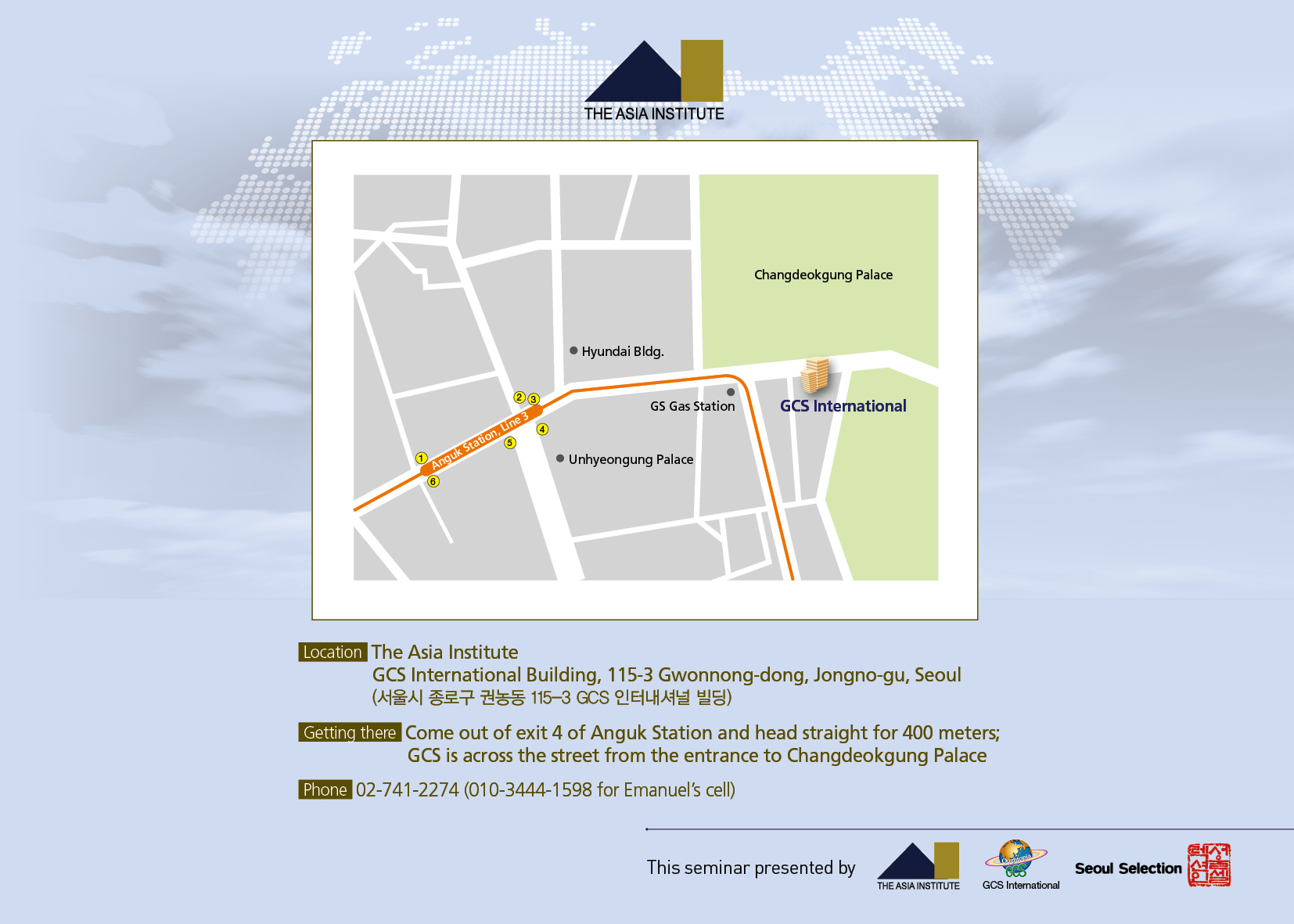
The Asia Institute and GCS International Headquarters

GCS International Building

115-3 Gwonnong-dong, Jongno-gu, Seoul

02 741 2274