“From Pacific Pivot to Green Revolution” in Foreign Policy in Focus

Foreign Policy in Focus

“From Pacific Pivot to Green Revolution”

By John Feffer and Emanuel Pastreich

October 4, 2012

The low rolling hills of the Dalateqi region of Inner Mongolia spread out gently behind a delightful painted farmhouse. Goats and cows graze peacefully on the surrounding fields. But walk due west just 100 meters from the farmhouse and you’ll confront a far less pastoral reality: endless waves of sand, absent any sign of life, that stretch as far as the eye can see.

This is the Kubuchi desert, a monster born of climate change that is slouching inexorably east toward Beijing, 800 kilometers away. Unchecked, it will engulf China’s capital in the not-so-distant future. This beast might not be visible yet in Washington, but strong winds carry its sand to Beijing and Seoul, and some makes it all the way to the east coast of the United States.

Read more

“Looking at Free Trade and Korea’s Position in a Globalized World ” Asia Institute Seminar with Mark Kingwell


“Looking at Free Trade and Korea’s Position in a Globalized World ”


Asia Institute Seminar with Mark Kingwell

May 10, 2012


Mark Kingwell

Professor

Department of Philosophy

University of Toronto


Emanuel Pastreich:

Free Trade agreements, especially with the United States, seem to raise very strong emotional responses in Korea. Koreans associate them with mad cow disease and undue influence of multinational corporations. And yet, oddly, trade agreements with Europe or India have not resulted in that degree of protest.

It seems many see trade liberalization, specifically the KORUS FTA with the United States, as opening the flood gates for influence by American multinational corporations and the import of unhealthy foodstuff. The import of American goods will put Koreans out of work and result in greater interference of the United States in Korea at the local level.

And yet, when it comes to trade, things are not exactly what many people think they are. Many Korean companies are themselves powerful multinationals and the balance of power between the United States and Korea, is far from obvious.

Koreans run around worrying that Americans will come in and just buy up valuable Korean companies and dominate the nation. But in fact, Korea is likely to invest far more in the United States than the United States could possibly invest in Korea over the next decade. If there is a problem in trade, it cannot be reduced to an America vs. Korea equation.


Mark Kingwell:

Some years ago, Canadians went through a similar debate concerning the North American Free Trade Agreement (NAFTA) with the United States and Mexico; but there are two significant differences between Canada’s relationship with the United States and Korea’s.  First, Canada is a resource-rich country. Our historical identity is as lumbermen and hewers of wood or drawers of water and will likely continue to determine our future, at least its immediate version, with respect to the rest of the world.  

Read more

“The Conditions for Engaging North Korea” Asia Institute Seminar with Jon Huntsman

“The Conditions for Engaging North Korea”

Asia Institute Seminar with Jon Huntsman

Former Governor of Utah & Republican candidate for President

9th April 2012


Jon Huntsman

American politician, businessman, and diplomat

Former United States Ambassador to the People’s Republic of China

Former Governor of Utah

Former Republican candidate for the 2012 Republican Presidential Primary


Emanuel Pastreich

Director

The Asia Institute

(Associate Professor, Kyung Hee University)

Emanuel Pastreich:

I wanted to ask you about the prospects for engagement with North Korea from your perspective as someone who has been intimately involved in the diplomatic debate concerning the future of North Korea. The question is not so much about the latest misdeed of North Korea, but rather about what the long-term prospects are. After all, if we want to solve the problem, we must move beyond the latest news cycle.

Many Koreans are confused because, on one hand there has been times of great efforts to engage with North Korea and these have been generally frustrated, and on the other hand there have been efforts to take a harder line towards North Korea at other times, and these efforts also, although they have been successful in some respects, haven’t resolved the problem either.  The question of what to do about North Korea has become a major issue in Korea today.  What do you think is the long term solution to this problem?

Jon Huntsman:

I am not sure we can find an easy answer when we are working with regime that is willing to put everything on the line in maintaining the status quo, in repressing its people with unprecedented cruelty and in saber rattling that sends tremors through the whole region.  I am one person who feels that nothing is going to happen in the short term with North Korea because we find ourselves in the middle of a transition right now and such political transitions always bring out unpredictable behavior from those in power.

Read more

Asia Institute Seminar with Dr. Vyjayanti Raghavan: “An Indian Perspective on the Korean Peninsula”

Asia Institute Seminar

June 2, 2012

“An Indian Perspective on the Korean Peninsula”

Dr. Vyjayanti  Raghavan

Associate Professor

Centre for Japanese, Korean and Northeast Asian Studies

Jawaharlal Nehru University


Emanuel Pastreich

How does the recent tension on the Korean Peninsula look from an Indian Perspective? India has obviously a profoundly different cultural tradition and historical experience. And yet we are quite aware of the fact that India has had any number of conflicts and disagreements over the last sixty years. After all, Pakistan and India were separated in 1947, the exact moment that the divisions between North and South Korea were forming.

Read more

Peace on the Peninsula through Art: Park Sidong’s Seokjangni Art Museum on the DMZ

Peace on the Peninsula through Art

Park Sidong’s Seokjangni Art Museum on the DMZ 

I first visited Park Sidong’s remarkable   Seokjangni Art Museum on the DMZ in March, 2012 after attending a seminar held at a military outpost overlooking North Korea. I was on a panel with artists and scholars discussing how an innovative residency for artists held right on the DMZ could serve as the first step towards bringing peace to the peninsula. The idea struck a chord with me. Could it be that rather than holding yet another seminar or writing yet another op-ed, just having artists practicing art could help facilitate the cultural and ideological shifts required to move beyond the current stalemate? I think there is that  chance.


The sculpture greeting the visitor


Read more

한일관계 “나에게는 꿈이 있습니다” (인사말씀)

2012年7月5日


시의

発表者

韓昇洲 前韓国外交長官

武藤正敏 日本駐韓大使

이만열 (임마누엘 페스트라이쉬) 후마니타스 칼리지


이만열

인사말

저는 오랫동안 일본문학과 한국문학을 연구해 왔어요. 한국과 일본의 문화와 역사를 어느 정도 알고 있고 양쪽에 매우 친한 친구도 많습니다.

이승신 관장님의 시집을 읽어보니까 제1장에 “꿈이 있다면”이라는 시가 있었어요. 그 말을 보고마틴 루터 킹  목사의 “나에게 꿈이 있습니다.” 라는 연설이 생각 났습니다. 이승신 관장님의 시와 킹 목사의 연설에 영감을 받고 말씀을 드립니다.

“나에게는 꿈이 있습니다.”

나에게는 꿈이 있습니다. 한국인과 일본인이 힘을 합쳐서 인류를 위협 하는 최악의 敵을 退治 하는 꿈이 있어요. 그 敵은 이웃나라가 아니고 저희 미래를 위협 하는 환경위기 즉, 기후변화 입니다.  

Read more

How Korean Science and Technology Succeeds in Global Competition

My friend Iwabuchi Hideki, currently working for the Ministry of Education,Culture,Sports,Science & Technology, published a very interesting book this month in which he and his colleagues offer an interpretation of Korea’s success in science and technology aimed at a Japanese audience, suggesting, in a sense, that Japan think of a “Korea as Number One.”

Read more

日韓の未来を考えて 私には夢があります (パストリッチの一言)

この間日韓緊張の最中で自分の日本と韓国の関係に関する夢を述べました。「私には夢があります」という表現は 黒人人権運動の盛りにマーティン・ルーサー・キング牧師がした「私には夢がある」演説からとりました。

講演会「李承信の一行詩の力」

2012年7月5日

報告

韓 昇 洲氏(前韓国外交長官)

武藤正敏氏(日本駐韓大使)

エマニュエル・パストリッチ氏(慶喜大学人文学部教授)

エマニュエル・パストリッチ氏の挨拶

李承信さんの詩集『君の心で花は咲く』には、たいへん大きな文化的・歴史的な意味があります。まず李承信さんは、お母さんの孫戸妍の和歌の伝統を勇気をもって受け継いでおられます。すばらしいことだと思います。李承信さんは、日本語、韓国語の両方であらゆることを文学的に表現しておられます。私の場合は、日本の文学を長く勉強してきたものとして、日本古典文学をアメリカの大学で教えながら、まわりの人々に日本文学のよさを長い間説明してきました。韓国に対しても日本に対しても深い愛情をもっております。同時に、厳しい歴史の矛盾をも見つめてきました。民族の悲しい歴史に対する韓国人の心理もわかります。

今日はアメリカ人として正直にお話いたします。まず日韓関係を考えるとかやはりイエスの言葉が思い浮かびます。

「あなたたちの中で罪を犯したことのない者が、まず、この女に石を投げなさい」

Read more

“The Great Green Wall and the Fight against Desertification in China”

Opening remarks
Thursday, June 28, 2012

Asia Institute Seminar

“The Great Green Wall and the Fight against Desertification in China”

The Asia Institute seminar on the noble fight against desertification was a wake-call for all of us. I must admit that although I was pleased by the enthusiasm of the participants, I was shocked that we did not have a larger crowd. After all, the spread of deserts in China is perhaps the most serious challenge facing East Asia today and is a crisis that calls for a global solution.


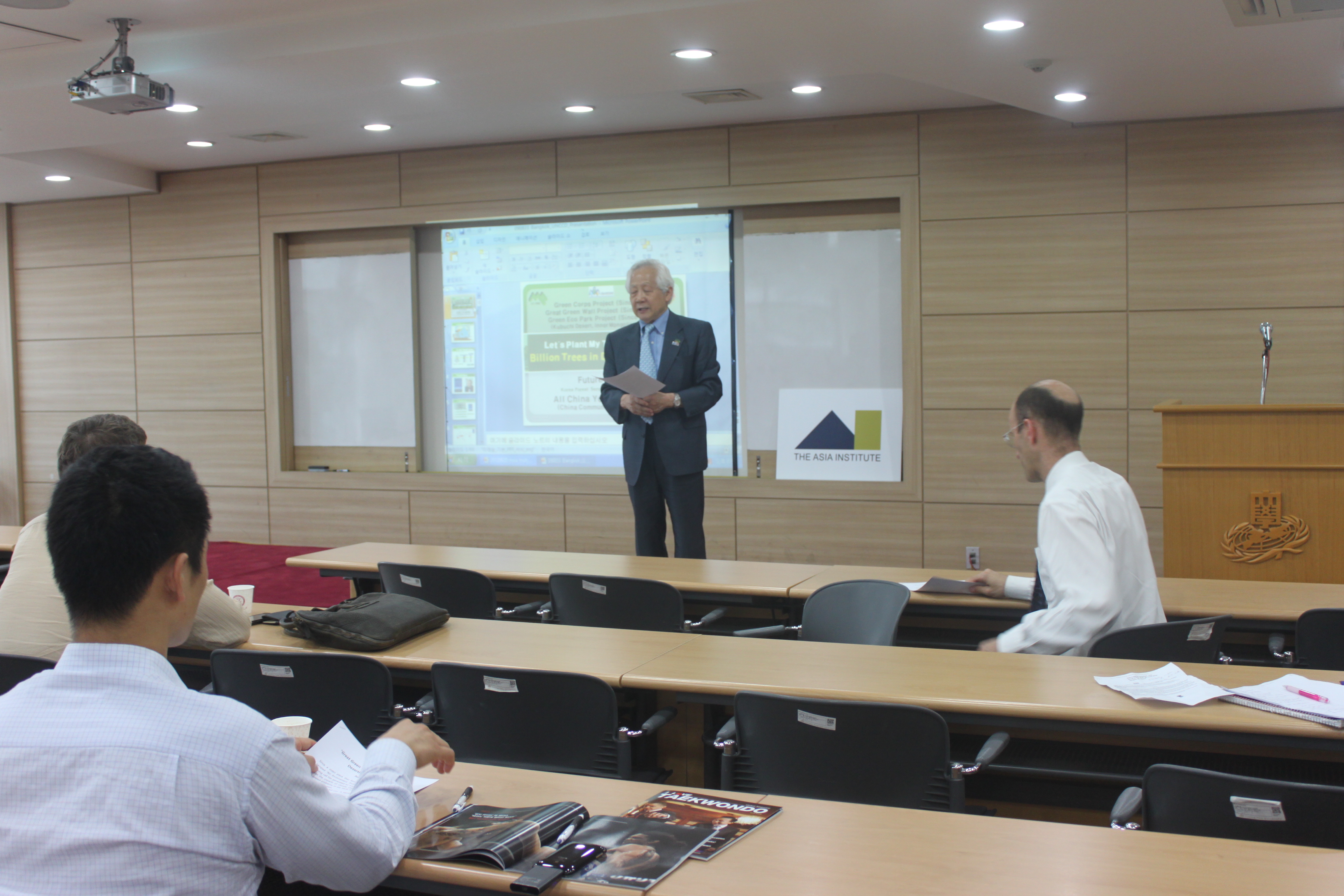
Lecture by Ambassador Kwon

Yet attendance was less than for our seminar on nuclear power in North Korea—an important topic, but not anywhere as significant.

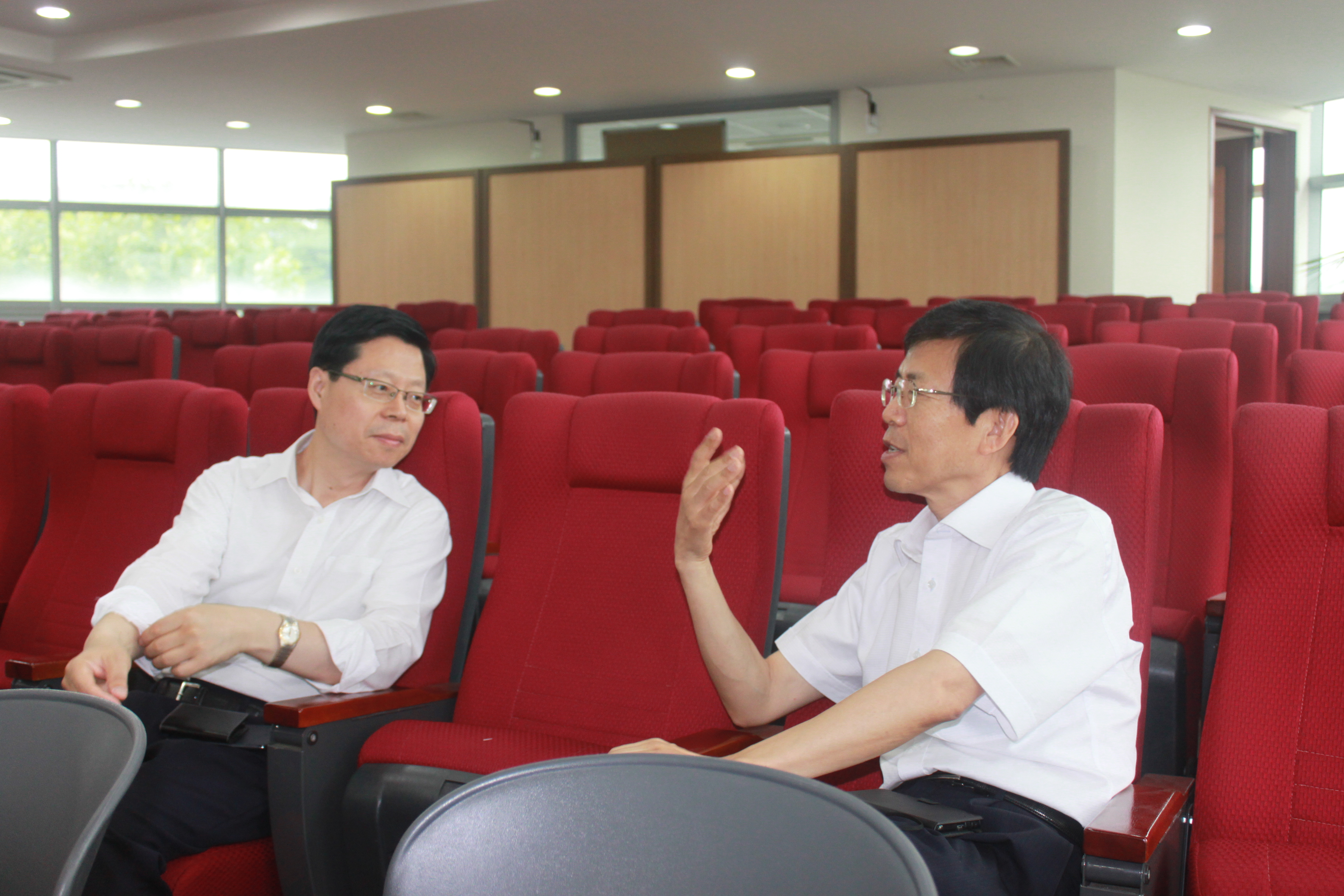
Kwak Sang-soo of Korea Research Institute for Bioscience and Biotechnology talks with David Seol, advisor to Asia Institute for external relations.

Ambassador Kwon Byunghyun spoke about his NGO Future Forest which

Read more