“The Korean Dream” (article in the Hangyoreh, June, 24, 2012)

The Hangyoreh


June 24, 2012


The Korean Dream


Emanuel Pastreich

 The United States became the major cultural force in the world during the 1950s and 1960s, putting forth through its media and its cultural institutions an image of a better life in a free society. The United States offered a powerful vision of a society wherein the individual could realize his or her dreams without the terrible institutional and cultural limits that hold back so many. That image of a good life in the United States was known as the “American Dream.” The American Dream was accompanied by significant intellectual and ethical content such as democratic process, social responsibility, the rule of law and excellence in scholarship and the arts that inspired the world to strive for something greater.

Not everything in the United States was as perfect as the vision given to the world. There were dark aspects of the United States such the hypocrisy of racial discrimination in a nation that spoke of equality and the ruthless pursuit of national interest in a nation that spoke of universal values. Nevertheless, the American Dream inspired people around the world to strive for something greater, to raise their standards for education, for fairness and for democracy to a new level. They stepped forward to demand changes in their countries, to innovate and to create a new society in every corner of the world.
Read more

Asia Institute Seminar “The Great Green Wall and the Fight against Desertification in China” JUNE 28, 2012

Asia Institute Seminar


 The Great Green Wall and the Fight against Desertification in China

Report to the Rio +20 United Nations Conference on Sustainable Development


Thursday, June 28, 2012

6:30-7:30 PM

Read more

Seoul goes Global (this time for real!)

Seoul is stepping into a much accelerated rate of internationalization over the last six months, so much that I would argue that Seoul should no longer be considered as representative of Korea, but put in a new class of global cities that are competing for global domination in economics, culture, education and prestige. That is to say, Seoul is going head to head with Dubai, Singapore, New York, London and Shanghai in a race for the top seat. You can refer to my previous short post on the next Byzantium  for a few thoughts on this phenomenon.

For example Seoul is going through a wave of enormous building projects such as the Dongdaemun History and Culture Park that may well fundamentally alter the landscape of the city.

Read more

“Every Practitioner of International Relations Should Major in Literature” (essay)

Emanuel Pastreich

“Every Practitioner of International Relations Should Major in Literature”

May 14, 2012

The Study of Literature and International Relations

There is a general assumption in the study of international relations that one should have a strong background in economics, development policy or the study of international relations if one wishes to play a significant role in diplomacy or security, whether that role is in government itself, or in the broad range of disciplines related to the global exchanges between NGOs, governments and corporations.

Well, as someone who did not take a single economics class as an undergraduate, and who did not start following international relations with any real seriousness until I was already a professor at University of Illinois, I feel a need to justify why I came to both write about international relations, and to be involved in a variety of activities related to international relations and

Read more

“The Critical New Role of the Traditional Hanok House” (essay by Emanuel Pastreich)

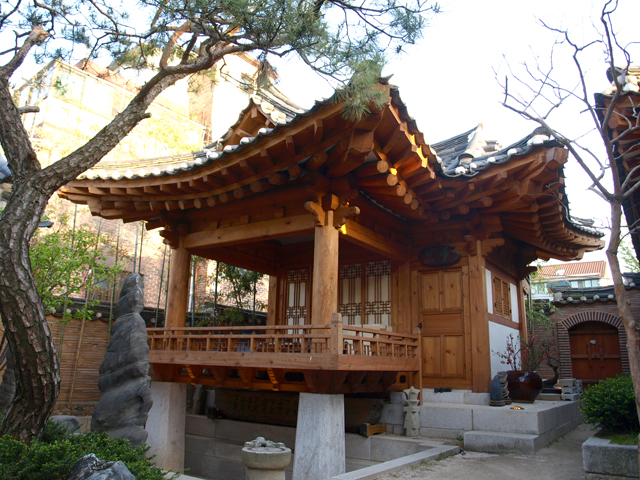
 The Critical New Role of the Traditional Hanok House

Emanuel Pastreich

9 May 2012

At a time that Koreans are playing such a critical role in the most advanced fields of technology, biotechnology, electronics, new materials and nano technology, there is one field of technology in which Korea has been losing ground and that has potential to be a billion dollar industry with profound implications for Korea’s global standing.

That field of technology is the traditional skills of carpentry and design associated with the building of the traditional Korean hanok house  (한옥).  Although few youth would consider this field of technology from the past as interesting career in an age in which new fields of science are opening up, a strong argument can be made that a massive investment in the technology of the hanok house is exactly what Korea needs at this point in its economic development.

Read more

“The Seoul Nuclear Security Summit: New Thinking in Northeast Asia?” (article)

A thoughtful article by Asia Institute’s senior associate Markku Heiskanen on the recent Seoul Nuclear Security Summit with Brookings Institution’s James Goodby.

MARCH 28, 2012

“The Seoul Nuclear Security Summit: New Thinking in Northeast Asia?”

James E. Goodby, Nonresident Senior Fellow, Foreign PolicyCenter for Northeast Asian Policy Studies

Markku Heiskanen, Senior Associate and Program Director, The Asia Institute

The Nautilus Institute

The primary motive for convening the 2010 nuclear security summit was to address the unprecedented threat of nuclear materials in the hands of terrorists. This remains the main task of the summit, but two other security problems will be on the minds of participants: the Fukushima catastrophe of 2011 and the nuclear programs of North Korea and Iran. 

Read more

Out of the frying pan, into the fire “Escape from Camp 14”

The Korea Times featured this article about the North Korea escapee Shin Dong-hyuk and his harrowing struggle for freedom with a focus on the recently published book Escape from Camp 14 which describes that experience. The book was written by the American journalist Blaine Harden.

Read more

Article in Korean on Korea’s democratic tradition from the Joseon Dynasty (in Korean in Kukmin Ilbo newspaper

This article argues that there is much of the democratic tradition in Korea that can be traced back far beyond the democracy movement of the 1980s, back into the Joseon period of the 17th and 18th centuries. The argument may seem somewhat obscure to some, but I would argue that if we see democracy in terms of the balance of power, Korea has a powerful and old tradition that deserves to be treated seriously, and emulated around the world. The Korean model is particularly relevant for China today.

Read more