Would we be better off if we were run by robots?

Of course it is a joke, or mostly a joke, perhaps.

But as we witness the complete inability of humans to regulate themselves and embrace global projects that will start to address the problems of limited natural resources, globalization and climate change, we cannot help wonder whether humans are even capable of rising to the occasion.

When Albert Einstein wrote about world federalism in the 1950s, the facts were already clear: technology has moved so far beyond human’s ability to control that we need a global approach to assuring that technology is used responsibly and global war can be avoided. And yet, although the need for “world federalism” is even greater today, and the world is increasingly integrated by trade and the global exchange of information, if anything, humans are even less capable of coming up with global solutions.
Read more

The Need for Peace: Fukushima and Technology

Many people dismiss the call for global peace as an unrealistic dream of the naive. I do believe that we must uphold high ideals if we hope to achieve anything in this world. But at the same time, there is a practical reason why we cannot afford to contemplate war any more. The cause is none other than the unprecedented acceleration in the rate of technological change. 

Read more

Panel on Cooperation in Energy, Transportation and Environment fields in Northeast Asia at Global Peace Convention

The recent Global Peace Convention in Seoul (November 28-29, 2011) brought together a remarkably diverse group of individuals from NGOs, business and academics to discuss the future of North-South relations. The concept of addressing the North-South division by inviting the input of youth from around the world was particularly striking. See the introductory video for Global Peace Convention for a sense of the approach to North-South relations: 

Read more

Asia Institute Seminar with Noam Chomsky (article in Korean)

White Ink

December 5, 2011

노암 촘스키, ‘나꼼수’에 대해 말하다

위키트리 11.12.05 11:20 하얀잉크

나꼼수 미국원정길에 딴지건 한국정부 향한 노암 촘스키의 대답은?

“만약 이라크 특공대가 조지 부시의 집에 침투해 부시를 암살하고 그 시신을 대서양에 버렸다면 어떻게 반응할 것인지 우리는 자문해야 할지도 모른다”

오사마 빈 라덴이 사살되었던 지난 5월 축제 분위기에 휩싸인 미국사회에 일침을 가했던 지성인. 미국정부의 오사마 빈 라덴 사살은 계획된 살해이며 이것은 명백한 국제법 위반이라고 당당히 밝혔던 이가 바로 노암 촘스키(Noam Chomsky) 교수이다.

Read more

Korean Unification Project

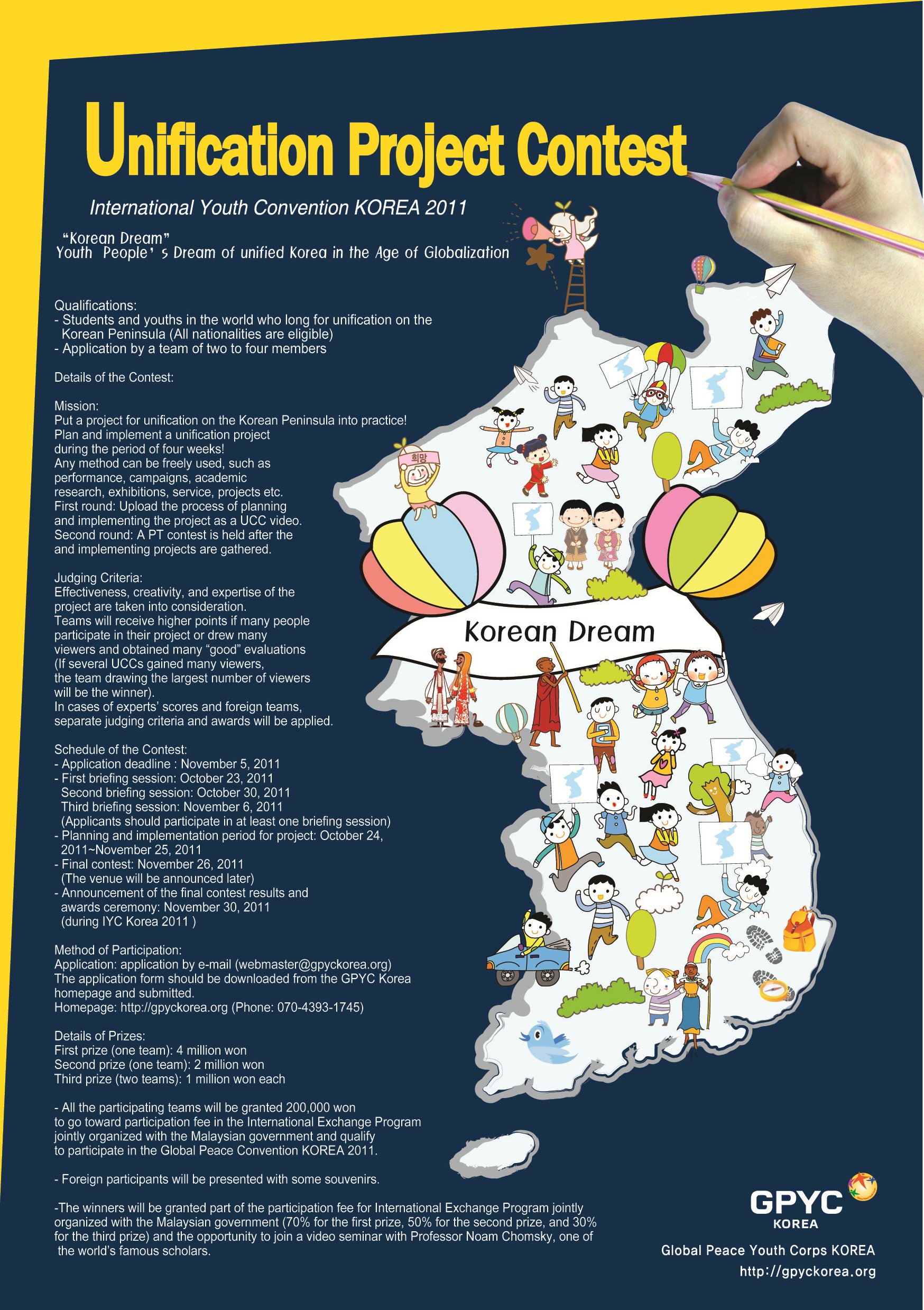
The Global Peace Youth Corps has taken the unusual step of launching this campaign to call on youth, Korean, or any nationality, as part of their annual convention. Since the Asia Institute has launched a biweekly seminar with the Global Peace Youth Corps (GPYC), including a live webinar with Professor Noam Chomksy on December 1, this effort is particularly noteworthy.

What better approach to the bureaucratic gridlock than to have youth offer their own creative solutions and get the conversation flowing? Your ideas are welcome!


GPYC "Unification Project" 2011

Emanuel delivers talks for Hyundai and KIA employees going abroad with families (November 25, 2011)

Emanuel delivered talks for a select group of employees from Hyundai and KIA Motors on November 25 in which he spoke about the need for a vision of the significance of working abroad and the importance of having a family plan for what the stay abroad means for each family members.

Read more

Asia Institute Seminar (November 13, 2011)

The Asia Institute seminar brought together a broad range of experts and students, including students from Japan and even an individual originally from North Korea, to discuss what youth in Korea can do to prepare the way for the future reunification of the Korean Peninsula. The participants broke into two groups: one discussing in Korean and one in English. The results of the seminar will be forthcoming as a short paper.

Read more

The Environment Crisis: Don’t cut Defense Budgets!

It is one of the terrible ironies of this moment that at the same time that we are seeing reports that carbon dioxide emissions jumped 6% between 2009 and 2010 (with the United States and China leading the pack as linked economies), military budgets for traditional warfare are skyrocketing. People seemed to be still deluded into thinking we will fight the next war with missiles and aircraft. The climate war is here, but we are unprepared.

The solution is not to ask ministries of defense to cut their budgets and dedicate that money to planting trees. We all know that as good as the intention may be, such an approach will never work. The only solution is to redefine the concept of “security” and increase the amount of spending within defense ministries on environmental issues. Innovative countries like Korea are capable of making the transition. The only question is whether they can do it quickly enough.

Some individuals may disdain the idea of working closely with the military or “militarizing” the issue of the environment. I would argue that we really do not have any choice at this point.