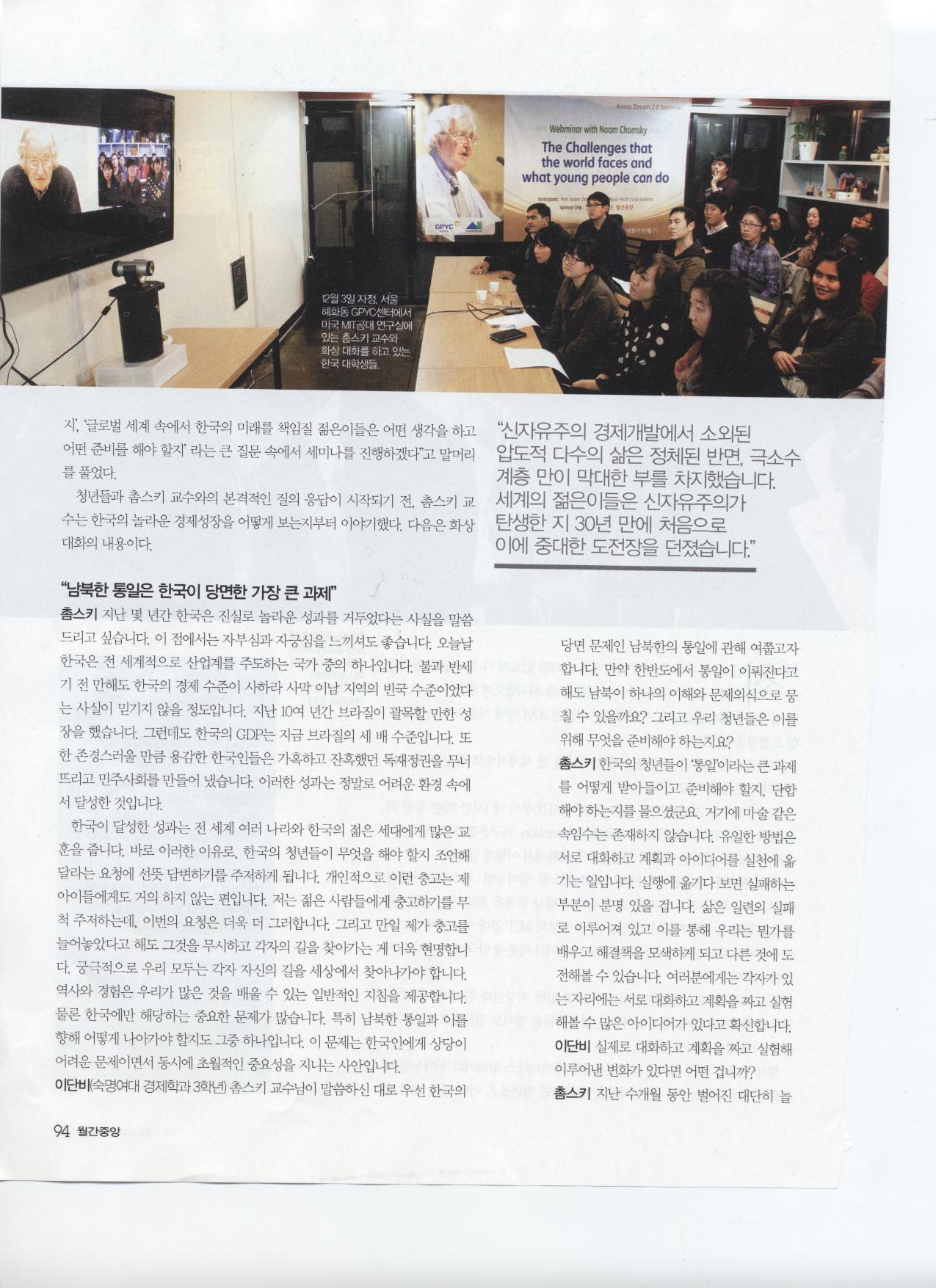
Kyung Hee University’s Founder: Dr. Young Seek Choue (1921-2012)

Young Seek Choue (1921-2012)

Dr. Young Seek Choue was one of most remarkable figures of the post-Korean War period. A man who devoted himself to a vision of peace and education in an age when most Koreans were concerned with the basic challenges of survival and economic development, Dr. Choue was above all a visionary, a man who established and built Kyung Hee University while remaining engaged in a far-sighted plan to “build a civilized world.” He started this project at a time when most Koreans were struggling to feed themselves. He imagined a global role for Korea, deeply engaged with the United Nations, that in the 1950s and 1960s seemed fantastic, but today, with Ban Ki Moon as Secretary General seems most prescient.
Read more

Is the world really becoming smaller?

It is a platitude that the world is growing smaller. Whether reading through Frances Cairncross’s “The Death of Distance” or Thomas Friedman’s “The World is Flat” one gets the impression that the growth of new technologies which link us together reduces distance between us and makes the world smaller, more connected.  Although it is hard to imagine how seven billion people could ever be a single group, a global village, there will be few objections if I say that “technology is making the world smaller” at a cocktail party.

But that assumption is not necessarily true. Let me make two different, related points. 

Read more

Korean Organic Farming: “The Jewel of Great Price” (Report)

Korean Organic Farming: “The Jewel of Great Price”

Emanuel Pastreich

The Asia Institute

January 25, 2012

The Flower of the Dharma Sutra (Fahuajing 法華經) includes a remarkable tale entitled “The Jewel of Great Price” (無價寶珠) that describes quite accurately the state of organic farming in Korea today as a forgotten treasure.

In “The Jewel of Great Price,” a man is given a jewel by a friend as a present. But because the friend sews the jewel safely into the lining of the man’s jacket while he is sleeping and does not have the chance to tell him about it before parting early the next morning, the man suffers through terrible deprivations over years, unaware that he has this priceless jewel right in his own jacket. Only later when he meets up again with his friend does he learn of the treasure that he was carrying with him.

Read more

‘The Korean Dream” Article in Munhwa Ilbo Newspaper (In Korean)

This article in the Munhwa Ilbo Newspaper argues that the Korean Wave of today must evolve into the “Korean Dream” of tomorrow. Like the American dream of the 1950s and 1960s, Korea is in the position to influence how people around the world conceive of themselves and their societies by promoting a “Korean Dream,” an model for thinking and behavior. I suggest that Koreans have to take the full responsibility that comes with great influence and put forth a  new vision of the world and the role of individuals that will have a positive impact. Such a dream must go beyond consumption to engage with spiritual issues and issues of sustainability. The concept of “Korean Dream’ was first introduced to me by the GPFF (Global Peace Festival Foundation” and I have been much impressed by their efforts to create a new model for activity by youth.

Read more

Cartoons and Education in Korea

The question on our minds is: what is unique about Korean education? Well Barack Obama spoke of Korean education several times in his 2011 State of the Union Address, but I did not have the impression that he had any concrete sense of what is unique about Korean education.

If you ask many Koreans, they will tell you that Korean education is a mess and many wish they could send their kids to the United States to escape from the land of forced memorization. But this story also doesn’t seem quite right. I meet many extremely well educated and thoughtful

Read more

“Establishing a Korean Tradition of Democracy to Inspire” (한국어)

“Establishing a Korean Tradition of Democracy to Inspire”

An essay arguing that Korea’s democratic tradition must be traced back over the last thousand years to properly have the depth necessary to inspire the world. We have mistakenly assumed that the Korean democratic tradition is a product of the 1980s, thus unnecessarily limiting its possible impact.

Emanuel Pastreich (이만열)

아시아인스티튜트 

2012년 1월 15일


전통의 재발견과 한국식 민주주의”

민주주의 발전이라는 주제를 갖고 아시아 각국을 바라보면 긍정적인 변화와 더불어 부정적인 변화도 동시에 나타나고 있음을 알 수 있다. 선거를 통해 최고 권력자를 선출하는 나라가 많아지는 현상은 긍정적이지만 정치에 깊은 관심을 잦고 참여 하는 시민들은 오히려 줄고 있다. 그 결과 2년에 한 번 정도 정치인을 상품으로 생각하고 선택하는 형식적 민주주의에서 그친다면 시민들이 정치에 대해 실질적인 영향을 미치지 못하고 의식이 있는 사람들이 정치를 하지 않는 악순환이 조성된다. 이런 현상은 현대 아시아에서, 그리고 전 세계적으로 나타나고 있고 민주주의 위기가 임박했다는 진단을 내릴 수도 있다.

Read more

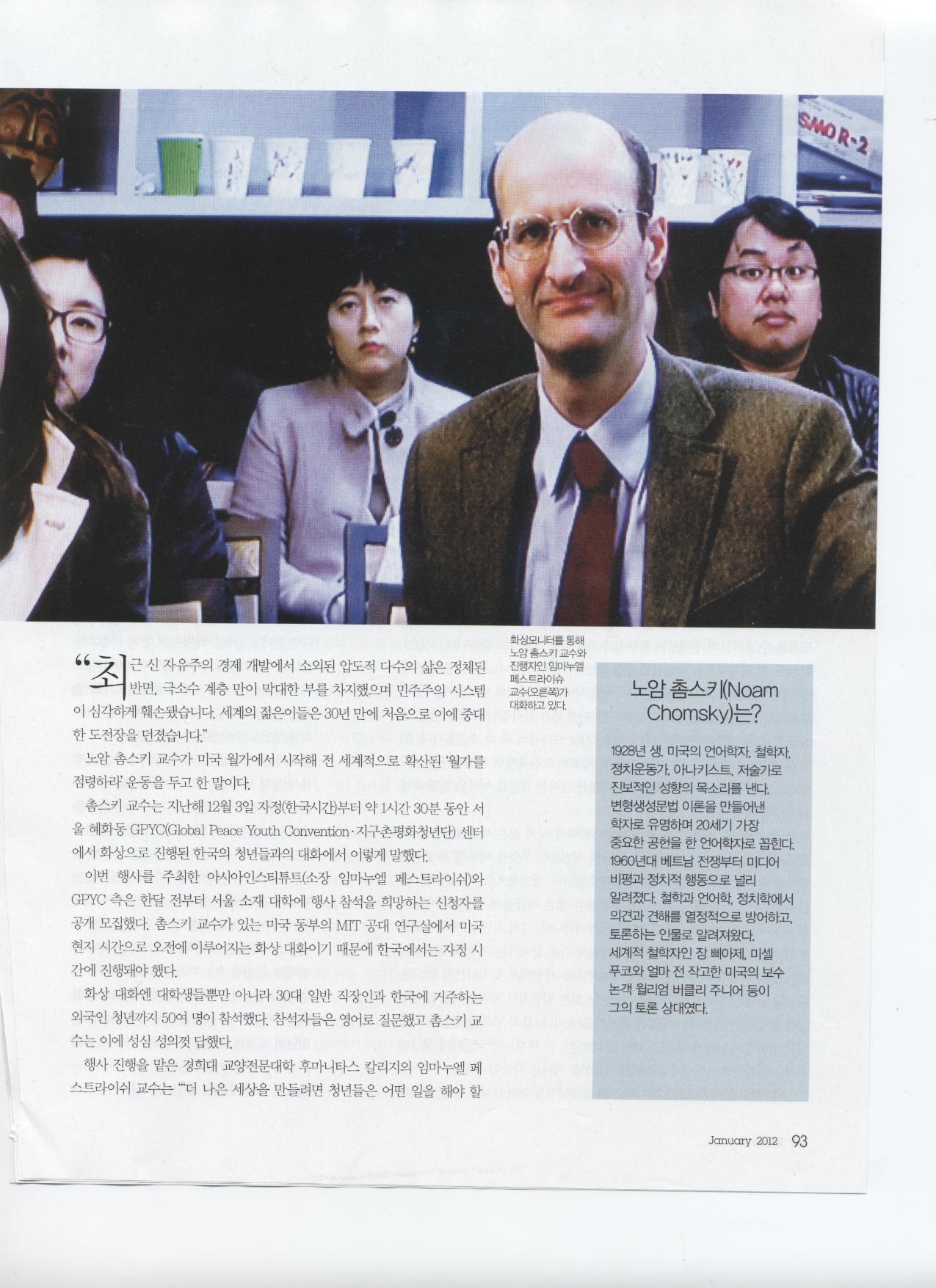
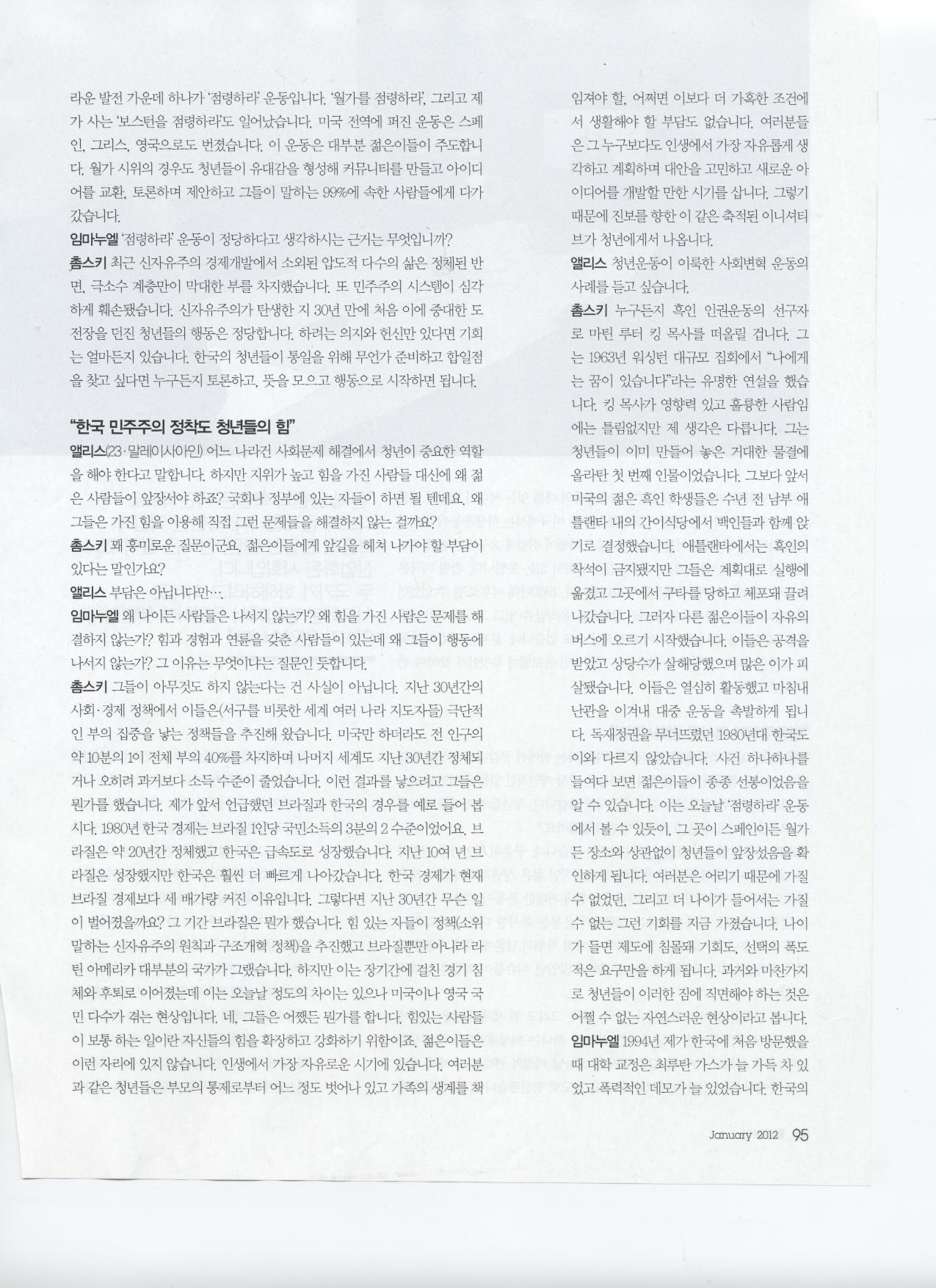
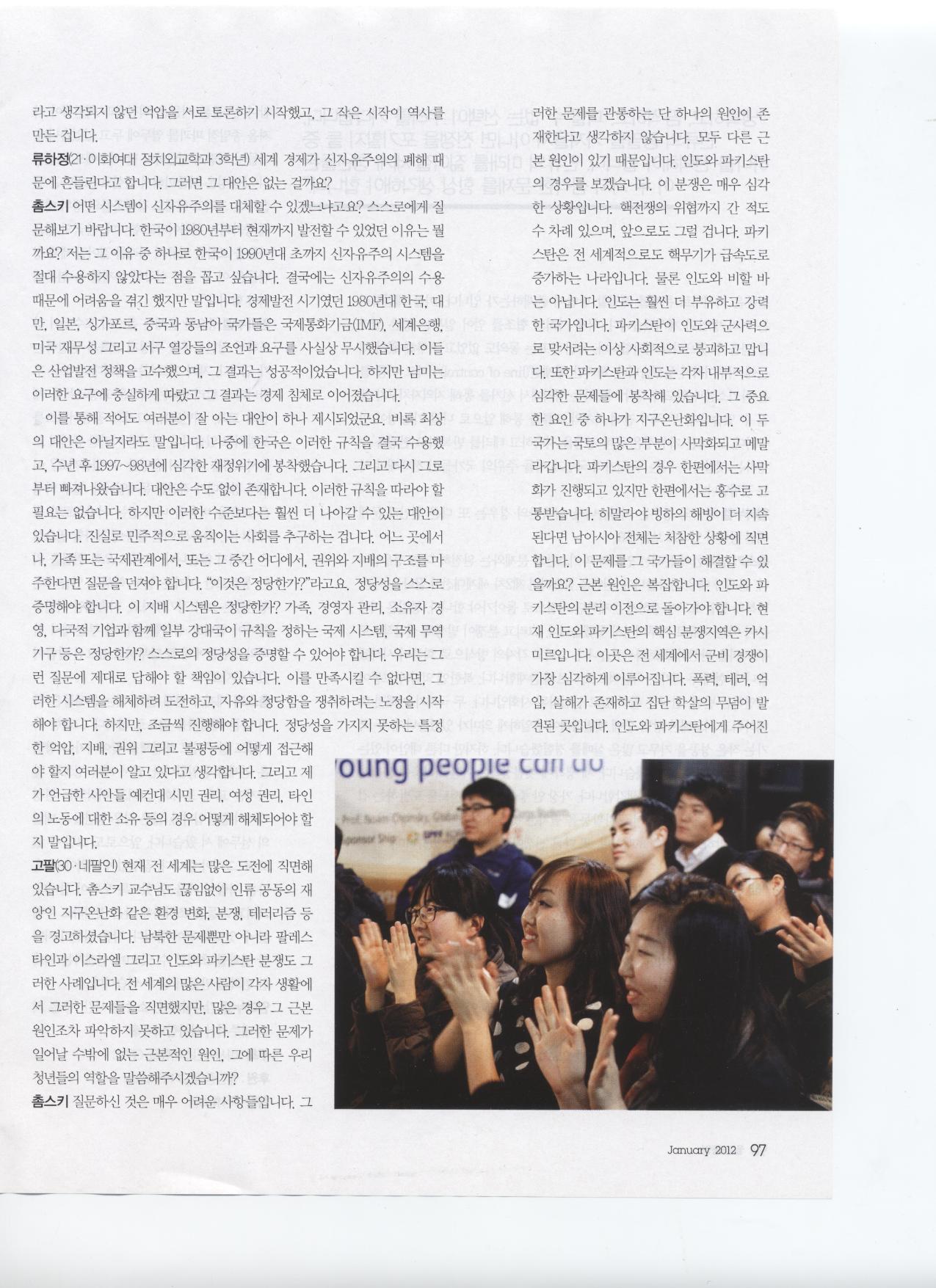
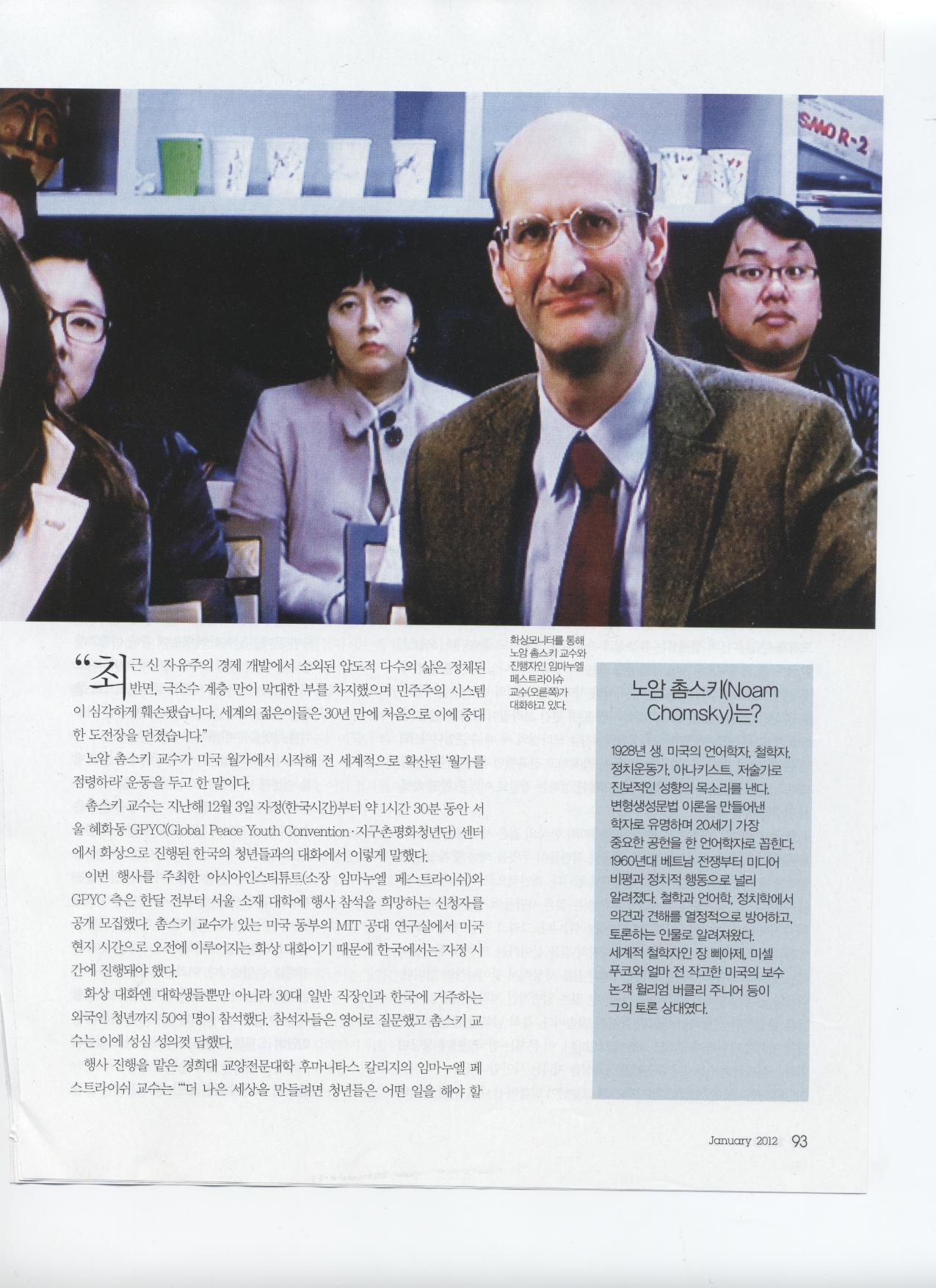
Asia Institute Seminar with Noam Chomsky (December 3, 2011)

December 3, 2011
Emanuel Pastreich with Professor Noam Chomsky

Asia Institute Seminar

The Asia Institute with GPYC Korea (Global Peace Youth Corps)


Emanuel Pastreich:  

Recently we have seen quite a bit reporting about a reengagement of the Obama Administration in East Asia and actions that are perceived as an effort to encircle and contain China. Most notable is the agreement to deploy 2,500 US Marines in Darwin announced during President Obama’s November visit to Australia. Well certainly reading through the New York Times you might think that the United States has surrounded China. But there is plenty of evidence that it is in fact the United States that is increasingly isolated from the world. We find increasingly that it is the United States that is difficult to get visas for entry and the United States that is isolated in the international community.

Read more

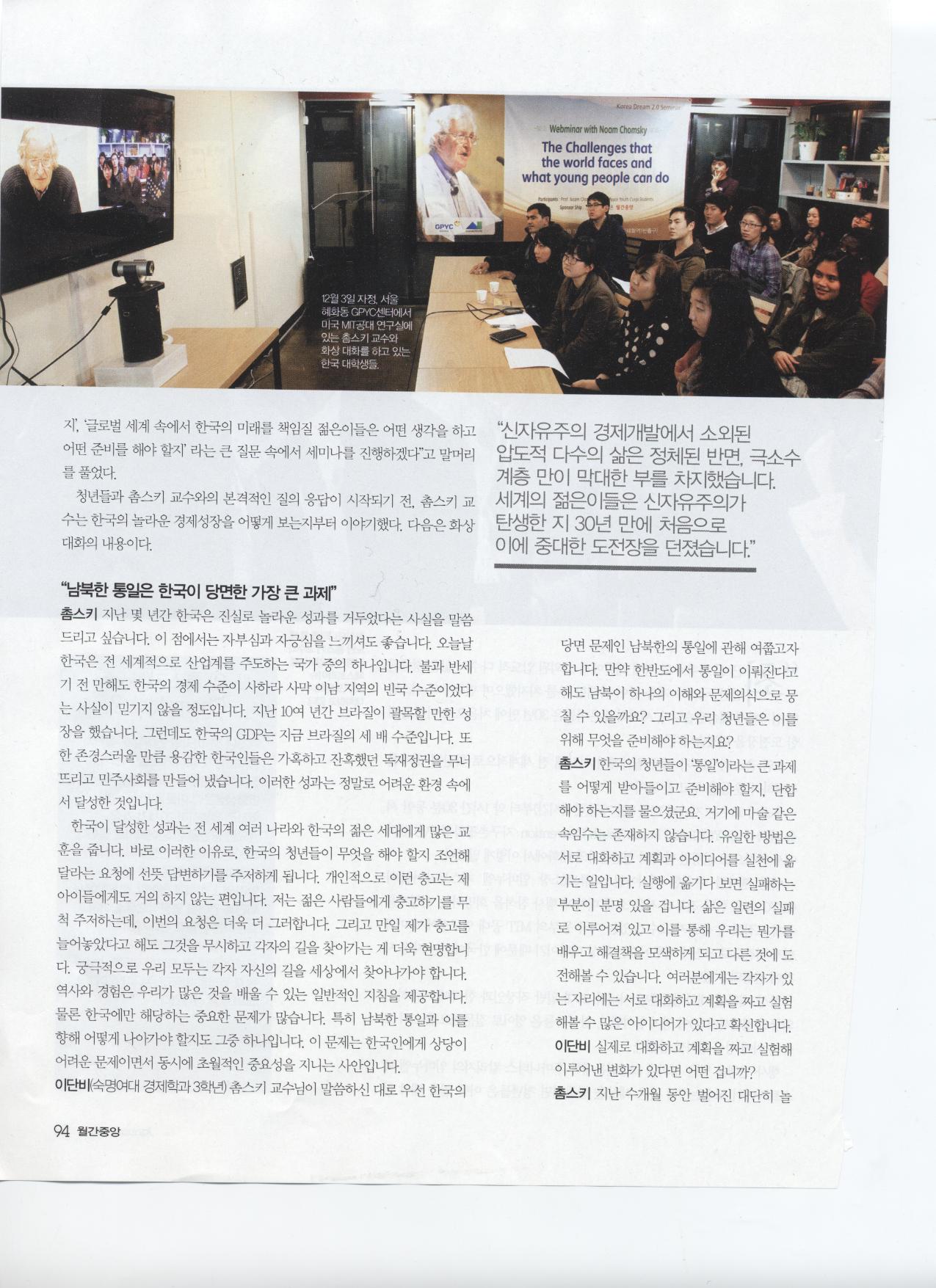
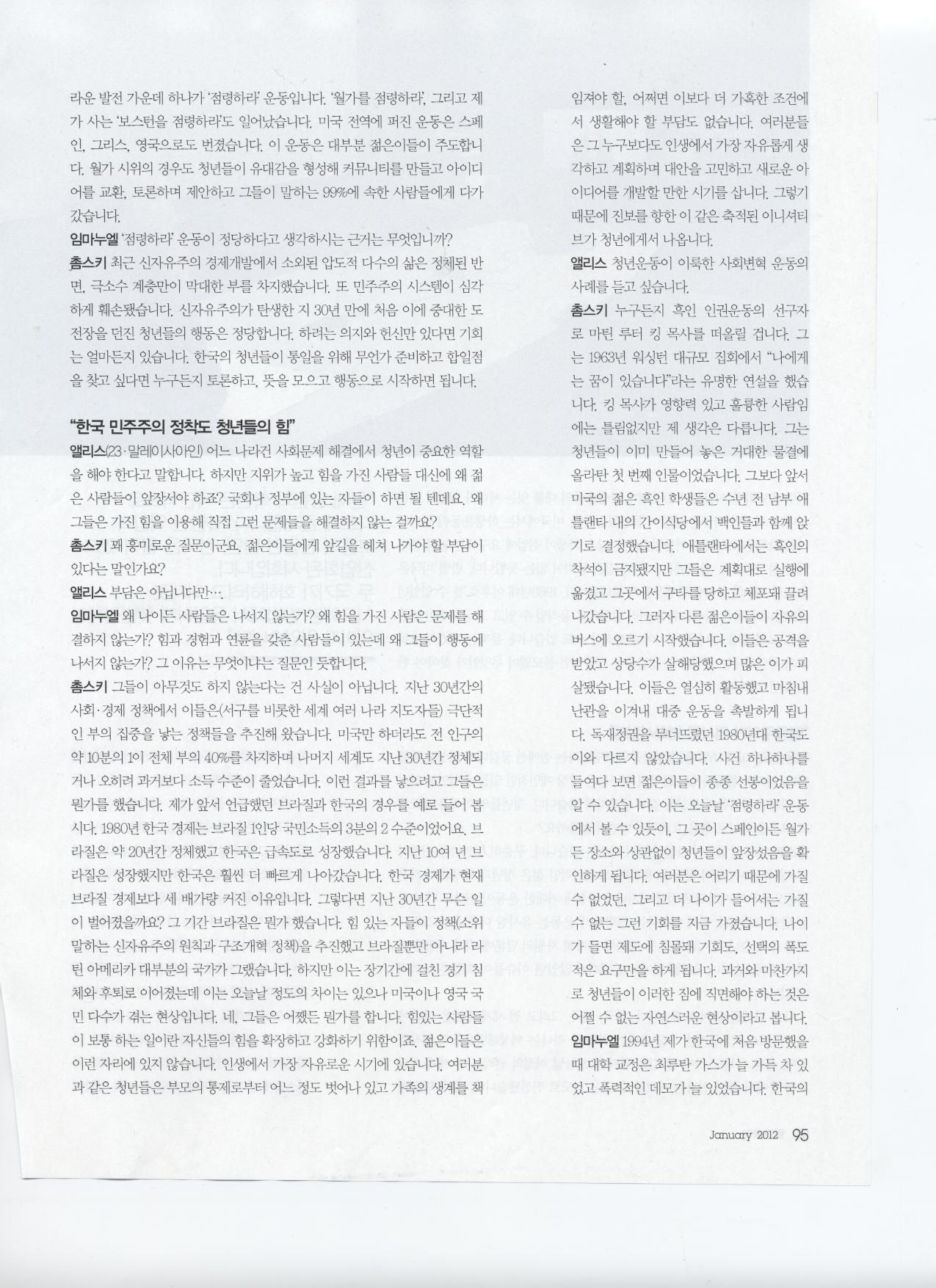
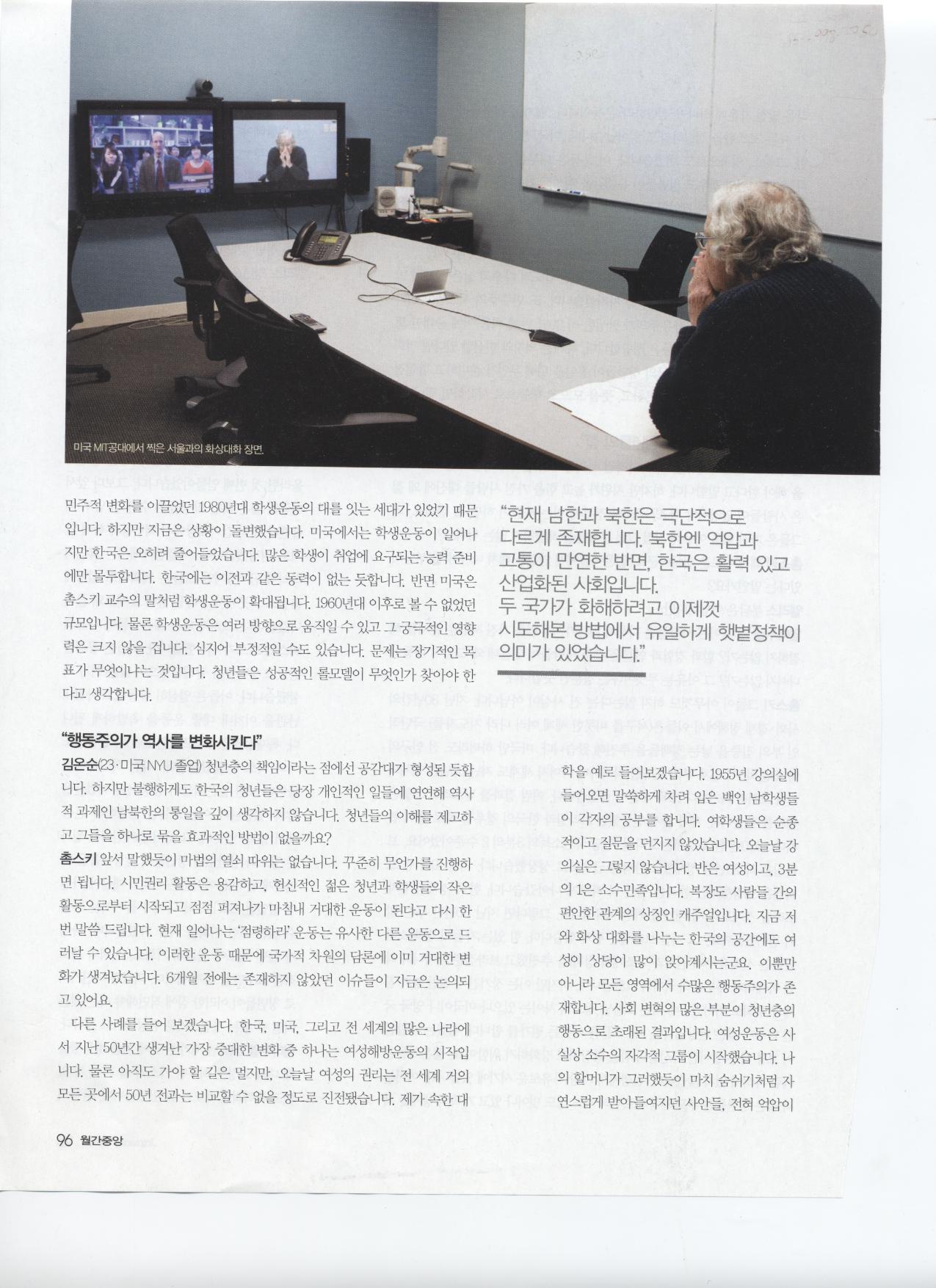
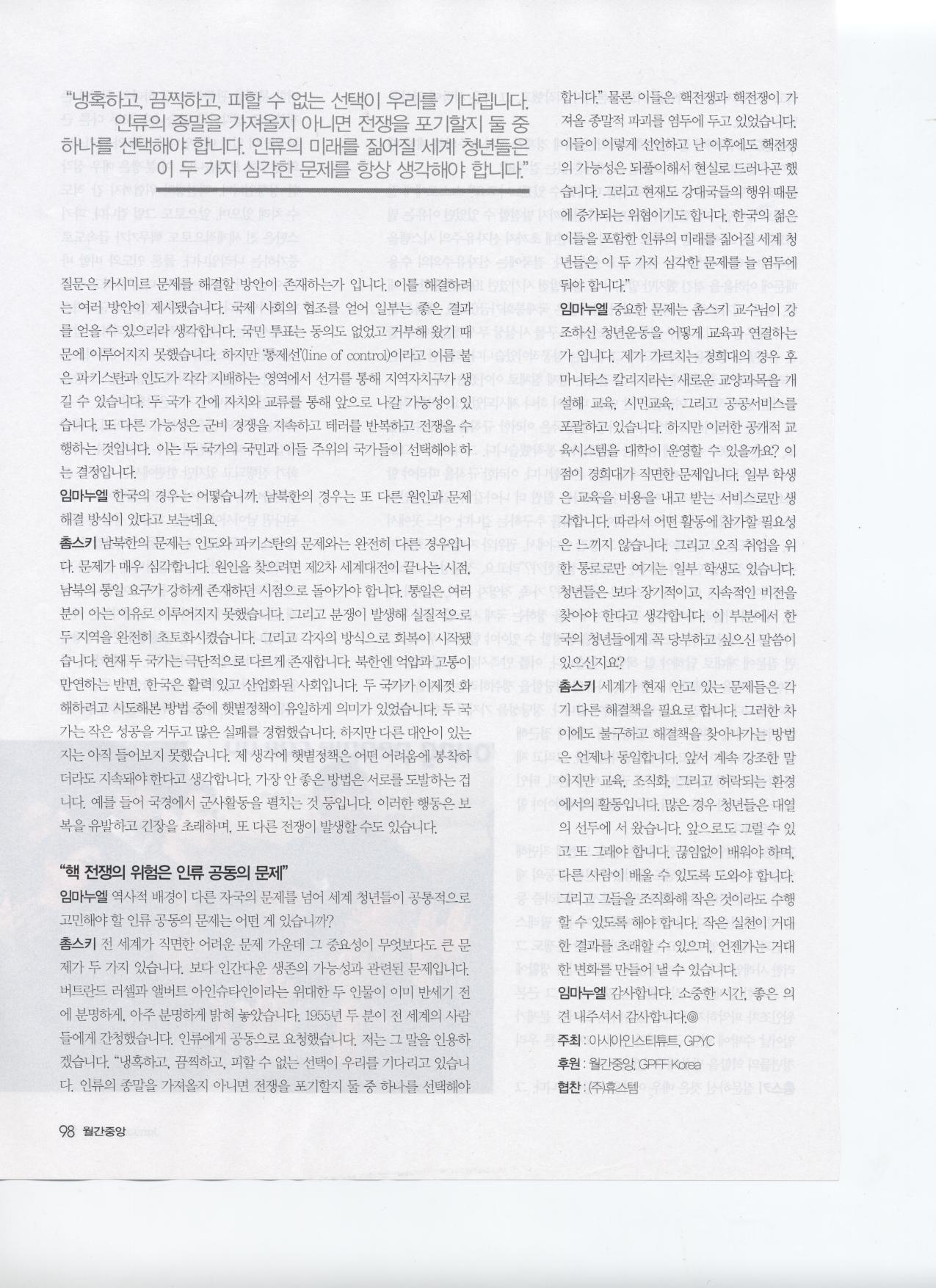
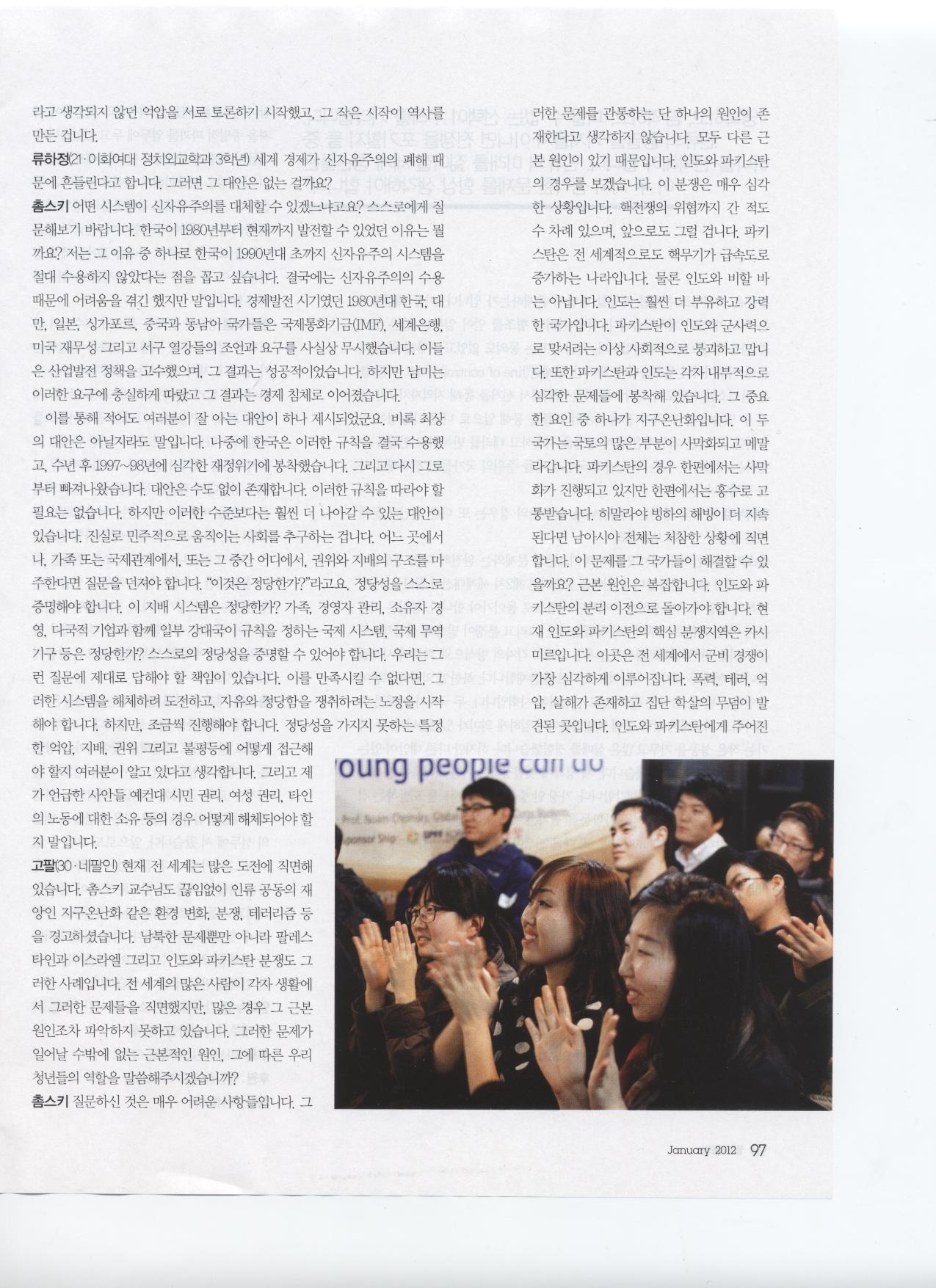
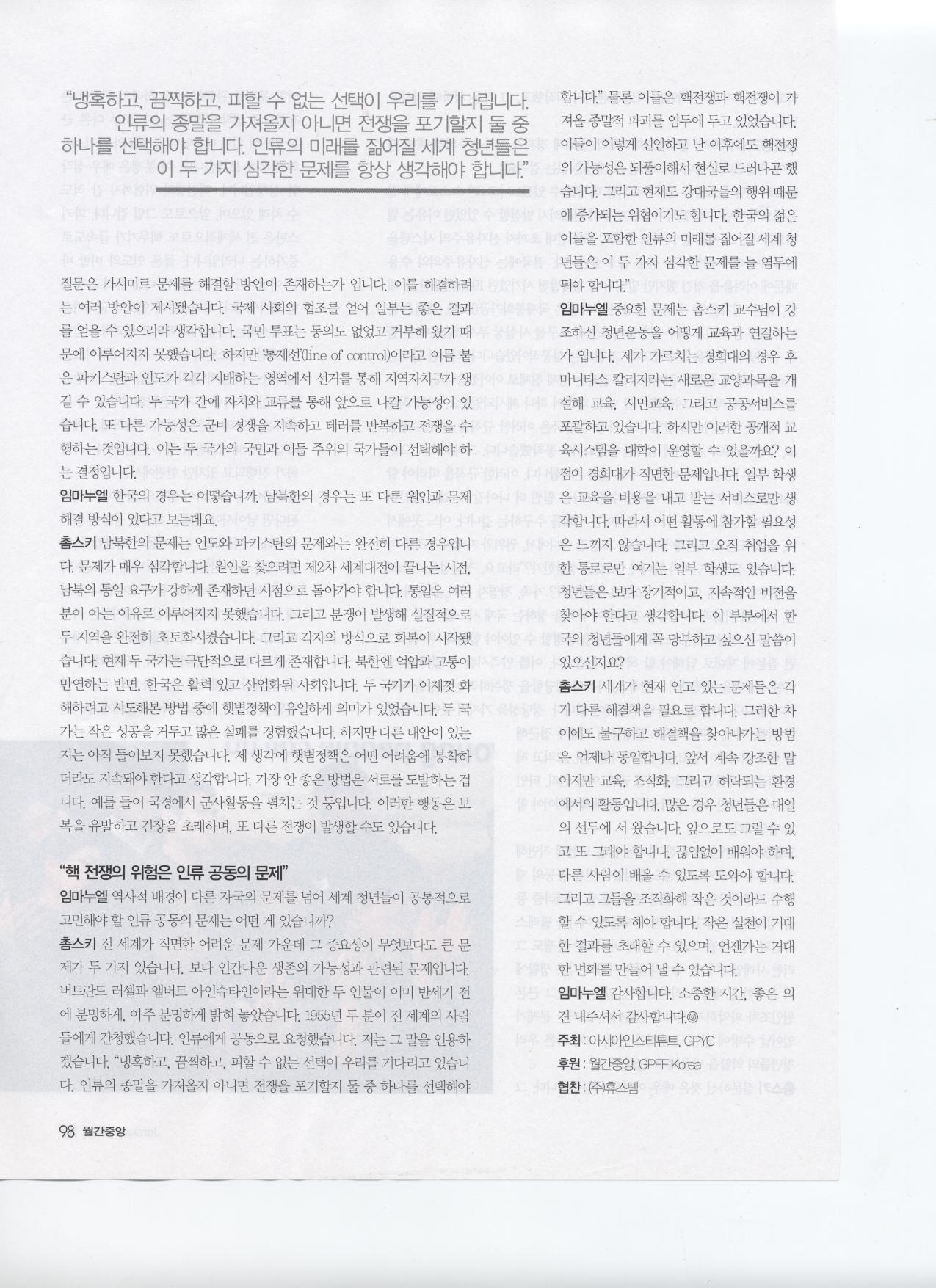
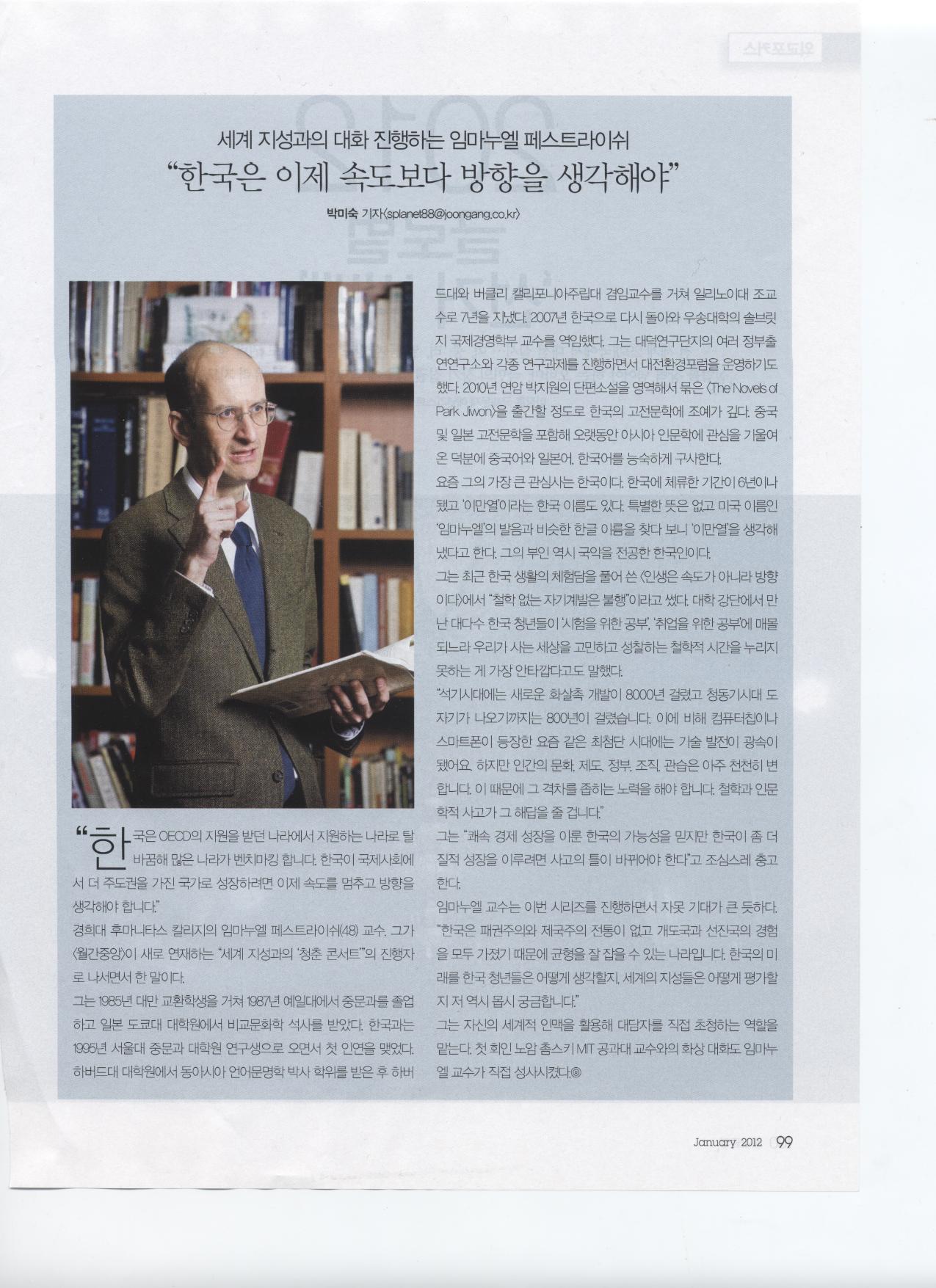
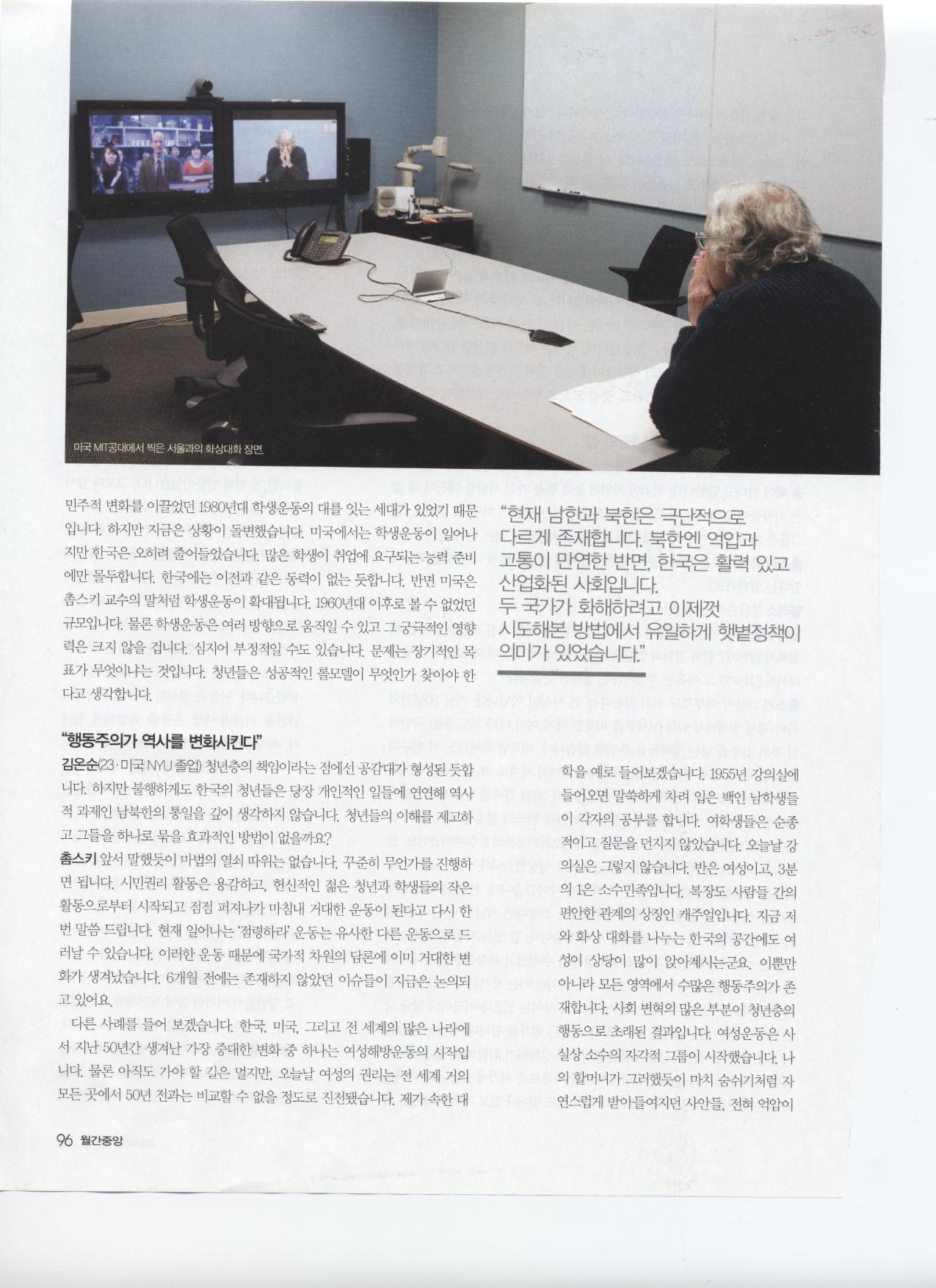
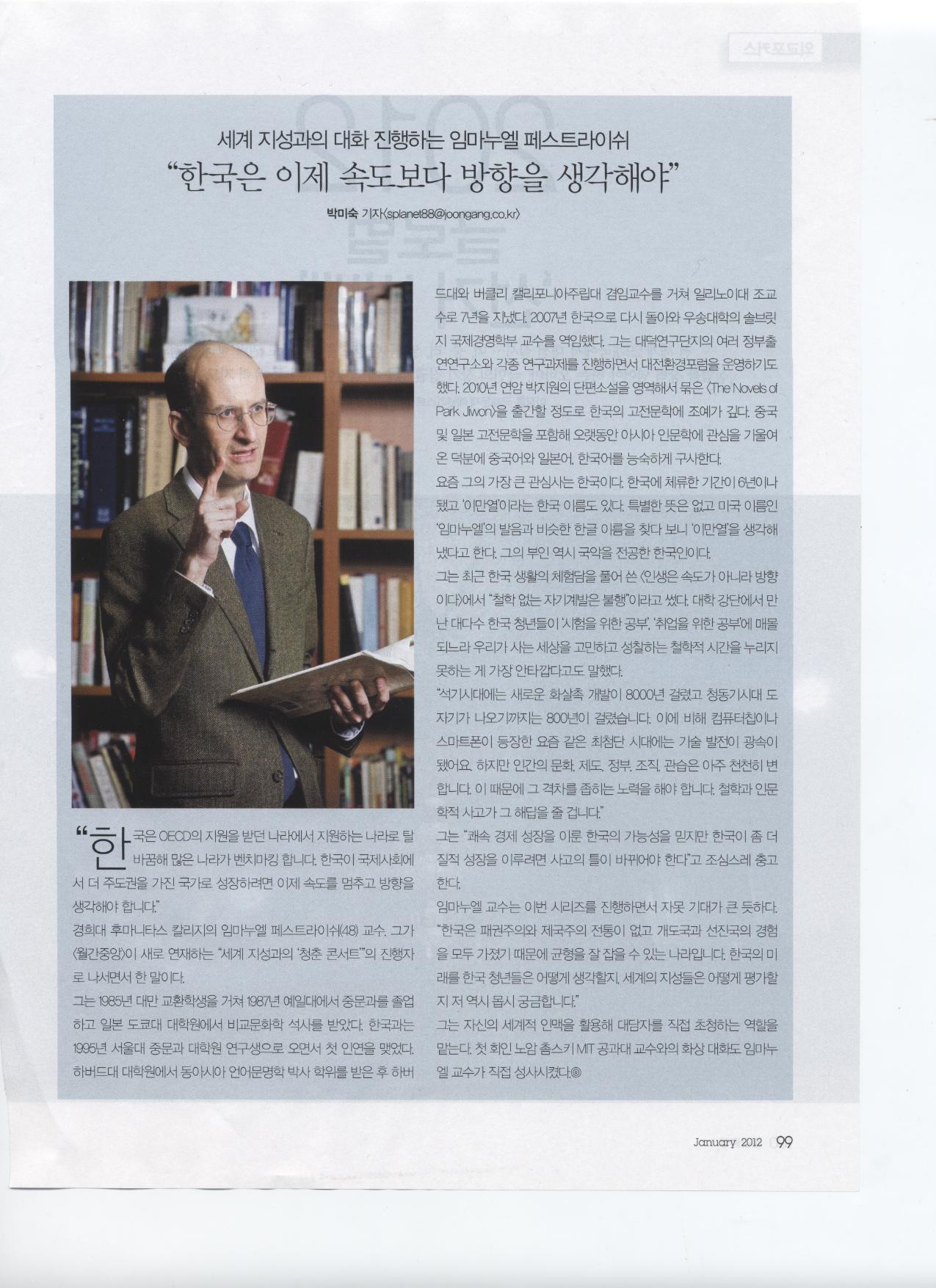
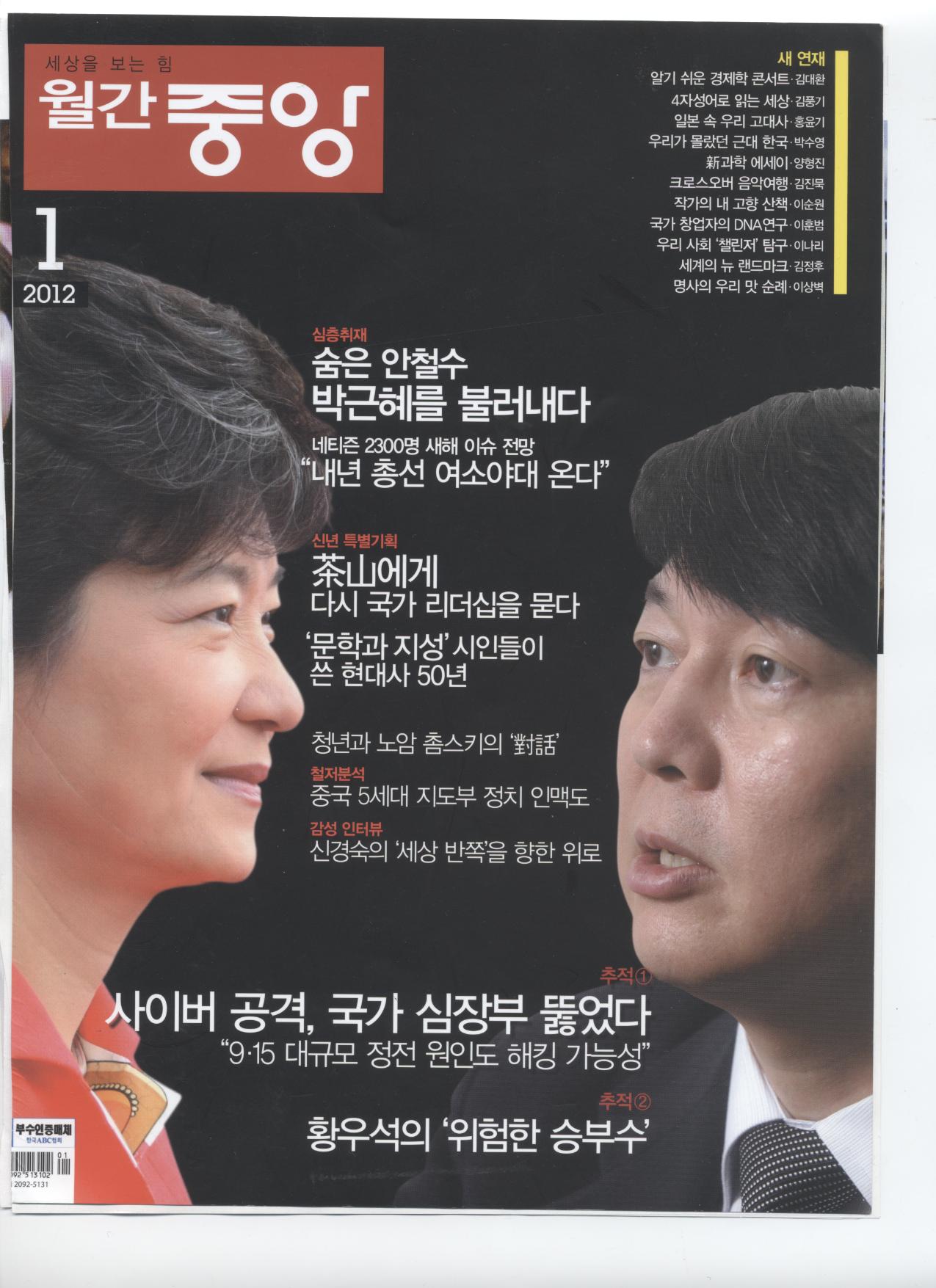
Jung Ang Monthly Magazine Article Features Asia Institute Seminar with Noam Chomsky (article in Korean)

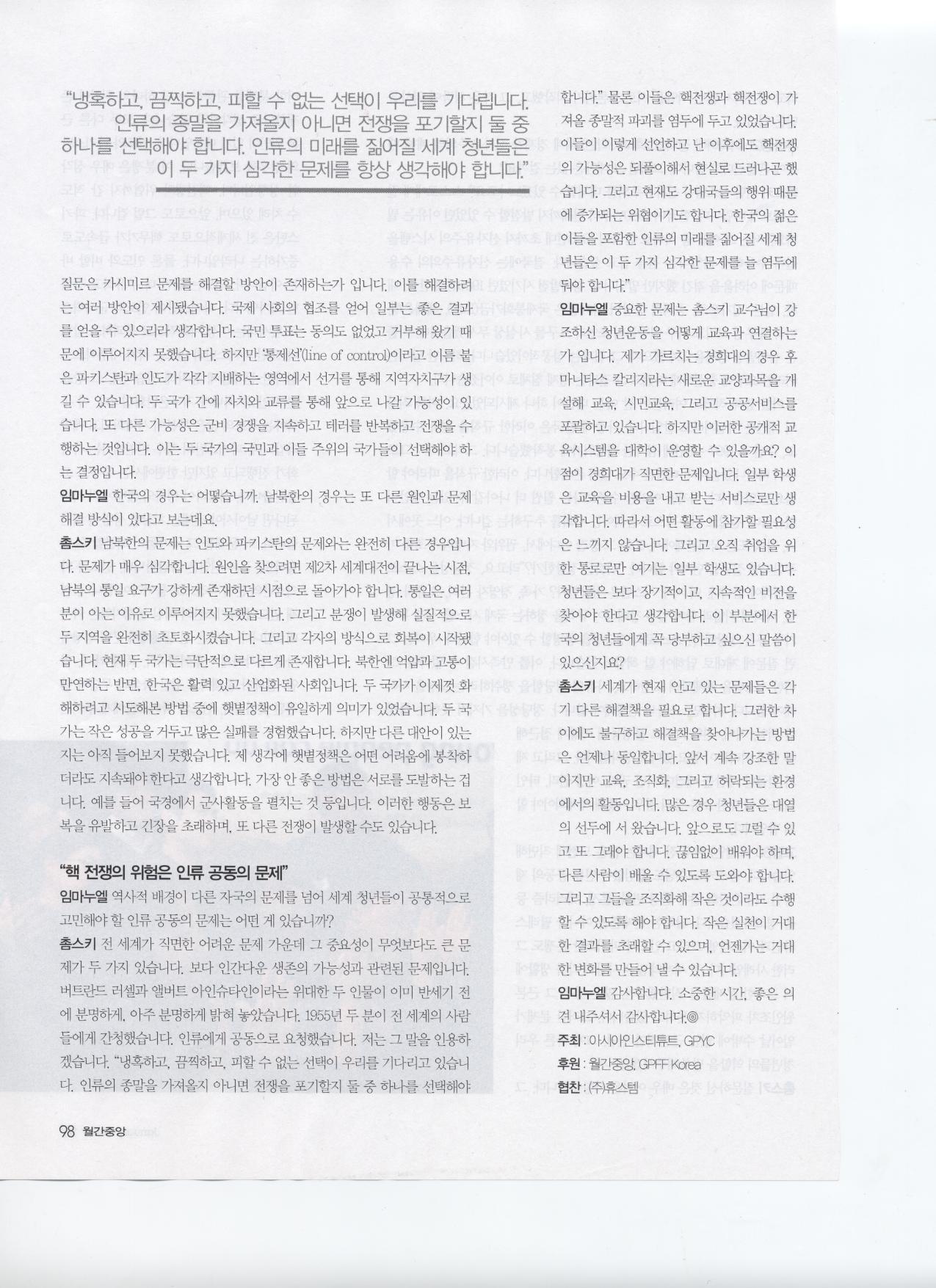
The December issue of Jung Ang Monthly Magazine (월간중앙) featured an extended article on our recent webinar with Professor Noam Chomsky of MIT. Here is a copy of the Korean text. The video and English version will be forthcoming.

Read more

“Climate Change, Social Change and the North Korean Threat”

I have yet to see an article discussing the implications of climate change for North Korea. But the topic came up in a recent Asia Institute seminar with Vince Rubino, Matthew Weigand and I. If climate change, the global financial chaos, digitalization and the disorder stemming to domestic and international conflicts sweeping the world worsen in the years to come, there may be some unexpected consequences. Not the least of which would be the strengthening of North Korean power and influence.

“Strengthening of North Korean power? Wait a minute, Emanuel, what are you talking about? I thought North Korea was on the edge of collapse.

Read more

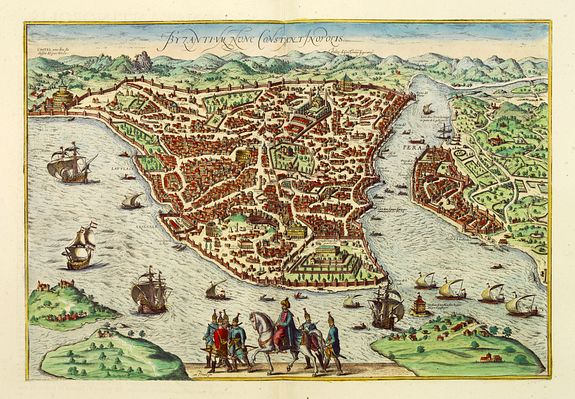
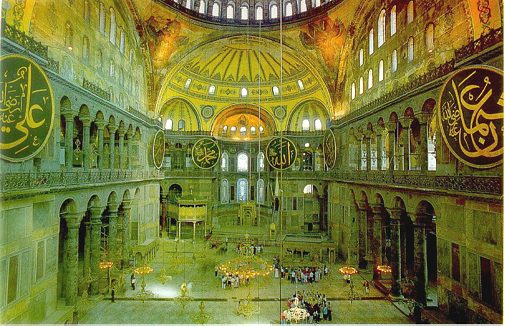
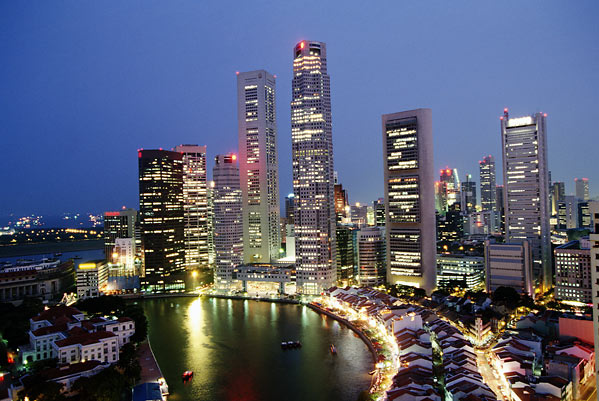
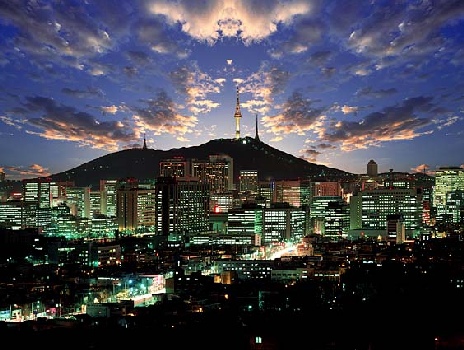
Which will be the next Byzantium: Seoul or Singapore?

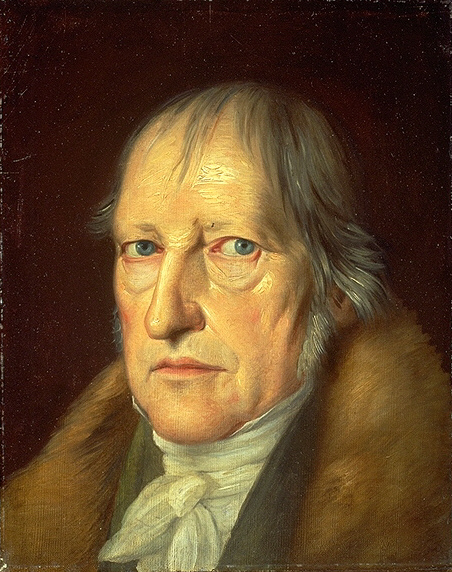
The rapid acceleration of technology today has the effect of speeding up historical processes. We see geopolitical shifts today take place at an increasingly fast pace. I can only think of  Georg Wilhelm Friedrich Hegel on steroids. That is to say that historical cycles that would take centuries to unfold in a previous age are now playing out in fast forward. 

Read more