 A highly-organized campaign has been pursued in Korea for the last two years to encourage people to walk on the right on stairs and hallways. Somehow that act of properly walking up the stairs on the right hand side is perceived as the key to becoming a “developed” nation. The progress is considerable, but still not perfect. The decision to call for citizens to walk on the right strikes at the heart of the difference between Korea and Japan, or Germany: a certain free-for-all behavior in public spaces. We have been impressed, however, at how quickly Korea is catching up.
Call for designs for a new Seoul

This sign in Seoul Metro calls for big ideas to transform the city. The participatory nature of the call is remarkable, and I have the impression that the proposals submitted by us foreigners and Koreans will be taken seriously. A remarkable moment.
“Creating a Green Korean Wave” (in Korean)
“Creating a Green Korean Wave” (in Korean)
Segye Ilbo Newspaper
January 28, 2009
2009년 1월 28일
“한류에 환경메시지 실어보내자”
세계일보
http://www.segye.com/Articles/News/Opinion/Article.asp?aid=20090128003737&subctg1=06&subctg2=00
한국은 ‘푸른 발전-녹색 성장’을 경제 발전 전략의 토대로 삼고 있다. 이러한 환경을 염두에 둔 국가 성장 전략은 매우 지혜롭다고 평가할 수 있다. 이는 또한 앞으로 아시아 전체에 건전하고 발전적인 방향을 제시할 것이며 이것이 경제 조정 과정을 이끌어가는 영향력을 행사할 것이다. 녹색성장을 바탕으로 할 때 한국이 취해야 할 첫번째 단계는 이러한 변화와 발전에 가장 큰 영향을 줄 요인을 찾아내는 것이다.
에너지 고효율과 석유화학 공장에서 나오는 공해의 감소를 위한 개선의 노력은 가장 중요하고 시급한 문제로 여겨진다. 이러한 문제의 해결 과정에서 아시아 전역에 파급돼 유행하고 있는 한류문화의 힘은 녹색 성장의 힘보다 더 강한 영향력을 가지고 있을 것으로 보인다.
최근 한류문화 즉 대하드라마, 영화, 가요, 패션유행, 비디오게임 등이 주변의 동북, 동남, 중앙아시아, 중동 그리고 러시아, 라틴아메리카 등에 널리 퍼져 유행하고 있음을 알 수 있다.
오늘날 심각한 환경문제에 대한 주요 원인을 생각해보면 서구 삶의 모습을 본받으려고 하는 삶의 행태가 주요 원인으로 작용했다고 할 수 있다. 중국, 중앙아시아, 인도에 사는 시골 농민들의 도시생활을 위한 ‘이촌향도현상’을 보자. 주변의 자연환경을 해치는 벌목, 환경 훼손, 환금 작물의 재배, 자동차 구매, 대도시로의 이사와 도시생활 향유에 필요한 재화 획득 등의 필사적인 노력이 이뤄지고 있다. 우리는 이 과정에서 자연 환경이 파괴되어 가는 모습을 볼 수 있다.
결국 이러한 행태는 대재앙을 낳게 되는 것이다. 비록 미국사람들의 생활방식이 개선된다 하더라도 세계 도처에서 환경파괴와 같은 과정이 진행된다면 지구의 환경 대재앙은 피할 수 없는 일이다.
요즈음의 한류문화 즉 대장금 같은 대하드라마와 노래, 영화는 아시아에서 가장 파급이 빠르고 영향력이 막강함을 알 수 있다. 중국, 베트남, 중앙아시아, 몽골인들은 한국의 드라마를 보고 매료되어 자기들의 생활과 사고 방식을 바꿀 정도로 한류문화의 인기가 대단하다.
이러한 것은 아시아에서 환경문제에 대한 위기 해결을 위해 한국이 중요한 역할을 할 수 있는 대단한 기회를 갖게 된다는 것을 의미한다. 가령 앞으로 한국의 대하드라마에서 아주 멋진 주인공이 사치스러운 생활을 하는 백만장자의 모습이 아닌 환경을 소중하게 여기고 자연생태를 조화롭게 유지하려 애쓰는 한류스타(주인공)가 등장한다면, 아시아 전 지역에 파급될 영향이 매우 클 것이다.
물질 만능주의가 사라지고 에너지 절약과 쓸모있는 물건의 재활용이 한국의 대하드라마만큼이나 유행하게 되면 주변의 많은 나라들에 환경문제의 해결은 물론이고, 이들 국가를 지속적인 발전의 길로 이끌어 줄 수 있는 효과를 기대해 볼 수 있을 것이다.
이런 한국 인기 대하드라마를 한번 상상해 보자. 다양한 활약을 하는 멋진 남성 주인공이 에너지 절약에 깊은 관심을 갖고 사치스러운 파티 등을 거부하고 주말에는 나무를 심고 이웃집 사람에게 재활용의 중요성을 설명한다. 또 그 주인공이 자동차 대신 자전거를 타는 모습을 보면 여성들이 한눈에 반할 것이다. 이런 장면이 한국 드라마에 나오면 다음 세대 아시아인에게 커다란 영향을 주고 아시아와 나아가 전 세계의 환경과 경제를 살리는 데 도움이 될 것이다. 한국이 환경 문화를 선도하기 위해 출발해야 할 때는 바로 지금이다.
“National Research Institute Require a Vision” (in Korean)
“National Research Institute Require a Vision” (in Korean)
August 26,. 2008
Segye Ilbo Newspaper
2008년 8월 26일
“정부출연硏 과학정책의 비전 제시해야”
세계일보
http://www.segye.com/Articles/News/Opinion/Article.asp?aid=20080826002636&cid
한국의 정부출연연구소(출연연)가 지난 30년간 선진국 연구소에 비해 초라한 연구비를 활용하면서 전기공학과 자동차공학, 재료·생명공학 분야에서 이룬 업적을 보면 경이적이다. 그러나 이 기간 세계는 크게 변했고 한국은 새로운 시장, 새로운 사회·경제문제에 대처할 수 있는 새 기술이 필요할 것이다. 한국 경제는 지금까지 가전제품과 자동차를 중심으로 발전해 왔지만, 앞으로는 새로운 분야인 재생에너지, 환경기술, 생명공학, 농학 등의 연구와 제조기반을 전면적으로 바꿔야 하는 거대한 변화를 맞이하고 있다. 지금의 위기는 1960년대만큼 심각하며 그 당시와 유사한 극복 의지가 요구된다. 이 과정은 틀림없이 매우 고통스럽고 불확실하지만, 생명공학 등 새로운 분야에서 출연연의 존재가 절대적으로 필요하다는 점은 분명하다.
현재 한국에서는 이들 분야에 대한 수요가 대단히 많기 때문에 교육과 연구 양쪽을 담당하는 대학교가 이를 뒷받침할 수 없을 것이다. 출연연 내 실험실은 당연히 대학 교수들과 긴밀히 협력해야 하며, 겸직교수가 보편적 형태가 돼야 한다.
차세대 출연연은 구조와 자금 조달, 전략 면에서 이전 연구소와 근본적으로 다르다. 새 출연연은 연구소 사이의 교류 및 상호 작용을 촉진함으로써 시너지 효과를 낼 수 있을 것이다. 한국 정부가 과학기술 정책에 대한 청사진이 부족하다고 한탄하는 사람들이 많다. 그러나 이러한 상황은 각 출연연이 각자의 임무를 되돌아보고, 모든 연구소가 전략에 대한 합의를 도출해야 한다는 점에서 축복이라고 볼 수도 있다.
에너지, 환경, 식량 안전에 초점을 맞추는 것이 열쇠다. 한국은 오랜 기간 집중된 연구를 통해 점진적으로 발전하는 모델로 성장하지 않았다. 한국은 이제 급격한 경제, 문화, 지적 변혁의 시기에 뛰어들고 있다. 한국 경제는 석유 의존에서 탈피하고, 아시아 전역의 식량 안보와 환경 악화 현안을 다뤄야 하는 중대한 도전을 맞고 있다. 이전 세대가 한국을 전쟁의 잿더미에서 부흥시킨 의지력이 다시 필요한 때이다.
출연연은 가장 중요한 현안에 주력하고, 비록 단기적인 이익이 있다 하더라도 외부 연구 프로젝트를 중단함으로써 그들 스스로 중요한 역할을 재확립할 수 있어야 한다. 이를 통해 우리 삶에서 과학이 차지하는 가치를 시민들에게 보여줄 수 있어야 한다. 출연연은 학계뿐만 아니라 사회 전반에서 지도적인 역할을 수행할 수 있는 혁신과 문화 변혁 능력을 증명해야 한다. 과학자들은 정부기금의 수동적인 대상이 돼서는 안 된다. 출연연은 연구에 대한 미래의 비전과 사회의 수요와의 관계를 정립해야 한다. 그럴 때에만 대중의 의식 속에 과학의 중요성이 재확인될 수 있을 것이다.
출연연의 새로운 역할은 미래 사회의 요구를 예상하고 전 세계 유사 연구소와 협력해 구체적인 대응책을 도출하는 일에 집중하는 것이다. 또 과학기술의 가치를 증진시키기 위해서는 중소기업과 협력해야 한다. 중소기업은 출연연과 전략을 논의하고, 정부와 접촉하는 연구소를 통해 배우며, 출연연과 함께 국민에게 과학 정책의 비전을 제시하는 공간의 역할을 해야 한다. 각 출연연을 중심으로 기업 집단이 형성돼야 하며, 새로운 접근방식을 추진하는 젊은 연구자들이 이러한 관계의 원동력이 돼야 한다.
한국의 출연연이 지금 당장 경제를 이끄는 역할을 하지는 않겠지만 뚜렷한 비전을 세우면 경제가 어려운 이 시점에 한국이 나아갈 방향과 희망을 찾을 수 있을지 모른다.
“Daejeon as a Ecocity to Lead the World Economy” (in Korean)
“Daejeon as a Ecocity to Lead the World Economy” (in Korean)
Hello DD IT News
January 8, 2008
2008년 1월 8일
“대전은 세계경제 이끌 ‘첨단 환경도시’”
HelloDD (대덕넷)
http://www.hellodd.com/Kr/DD_News/Article_View.asp?Mark=22666
친환경 도시의 특징은 무엇일까? 에너지 소비를 줄이는 원칙을 수용하고 환경오염을 줄이며 강력한 분리수거제도를 실천하고, 자원을 재활용하는 등의 적극적인 정책을 펴는 도시일 것이다. 누구도 아시아의 여러 도시들 중에서 대전이 환경경영을 실천하는 선구적인 역할을 맡게 되리라고 기대하지 않았다. 하지만 대전은 뛰어난 과학자원의 축복을 받은 곳이기에 충분히 한국의 환경 수도가 될 수 있다.
또 현재 환경 퇴보라는 망령과 수입 석유에 대한 중독으로 전쟁을 치르고 있는 동아시아의 모든 도시들의 미래 모델로서의 자질도 충분하다. 이 목표를 향한 첫 단계는 간단하다. 대전지역의 초·중·고 학생들에게 “대전이 에너지 소비량을 줄이고 오염을 줄이는 가장 좋은 방법은 무엇일까요?”라는 질문을 주고 이에 대한 답변을 인터넷을 통해 공모하는 대회를 여는 것이다. 대회의 우승자들에게는 부상으로 대학 장학금을 주고 우수한 답안들은 대전의 모든 신문과 방송매체를 통해 대전 시민들에게 알린다. 그러면 시민들은 미래 세대들을 통해 에너지 부족과 환경오염에서 벗어나는 것이 대전의 미래에 결정적인 과제라는 것을 분명히 깨닫게 될 것이다. 시민적 공감대가 형성된 이후 단계 역시 중요하다. 대전의 대학이나 정부 출연연구소에서 개발 중인 에너지 보존과 오염원 감소에 관련되는 연구개발 활동을 주의 깊게 살펴보는 것이다.
가치 있고 실용적인 기술과 개발전략들에 대한 확인·분석 작업이 완료되면 대전에서 그 기술을 응용하려는 일련의 계획들을 수립해야 할 것이다. 이 과정에는 상당한 상상력과 추진력이 필요하다. 기존의 기술들이 어떻게 에너지 절약이나 오염 제거에 활용 될 수 있는지가 단기간에 명확히 드러나지 않기 때문이다. 그러나 충분한 상상력과 추진력이 충분히 발휘된다면, 한국기계연구원이나 한국항공우주연구원, 한국화학연구원 등 다양한 연구기관에서 개발 중인 원천 기술들을 이용해 효과적인 전기 자전거를 만드는 등 성과를 기대할 수 있다. 이같은 일은 대전의 교통체증을 줄이는 효과를 볼 수 있을지도 모른다. 대전은 한국의 연구개발의 중심일 뿐만 아니라 개발한 환경 관련 신기술 응용의 실험장이 될 것이다.
대전에서 컴퓨터로 선로 조정을 하고 배기물질은 최소화하고, 또 연비는 극대화시킨 시험 열차가 제작될 것이다. 또 비효율성을 최소화에 하는 새로운 최첨단 난방 시스템의 대규모 테스트도 대전에서 실시 될 것이다. 열 손실을 완전히 줄이는 우주 시대의 단열물질이 새로운 주택공법에 사용 될 것이며 차세대 태양 전지도 대전에서 처음으로 선보일 것이다. 대전은 어디서나 사용가능한 진보적인 에너지와 오염 절감기술 시스템들의 전시장으로 신속하게 변모할 것이다. 우리는 이러한 신기술들을 통해 지구온난화에 대한 높은 사회적 관심과 세계적인 주목을 받을 수 있다.
결과적으로 대전은 중국과 인도 및 개발도상국들이 향후 10년 간 직면하게 될 환경 문제들을 해결해 주는, 실질적인 성장이 보장된 분야인 환경 기술의 세계적인 리더로 부상 할 가능성을 갖고 있다. 우리는 이러한 노력들을 인간을 달에 보낸 계획과 동등한 것으로 생각해야 한다. 이같은 노력을 실천한다면, 대전은 8년 안에 아시아에서 가장 친환경적인 도시가 될 수 있을 것이다. 지속적인 경제발전에도 불구하고 에너지 사용과 오염 방출양은 반감시키는 도시가 될 것임을 예상할 수 있어야 한다. 우리가 밟아갈 구체적인 절차에 대해 생각해보자.
먼저 에너지 소비량과 오염을 줄일 실용적인 기술에 대한 조사를 실시해야 한다. 오염 방출양을 줄일 기술, 에너지 낭비를 막을 기술, 태양열 주택 기술, 저렴한 청정 연료를 생산할 기술, 쓰레기를 모으고 건설적으로 처리하는 기술, 처음부터 쓰레기를 줄이는 기술, 보다 효율적인 운송수단을 만드는 기술, 오염된 장소를 청정하게 하는 기술 등이 이에 해당할 것이다. 다음 단계로, 우리는 그런 기술들 중에서 대전에서 시험 가동을 통해 세계적인 상용화에 성공 할 수 있는 기술들을 구별해야 한다. 또 우리는 어떤 신기술들이 중국과 인도 및 개발도상국들에 즉시 적용될 수 있는지도 고려해야 하며, 이와 동시에 수행되고 있는 에너지기술들을 세계적인 수준으로 끌어 올리도록 해야 할 것이다. 대전에 환경산업센터를 설립하는 것도 이런 기술들을 개발하고 대책을 마련하는 것 못지않게 중요하다. 개발된 기술들을 경제적이고 효율적으로 생산, 혹은 설치 할 수 있는 회사들이나 기구들을 대전에서 확인하고 또 에너지 소비를 줄이고 오염원을 제거할 정책과 생활습관을 촉진시킬 수 있어야 한다. 앞으로 환경 관련 기술들은 앞으로 몇 년 안에 엄청나게 부가가치가 올라갈 것이다. 만약 대전이 이 분야에 대해서 세계적인 리더가 된다면 우리는 향후 15년 안에 세계 경제의 메카로 우뚝 설 수 있을 것으로 기대한다.
“The Daejeon Green Growth Forum”
“The Daejeon Green Growth Forum:
An Effort To Build A New Korean Economy From The Bottom Up”
The Nautilus Institute
Policy Forum Online
http://www.nautilus.org/publications/essays/napsnet/forum/security/08099RanKe.html
– “The Daejeon Green Growth Forum: An Effort To Build A New Korean Economy From The Bottom Up”
By Liao Ran and Chen Ke
Korea has not been known as a leader in environmental technology. Its industries have lagged behind Japan and Germany in implementing energy efficient manufacturing technologies and achieving low carbon emissions. Yet Korea, a compact nation of 48 million citizens famous as rapid adopters of new technologies, has some major advantages now that it has entered the environmental growth ring.
Koreans are clearly remarkable innovators. Time and again, Korea has shown its ability to change course, to adapt to changing circumstances, by reinventing itself economically and culturally. After all, Korea had no background in shipbuilding in the 1960s but now leads the world in that field by dint of the determination of its policy makers and industrialists.
The Daejeon Green Growth Forum is an example of how quickly Koreans are changing their thinking about the environment and how serious they are about implementing their new ideas. Koreans at the local level have formed a coalition bringing together experts from major research institutes, representatives from businesses, NGOs and local and central government to tackle the problems of making the city energy-efficient and environmentally sustainable. It is unusual enough for experts in technology to sit down with government officials to discuss mass transit and energy conservation, but for environmental activists best known for their protests in front of city hall to join the discussion is astounding.
The Daejeon Green Growth Forum now has not only an imperative to work with the city to build in Daejeon a model for Asia of an ecologically-friendly urban space, but also a budget from the Ministry of the Environment and the Ministry of Knowledge Economy to help it to do so.
The group started out in January of 2008 as an informal meeting of figures from the leading research institutes and universities in Daejeon (Korea’s science and technology R&D cluster) who felt strongly about environmental issues and were frustrated with the pace at which new technologies developed in the labs are implemented at the local level.
Two members of the Daejeon Green Growth Forum (then known as the Daejeon Environment Forum) put forth its vision for Daejeon as an “Ecocity” in a short article published in Korean and English entitled “Daejeon: Environmental Capital of Asia” that drew considerable attention.
The group started small. Researchers stole away from their laboratories in the evenings to meet in the conference rooms at assorted research institutes in Daejeon and to discuss how the expertise available in Daejeon could be put to work to transform the city. The excited, and sometimes heated, debates began over dinner, followed by a member’s presentation, followed by a roundtable discussion.
On one such occasion in March 2008, Junghoon Han of the National Fusion Research Institute presented his plans for the construction of new bicycle paths in the city. Dr. Young Choi of the Korea Institute of Machinery and Materials, gave his input as an engineer and Dr. Jiwon Yang as a chemist. The debate covered myriad topics, from innovative designs for bicycles and surfaces for bike paths to approaches to publicizing bicycles among citizens and convincing city hall of the project’s value.
Within four months, the forum had gained such a reputation that it hosted Daejeon’s Mayor Seong-hyo Park and convinced him of the importance of their efforts. Many elements of the discussion on bicycle paths from Dr. Han’s presentation are now under serious consideration by the city.
The members of the Daejeon Green Growth Forum came to the dialogue from different fields but all were committed to using their specialized knowledge at the local level. From the enthusiastic and ebullient Ahn Jihwan of the Korea Institute of Geosciences and Mineral Resources to the incisive and penetrating Sang-soo Kwak of the Korea Institute for Bioscience and Biotechnology, who spends much of his time in China in an effort to introduce genetically modified sweet potatoes to arid regions of China, a variety of personalities were represented. The politically savvy, the idealists and the pure scholars all joined in at the dinner table.
In addition, the group was joined by two foreigners, Nakamura Toraaki, a long-term resident Japanese committed to environmental issues, and the American Emanuel Pastreich of SolBridge Business School, best known for his efforts to promote closer relations between the nations of Asia. Korea’s social movements are generally quite insular, so the very idea of having foreigners involved in such an effort from the beginning is nothing short of revolutionary.
The membership grew. By July of 2008, there were 20 members in the Daejeon Green Growth Forum from the Korea Electric Power Research Institute, Chungnam National University, the Korea Basic Sciences Research Institute, KAIST (Korea’s foremost technical university) and others institutions. Jiwon Yang, KAIST’s Vice President, and environmental technology expert, took over as chairman.
The discussions carried out at the Daejeon Green Growth Forum did not take place in a vacuum; its members were also active participants in a larger debate on Korea’s future. Daejeon, with its combination of research institutes and businesses, is a microcosm for the concerns of Korea as it wrestles with the challenges of an export-driven economy in an age of high energy costs and environmental threats.
Those themes were encapsulated in President Lee Myung-bak’s address commemorating the 60th anniversary of the founding of the Korean Republic, delivered on Aug. 15, 2008. President Lee honed in on the importance of green growth for the Korean economy in the twenty-first century in this speech, stating that “Low carbon green growth … is a new national development paradigm that creates new growth engines and jobs with green technology and clean energy. The world has gone through the stages of the agricultural, industrial and information revolutions. Now, it is entering the age of an environmental revolution.”
This speech took the environmental movement from the periphery to the center of the policy debate in Korea, with the crisis of climate change and environmental degradation receiving new attention from a conservative administration that few would have expected to focus on the environment.
A “Green Growth Forum” was established in Seoul on Sept. 9 under the aegis of the Ministry of the Environment, bringing together members from academia, business, the research institutes, and media.
Next, the Daejeon Metropolitan City announced its vision of a “Green City Daejeon” on Oct. 6. Mayor Park increasingly spoke of the importance of leadership in environmental issues and embraced the vision of tapping into Daejeon’s research capability to rejuvenate the city in coordination with the central government. He asserted that the perceived conflict between growth and environment could be overcome and a new synergy developed from the marriage of the two concerns.
The next step was the establishment of a Green Growth Forum at the local level to coordinate the actual policies required to implement President Lee’s vision. The Daejeon forum was the natural choice. The Daejeon Environment Forum was renamed as the “Daejeon Green Growth Forum” in a formal ceremony held at the Yusung Hotel in Daejeon on Nov. 27.
The forum’s character was transformed, moving from an ad hoc gathering of like minds to a formal institution. The forum gained new members from industry, government, the media, NGOs and religious groups, and established an executive office and advisory board. Three working groups were inaugurated: climate change technologies (reducing greenhouse gases, energy independence), green industries (environmental technology development), and the green society (the revolution in daily life, education about the environment). Vice President Yang continues in his role as chairman, assisted by Ho Kang, director of the Daejeon Environmental Technology Development Center at Chungnam University.
The Daejeon Green Growth Forum plans to develop into a think-tank for environmental technology and policy that will have impact throughout Asia because of the stature in research of the institutions in Daejeon, with the goal of inspiring other communities to employ locally the technologies available in their research institutions.
Vice President Yang spoke of the future of the Daejeon Green Growth Forum in the following manner:
“The Daejeon Green Growth Forum is concerned with sustainable development, a topic that has not been addressed previously in a sufficiently serious manner. An important aspect of our forum is the support it enjoys at both the local level and in the central government. Around the world people are thinking increasingly about the environment as part of the economy, but here in Daejeon we have a critical mass of research institutes that not only have expertise in environmental sciences, but are major players in the local economy. We can impact the local economy directly through our actions.”
Although the ultimate impact of the Daejeon Green Growth Forum’s efforts has yet to be seen, it is a tribute to Korea’s capacity for innovation that this environmental forum has come to play such a central role within less than a year of its establishment.
Technology Transfer
One of the great myths of technology transfer is that it must be from developed nations to undeveloped nations. In the case of environmental conservation, one of the key issues is how to use fewer resources. For example, how do you wash all your dishes and take a bath with a liter of water in a relatively sanitary manner. This skill is completely lost on citizens from developed nations, but the technology remains with those from poor nations. We should make an active effort to import their technology to countries like Korea, the United States or Japan.
“Proposal for an Ecocurrency” (in Chinese)
“Proposal for an Ecocurrency” (in Chinese)
Green Grants
March 26, 2010
2010년 3월 26일
“生态货币” (중국어)
Green Grants
http://www.greengrants.org.cn/poster/show.php?id=6283
如今,在人类面临的严峻环境问题的迫使下,如果我们重新审视传统的经济增长观念,就会发现失控消费和无限制发展的隐患是不容忽视的。
解决环境危机最显著的方式是制定一种有效机制,并通过该机制使全球生态系统健康与冷战后对国际金融、贸易与投资有全面巩固作用的经济体制建立直接联系。换言之,环境意识必须深刻渗透到全球经济体制的核心以及衡量经济增长与制定经济计划的准则中来。
作为上文所提出的环境观念及其经济重要性改革的起点,货币是最恰当的选择。国际社会应当启动生态货币,以此充当国际通用货币或者作为影响各种与IMF挂钩的国际货币的重要因素之一,并使生态货币的贮备量直接反应一个国家环境政策的优劣。这种生态货币机制最有可能显著推进环境问题的解决。
要使生态货币成为影响国际现行货币的诸多因素之一,可以使生态货币遵循类似于国际货币基金组织当前采用的SDR(特别提款权)体系。根据国际货币基金组织网站,对于对外财政状况足够稳健的会员国,IMF会指派其利用可以自由使用的货币向对外财政状况不佳的国家购买特别提款权。这项规则中的稳健对外财政状况条件可以被绝大部分甚至完全替换为环境标准,从而构成生态货币机制。
生态货币还可以成为衡量世界各国的黄金标准。通过合理有效地减少污染排放和水土流失所累积得到的环境积分可以严格按比例转换为一个国家可以得到的货币供应量。既然现行的货币标准可以建立在极其稀有珍贵的黄金矿石之上,那么将其建立在地球上最为宝贵的健康的生态系统之上也是完全符合逻辑的。事实上,生态系统的价值要远远超出黄金,因为生态系统直接关系到人类的生死存亡。有了生态货币,每个国家仍旧拥有各自的货币主权,但是计算各国货币的同时还必须考虑各国的环境状况以及各国环境积分占世界环境总积分的比例。
不论是作为国际通用货币还是影响所有现行硬通货的因素之一,全世界所流通的生态货币总量都将计算作等同于全球生态总积分。积分的获得要通过审核一个国家减少有害排放,保持水土,或者环保政策实施程度而定。虽然计算世界环境总积分及其在各国间的合理分配有很大的难度,而且很有可能涉及到政治困难,他们也绝不会是不可完成的任务。
这个建立在环境积分体系上的国际货币计划可以使抽象的碳减排量交易在环保过程中变得更加切实可行,在财经世界里变得更加显而易见。这项计划要求所有地区级别的财政及发展政策制定人参与到将气候变化政策作为经济政策的一部分来严肃实施的讨论中来。有了该计划,环境政策再不会被与财政政策分开考虑。这两个方面将被有效结合起来。通过环境政策的有效性来影响未来经济体系的核心,环境问题将确保不会被搁置不顾。
Other variations on technology transfer
The dominant paradigm for technology transfer is from developed nations to developing nations, often involving technologies developed through intensive investment in complex technological research. But there is another form of technology transfer that may well be quite important in the future: technology transfer from developing nations to developed nations. Let us take the case of water usage. People living in developing nations know how to use water quite effectively. They can wash all their dishes, or take a bath, with just a half a liter of water, or less. The technology is incredible, and those of us who lived in developed nations lack the basic know-how. But there is room for us to learn. Such know how should be transferred back to the developed world where we live such wasteful lives.
“The Novels of Bak Jiweon Translation of Overlooked Worlds”
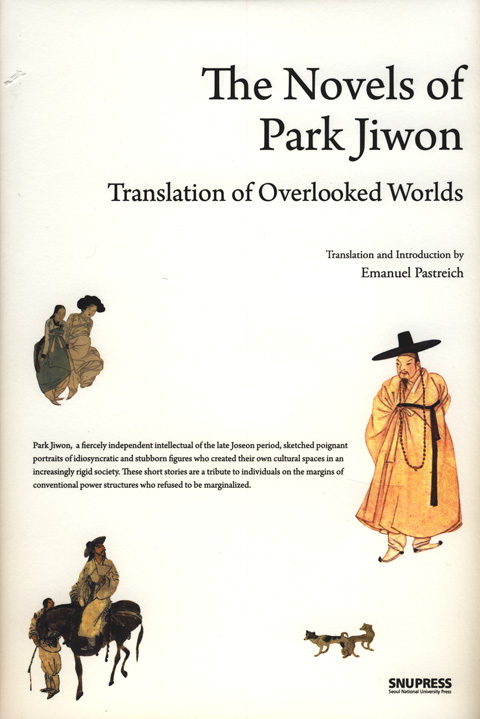
The Novels of Bak Jiweon
Translation of Overlooked Worlds
Seoul National University Press
February, 2011
Bak Jiweon’s novels are populated with the full range of individuals who had been entirely excluded from the literary lens of Joseon (1392-1910) Bak’s writings are an exploration of the full range of human experience in society. But rather than attribute insights on moral issues to Confucian sages—as did his peers, Bak places his words in the mouths of beggars, con men, day laborers and widows. Those who had no voice in Joseon society are given a chance to articulate their perspectives in the language of the scholar: literary Chinese. But these novels are not simplistic tales of empowerment either. They are permeated by irony and ambiguity. The low-mimetic protagonists make Korean high society appear ridiculous, but they themselves do not escape ironic treatment. The importance of moral action may be the explicit message of many of the novels, but the tales are rife with anecdotes of uncertainty and even futility.
Bak was swimming against the tide in a profoundly conservative and increasingly inflexible social establishment when he wrote these novels in the late eighteenth century. The Confucian gentry had lost sight of larger social responsibility, being more interested in petty disputes over land and status. Bak demands an erudite and patient reader. Tales that appear to be simple parables reveal on a second or third reading meticulous attention to structure and carefully selected archaic expressions. Bak employs Chinese characters in rare senses throughout the book. His crabbed, dense writing has much in common with the literary archaism that swept China during the Qianlong period in China.
Bak lived a life of intense, but often solitary, intellectual engagement. He was known best as a fiercely independent autodidact who read widely in philosophy, history, astronomy, geography, military affairs, agriculture and economics, but kept a distance from established institutions. Bak became a heroic figure for later scholars because he so vividly limned the inadequacies of Korean society, without blinking.