Professor Scott Strobel, Vice President of Yale for West Campus, visited Seoul National University Advanced Institutes of Convergence Technology and Kyung Hee University on November 4, 2011. At Kyung Hee University he delivered a fascinating talk about Yale’s West Campus project and how a group of far-sighted
AICT Holds ConTech conference “A Smart and Humane World” at KOEX
AICT (Advanced Institute of Convergence Technology) at Seoul National University hosted the CONTECH international conference “A Smart and Humane World” on convergence technology on November 3, 2011, bringing together experts from around the world to discuss the implications of the convergence of technological fields for our world. Emanuel served on the international advisory board for this event. Several themes are related to the Kyung Hee University-AICT research project for which Emanuel was co-researcher.
Vegan Restaurant opens in Hoegi-dong
Actually, the place., “Simple Waffle,” only serves vegan waffles so far, but the owner, who goes by the name Pooh Lee, has great ambitions. Vegan food is hard to find in Korea, and I think a true Vegan could starve without some help. I stick to vegetables myself, but commonly you find a taste of meat or fish in just about everything.
So it is impressive that there is now a place that calls itself Vegan near Kyung Hee University. In Korea, oddly, eating meat is associated with being modern. Just like throwing away paper cups is somehow “modern.” I love Korea, but this cultural assumption is one of the great challenges.
Climate Change in Seoul
Our house still has mosquitoes at the beginning of November. They come up through the water pipes. I stopped by a neighborhood pharmacy and asked if they had insect repellent.
“No,” said the store owner, “We don’t have anything left.”
Two essential laws of politics
I tend to be naive about politics. Or should we say I am politically naive.
Sometimes it is a studied posture of someone who actually knows how things work, but pretends not to know. Sometimes I am literally that naive and that simple when it comes to politics. And then sometimes I tend to treat the political world in terms of what I want it to be, instead of in terms of what it really is. If I could just give up the naive assumptions and play the game smartly.
Daejeon Mug is available at last!


Release of the Daejeon Mug
The Daejeon Mug Highlights Daejeon’s unique ecosystem with a delightful design by the graphic artist Ryu Miso. The three rivers that define Daejeon, the Gapcheon, Yudeungcheon & Daejeon Cheon, are lyrically represented in this original design. The front side is in English and the backside in characters suitable for Koreans, Chinese and Japanese.
Talk on Technology and Human Experience at Korea Institute of Patent Information
Emanuel made a presentation at the Korea Institute of Patent Information on October 26, 2011, in which he spoke about the tremendous challenges posed by rapid technological change and its implications for us.
What Emanuel does not like about Korea
I have received numerous criticisms of late to the effect that I am too positive about Korea. Although I think my writings do contain numerous criticisms of Korean practice, it is certainly true that I go to great lengths to keep the tone constructive and positive. That said, I have decided to give a short list of serious issues with Korea that I have.
The white or brown sauce that is squirted on food at restaurants:
So many times we find at Korean restaurants that the cooks feel that they have to squirt a white or brown sauce in lines on top at the food at the last minute to make it look better. The sauce does not add to the flavor and I wish we could just eat the food.
Not being able to see the name of the station from my seat on the subway
How many times on the subway have a found that the sign indicating the station at which the train is stopping at is invisible from where I am sitting? The visibility of signs is clearly far worse in Seoul Metro than in other major subway systems I have ridden.
Korea Launches a Campaign against excessive drinking
Amazing to witness how quickly new campaign to encourage people to drink less as part of their work has gained speed in Seoul. There are signs on the subway, in workplaces, government offices and on TV aggressively driving this point home.
The Korean Hangul script as a global phonetic system
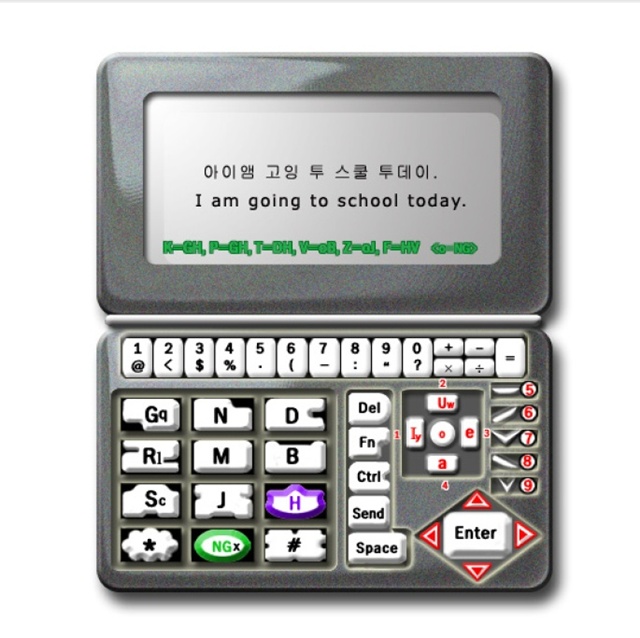
A fascinating article by Professor Sin Buyong, Director of KAIST’s new “Hangul” Engineering Institute” in which he argues for the broad application of the Korean hangul script globally. Korea is starting to expand the concept of technology to include many new applications, and this concept of hangul as a universal script that can more accurately, and more simply, represent all languages is particularly striking. What is new here is the Koreans are not merely proposing more people in the world should learn Korean, but also that they could better write their own languages using the hangul script.
Professor Sin presented in a previous article an input device employing hangul and demonstrates how hangul is better than the Roman script for inputting English. I am not sure how realistic this example is, but it does suggest a new self confidence and creativity which is most welcome.