Korean propriety for a network society in Kookmin Daily News (in Korean)

Here is my article on Korean propriety for a network society in Korean in Kookmin Daily News

국민일보   2012년 03월 05일

네트워크 시대 열어갈 한국 禮學”

하버드대에서 한국 고전문학을 공부했을 때 조선시대의 문학가들인 김만중 박지원 정약용의 글을 좀 읽어봤다. 그 글에 ‘예학(禮學)’이라는 학문에 대한 언급이 참 많았다.

한국의 예학은 단지 관혼상제(冠婚葬祭)의 사례가 모이는 것보다 사회질서를 평화로운 수단으로 유지하는 헌법에 가까운 성격의 제도라는 느낌이 들었다. 현대적인 인간과 인간 사이를 관리하는 방식으로 보이기에 매우 신선했다.

우리는 이른바 네트워크 시대에 살고 있다. 네트워크 속에서 개인으로 구성되는 복잡한 관계가 중대한 영향을 미치는 시대다. 이런 관계는 페이스북이나 다른 소셜 네트워크를 통해 이뤄지지만 사실 우리는 그것이 무엇인지 제대로 알지도 못하는 실정이다.

Read more

Asia Institute Seminar with Dr. Richard Bush, Director of Brookings Institute Center for Northeast Asian Policy Studies

 The Asia Institute

Seminar

February 13, 2012


(With support of the Global Peace Youth Corps)


Speaker:

Dr. Richard Bush

Director

Center for Northeast Asian Policy Studies

Brookings Institution


Moderator:

Emanuel Pastreich

President

The Asia Institute

(Associate Professor, Kyung Hee University)


Emanuel Pastreich

Thank you for joining us this afternoon. We live in an age in which China’s impact on the world is growing daily, and yet many have only a very vague idea of how China actually works. Your insights are most valued. Tell us a little about your current research on China and Northeast Asia.

Richard Bush

I spend most of my time conducting research on China-Taiwan relations these days. I am currently writing a book on contemporary Taiwan-China relations in which I trace the relationship and offer my views on prospects for the future. I also dabble in other aspects of East Asian Security issues from time to time. I have done a long report on North Korea and its nuclear programs. I have written about China-Japan security relations as well.

Read more
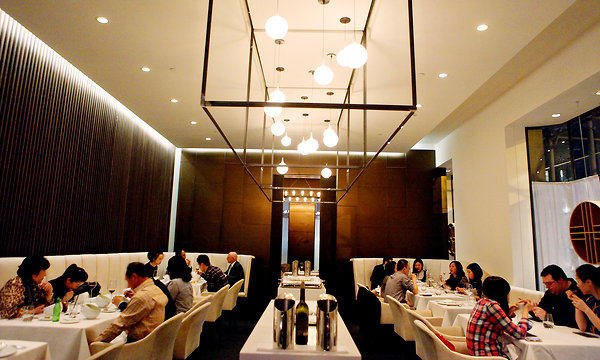
New York Times article on up-scale Korean restaurant in New York

Following immediately on the New York Times article on bibimbap as a happening health food comes this article describing a Korean restaurant in Manhattan called Jungsik that has carved a new space in Korean cuisine for those in the know.


The article resembles reviews of upscale sushi houses from the 1980s and is a major shift in Korea’s cultural currency. Just looking at the photograph gives some indication of how far Korea has come.

Read more

Article in Munhwa Ilbo newspaper on Korea’s Organic Farming Tradition (in Korean)

This article in Korean recounts the my “Jewel of Great Price” report in Korean. The question raised is how the great tradition of organic farming from Korea’s past can be brought back to life in our age.


문화일보

2012년 2월 29일  

“한국 유기농의 무한한 價値”

이만열/경희대 후마니타스칼리지 교수·동아시아문명학

Read more

Bibimbap in the New York Times

The New York Times carried this article today about bibimbap, the Korean dish in which a variety of vegetables are mixed together with rice in a bowl.

Tara Parker-Pope on Health


The article, titled “Easy Korean Bibimbap for Home Cooks” presents the dish in an aesthetically pleasing manner, and suggests it is an excellent health food–which it is. The article is indicative of a major shift in the perception of Korea. No longer a rough culture for adventurous Americans, Korea is becoming a much more polished cultural identity with cultural depth.

Emanuel’s Talk at International Korea-China Social Science Conference

I will be speaking at 3:40 at the international conference of the  Korea-China Social Science Conference (한중사회과학학회: 국제학술대회; 韩中社会科学学会:国际大会)to be held at Yonsei University tomorrow, Wednesday, February 22, 2012. My talk is on the complex relationship between China and the United States (talk is in Chinese).

(Location is the basement of the Daewoo Hall at Yonsei University)

See Program:

2012_경제학공동학술대회 한중사회과학학회 프로그램_수정본-0218

Kyung Hee University’s Founder: Dr. Young Seek Choue (1921-2012)

Young Seek Choue (1921-2012)

Dr. Young Seek Choue was one of most remarkable figures of the post-Korean War period. A man who devoted himself to a vision of peace and education in an age when most Koreans were concerned with the basic challenges of survival and economic development, Dr. Choue was above all a visionary, a man who established and built Kyung Hee University while remaining engaged in a far-sighted plan to “build a civilized world.” He started this project at a time when most Koreans were struggling to feed themselves. He imagined a global role for Korea, deeply engaged with the United Nations, that in the 1950s and 1960s seemed fantastic, but today, with Ban Ki Moon as Secretary General seems most prescient.

Read more

“Revitalize Rural Korea” (article in Hangyung Economic News in Korean)

This article outlines a plan for revitalizing rural Korea with an emphasis on traditional goods and architecture.

한국경제신문

2012년2월 08일

한국 농촌 세계화 `전통` 담아야


산업화 이전 유구한 역사 못살려
마을 상징물 만들어 홍보에 주력
된장에 스토리 입히면 관광 자원

이만열 < 경희대 교수·후마니타스칼리지 >

Read more

“Let us Permit Imagination!” (Kukmin ilbo Newspaper article in Korean

“Let us Permit Imagination!”   Kookmin Ilbo Newspaper

February 6, 2012

This article argues that in Korea there are plenty of extremely creative people. The problem is simply that organizations do not let them realize their potential.

국민일보

2012년02월06일

상상력을 許하라!”

이만열 (임마누엘 페스트라이쉬)

“낡은 도시 잠재력 깨우려면 행정·정치가 예술가의 창의력 발휘를 뒷받침해야 한다”

Read more

More on why we need to demand more proficiency in Korean language of internationals

More on why we need to demand more proficiency in Korean language of internationals

Emanuel Pastreich

February 8, 2012

There are several underlying factors behind the reluctance of Koreans to demand high proficiency in Korean from foreigners.

First, the Korean language is viewed primarily as an extension of Korean ethnic identity, and not as an object for objective investigation and evaluation.  Many Koreans think that ethnic Koreans should speak perfect Korean and foreigners are a bit odd if they speak any Korean at all. Most Koreans evaluate ability in

Read more