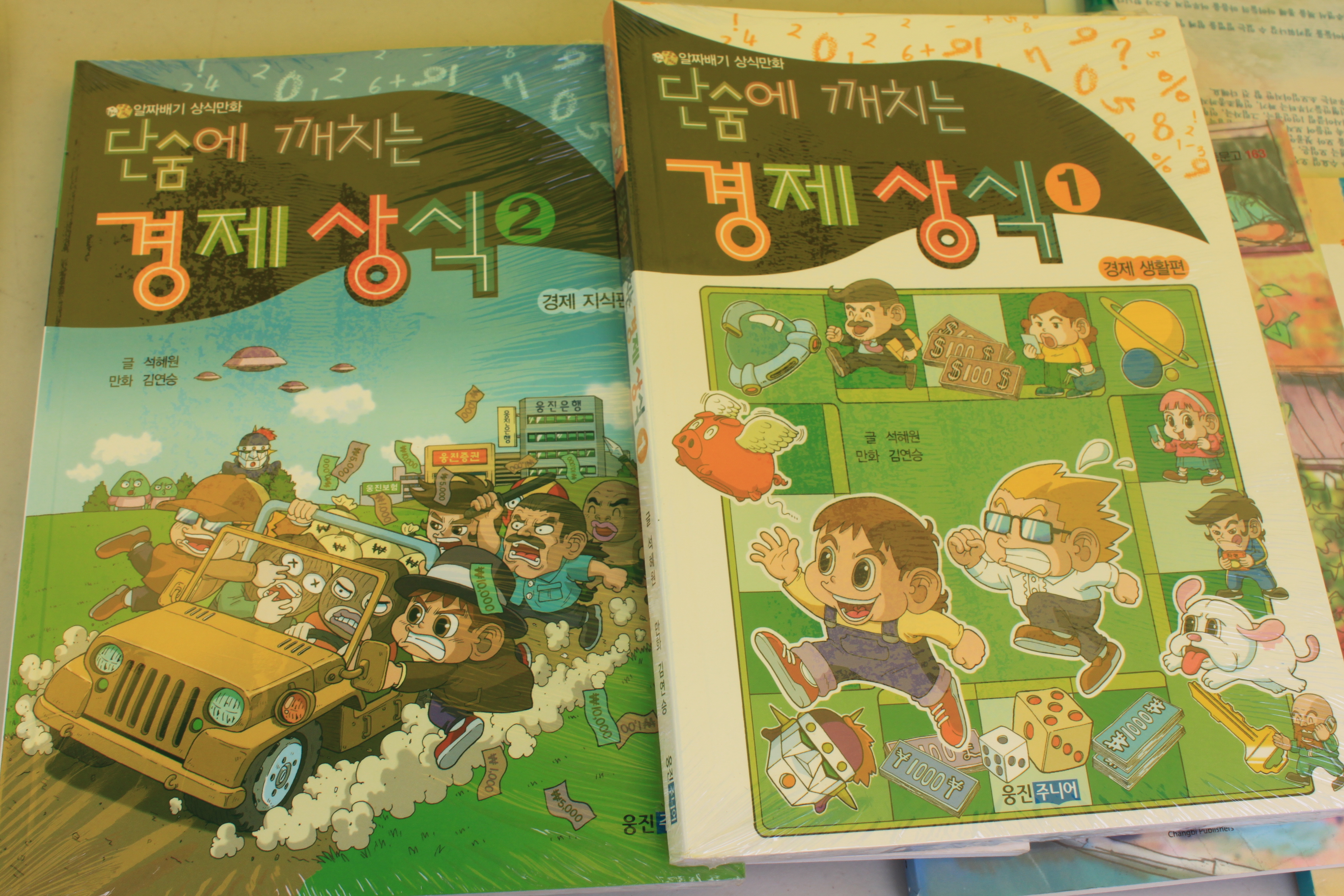
I have noted previously that one of the outstanding aspects of Korean education is the development of educational comic books aimed at elementary school students that present rather complex information about contemporary society and the world in a readable and entertaining manner. These educational comic books are so well done that I think they deserve to be translated into English for international use.
Today in Korea
Sungmisan School in Seoul: A remarkable Approach to education.
I had a chance to visit the Sungmisan School (성미산학교) in Seoul today for their yearly festival and I spoke a few minutes with one of its founders, Yu Chang-bok (유창복) and the current principle Park Bok-seon (박복선).
Founded in 1996, Sungmisan School is one of the best-known of the alternative schools in Korea, running a program from nursery school through high school—and there is even a plan to establish a university. The school puts a tremendous emphasis on the role of students in society, and particularly courses related to the environment and agriculture (while the school is located in the middle of Seoul).
Big Data Health in Korea: A Brave New Body?
This article suggests the new concept of “big-data based health IT services” in Korea. The potential for innovation is considerable as many in the United States and Europe would simply not tolerate this use of information. But in Korea, and in China, and elsewhere, it could well be a new model.
MK Business News
2012.05.21
SKT, KT venture into big data health IT business
Yoo Ki-yoon (aged 51) recently received a personalized healthcare plan based on genome analysis, which processes the patient’s medical and family history and offers relevant healthcare information. This comprehensive health IT service suggests which hospital to visit
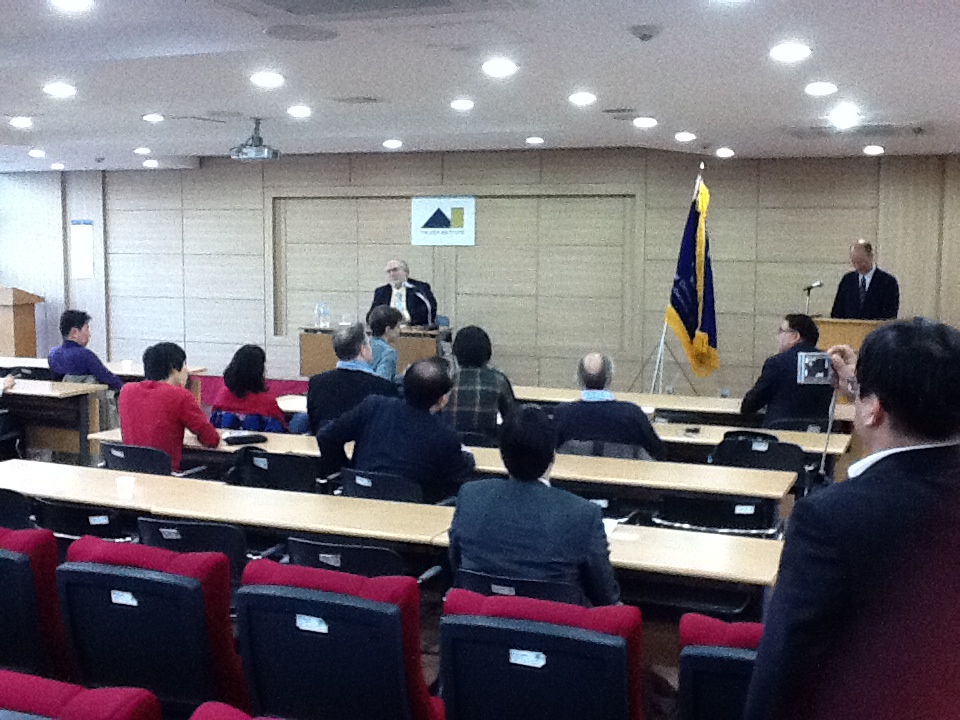
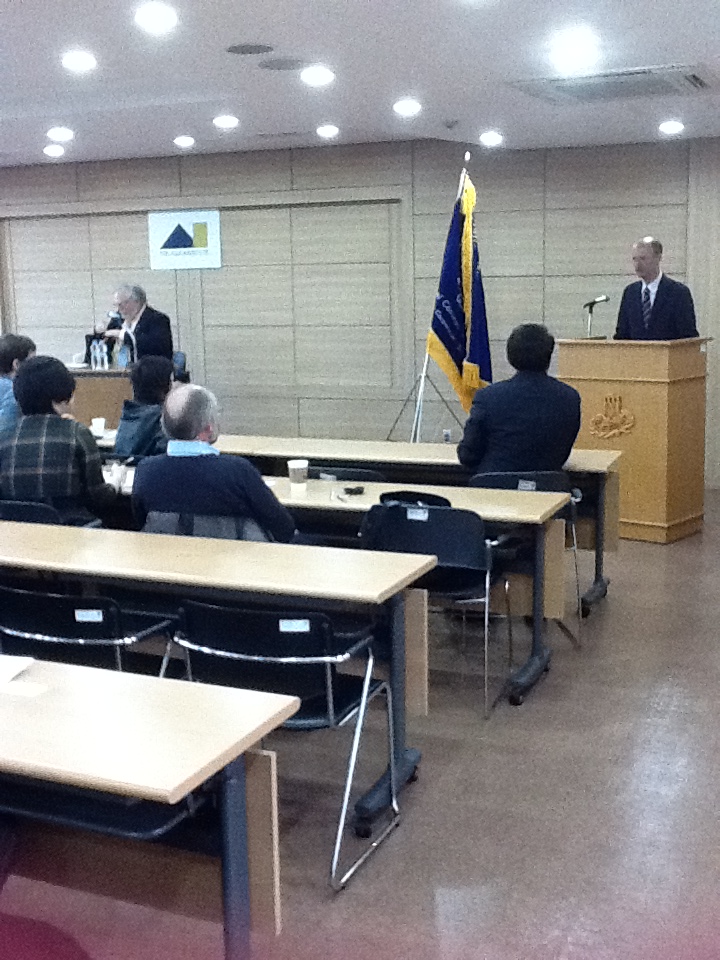
Asia Institute Seminar with John Feffer (April, 2012)
Asia Institute Seminar
21st April 2012
“Engaging North Korea”
Speaker
John Feffer
Author of
North Korea/South Korea: US Policy and the Korean Peninsula, Power Trip: US Unilateralism and Global Strategy After 9/11
& Crusade 2.0
Co-director of Foreign Policy In Focus
The Institute for Policy Studies
Political and Apolitical Reasons for Drinking Coffee in Korea
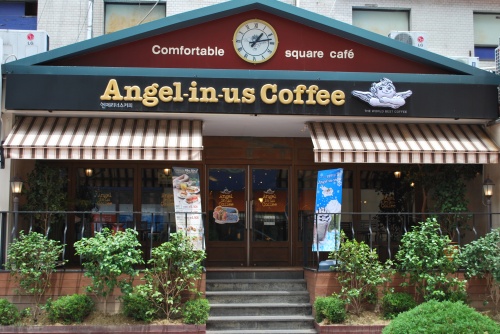
When I wrote the article about the “Café Revolution in Korea,” I did not go into a sufficient consideration of what is driving this craze for cafes. I would say that they make no economic sense. There seem to be cafes sprouting up on every corner and in the case of the road leading up the Kyung Hee University, I would go as far as to say that it is almost wall to wall coffee shops, many empty.
Asia Institute Seminar “Korea’s New Role as Global Development Partner”
Asia Institute Seminar
“Korea’s New Role as Global Development Partner”
May 25, 2012 (Friday)
6:30 PM
Speakers:
Peter M. Beck, Korea Representative for the Asia Foundation
Emanuel Pastreich, Director, The Asia Institute
Discussant:
Ki-Hwan Kim, Distinguished Visiting Scholar, Korea Development Institute
“The Critical New Role of the Traditional Hanok House” (essay by Emanuel Pastreich)
The Critical New Role of the Traditional Hanok House
Emanuel Pastreich
9 May 2012
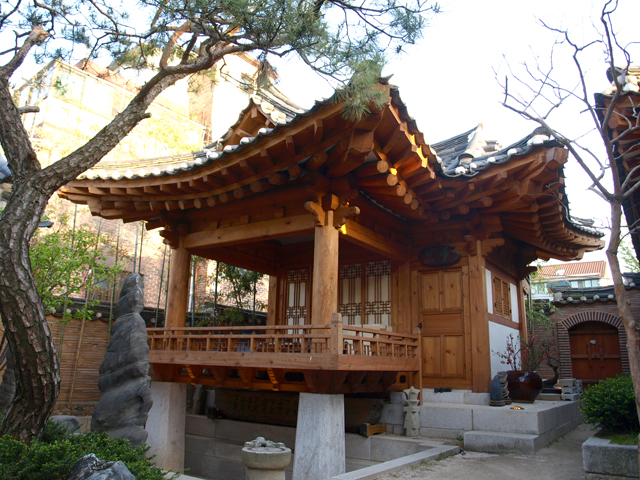
At a time that Koreans are playing such a critical role in the most advanced fields of technology, biotechnology, electronics, new materials and nano technology, there is one field of technology in which Korea has been losing ground and that has potential to be a billion dollar industry with profound implications for Korea’s global standing.
That field of technology is the traditional skills of carpentry and design associated with the building of the traditional Korean hanok house (한옥). Although few youth would consider this field of technology from the past as interesting career in an age in which new fields of science are opening up, a strong argument can be made that a massive investment in the technology of the hanok house is exactly what Korea needs at this point in its economic development.
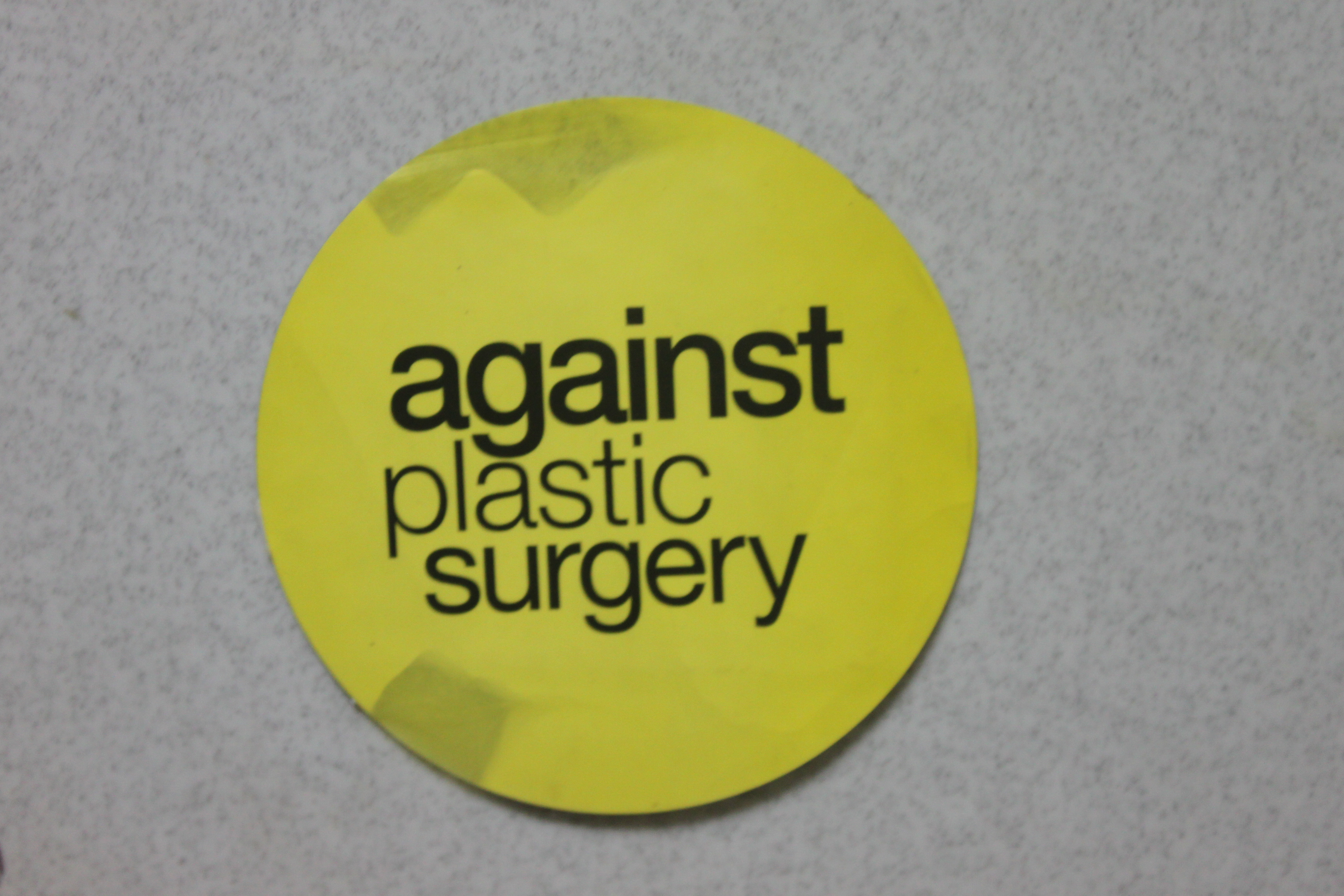
Seoul against plastic surgery
At a time when I wince every time I see young women on television who have had their features so completely remodeled to match some computer-generated ideal, I found this sign, in English posted around Seoul this week. I do not know who put the stickers on walls and telephone poles, or why it is in English, but the stickers are intriguing nevertheless.