Examples of innovation in Japan

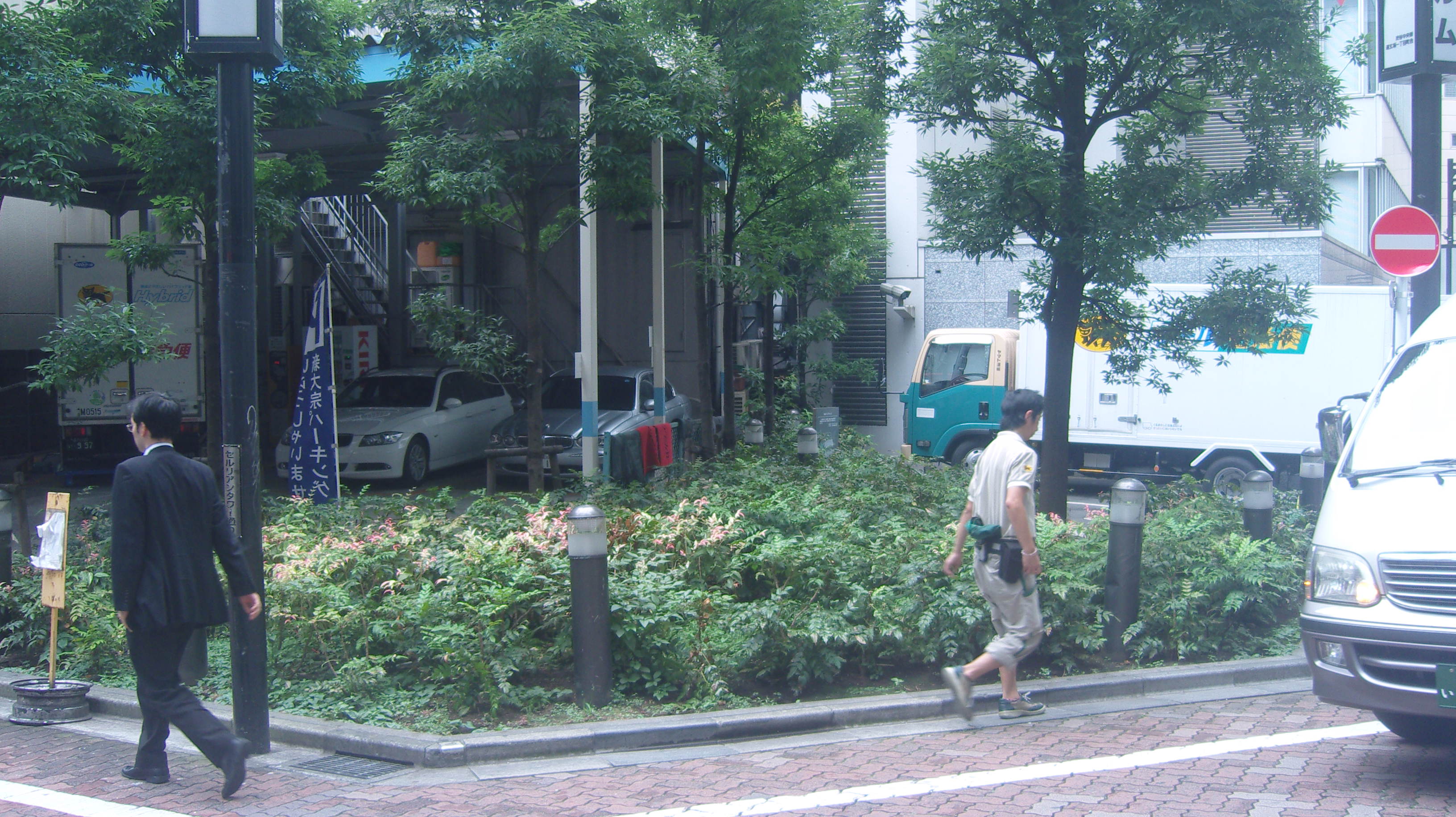
During my recent visit to Japan to attend a meeting at RIKEN and see  a few friends at University of Tokyo, I was quite impressed at the innovation I saw all around me in Japan. For example, a small bit of land in downtown Tokyo was converted into a very attractive natural space with flora that truly appeared wild.

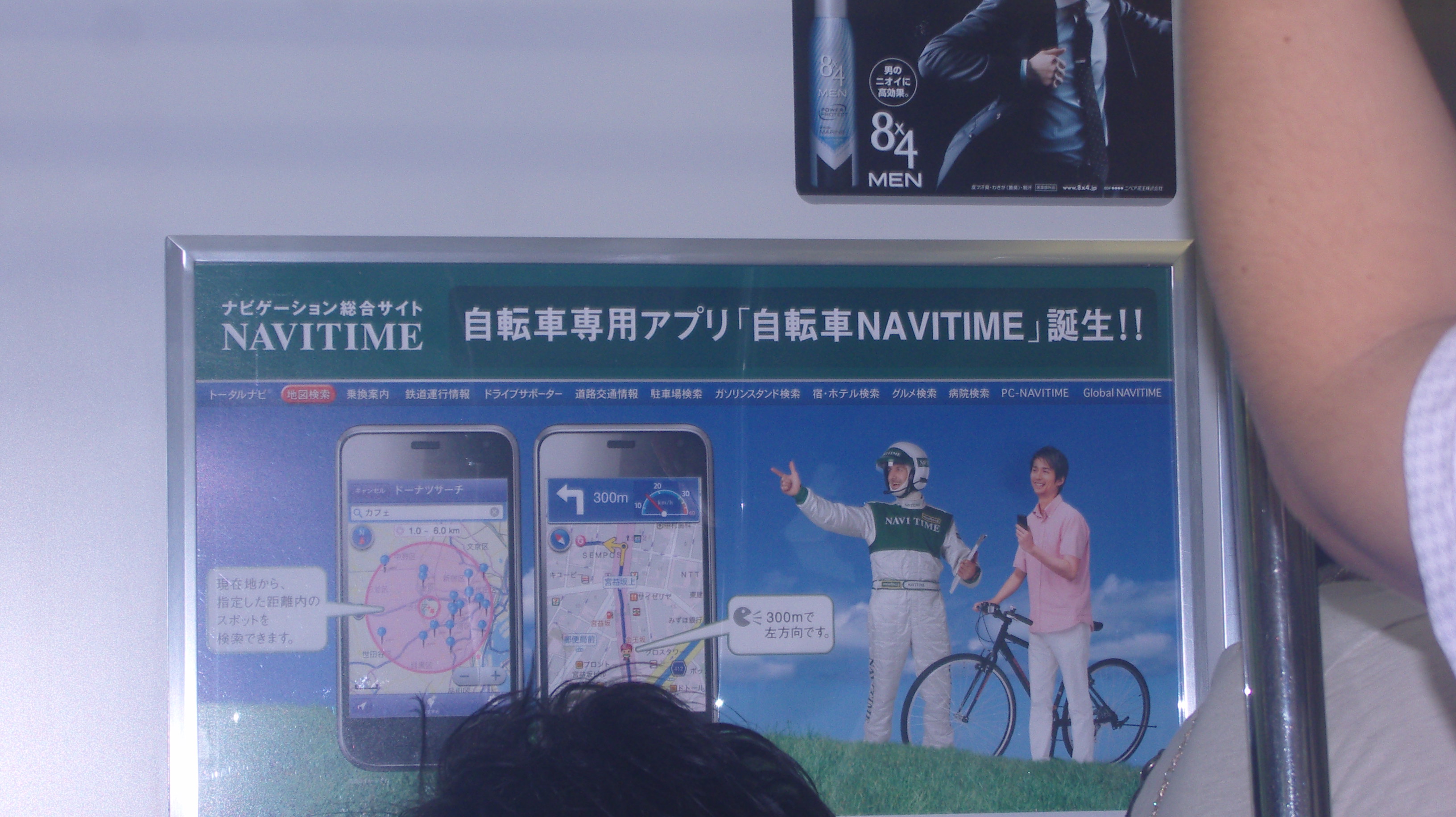
I saw an advertisement for a very innovative navigation system aimed at bicycle riders.

Dr. Isoshima at RIKEN was wearing a ventilated shirt that looked remarkably comfortable, with two small fans sewn in place.

In Wako there is an organic farm. This dispenser allows the local residents to sell their pumpkins to passersby.
An empty lot in the Shibuya neighborhood of Tokyo is lovingly maintained as a natural space.
A new system for navigation aimed at bicycle riders
Here is a ventilated shirt that my friend Dr. Isoshima at RIKEN was wearing the other day.

Participation in the community in Korea

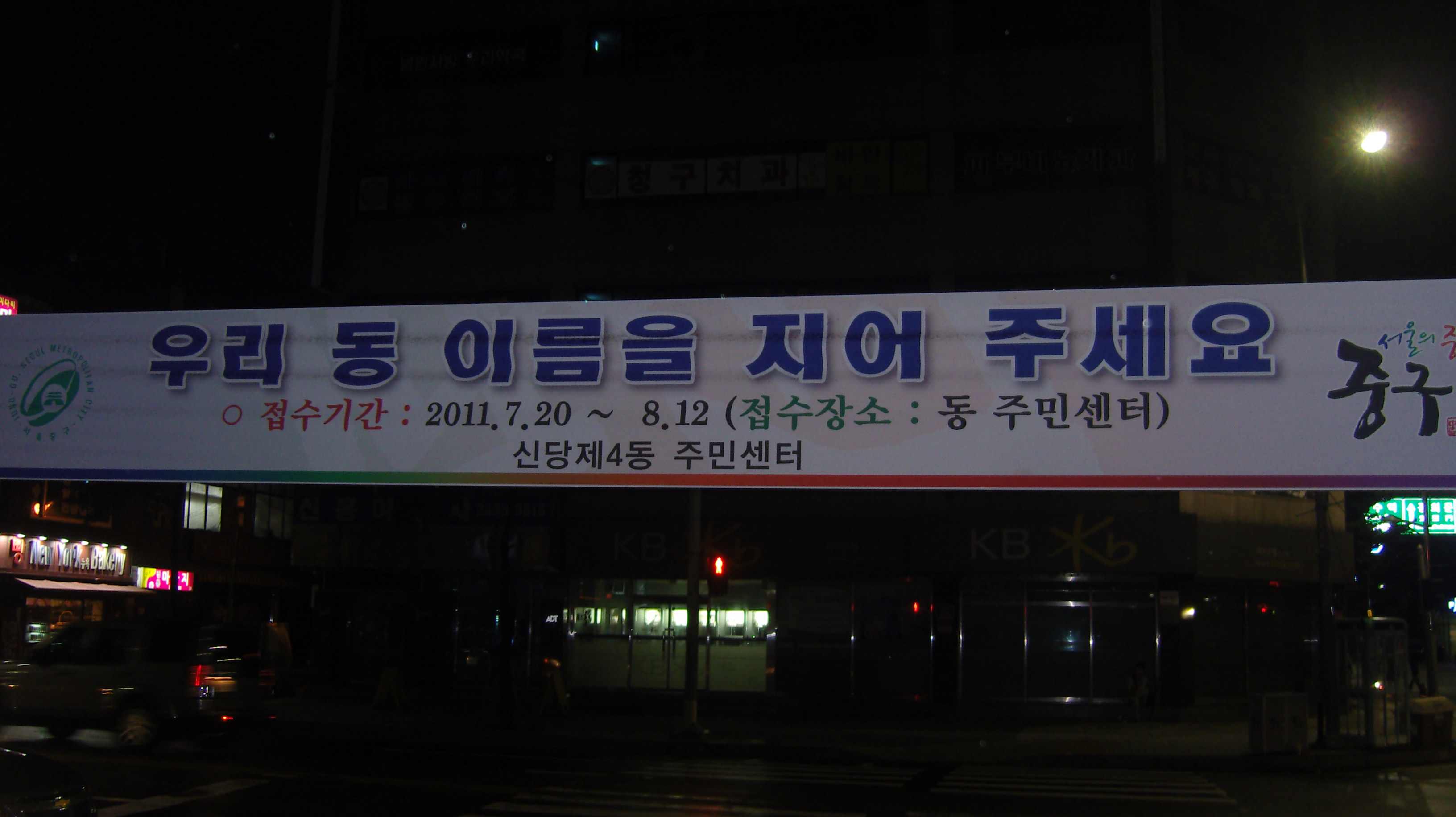
It is just an anecdote,, but it speaks volumes. Here is a call for citizens to suggest names for their neighborhood in the Jung-gu District of Seoul. I see constantly calls for contests and other opportunities for citizens to participate in the naming and the planning of the metro and the city in Seoul. How sincere all of these calls are, I cannot say, but I can say that I do not see much such calls much in the United States.


Some thoughts on the CIA

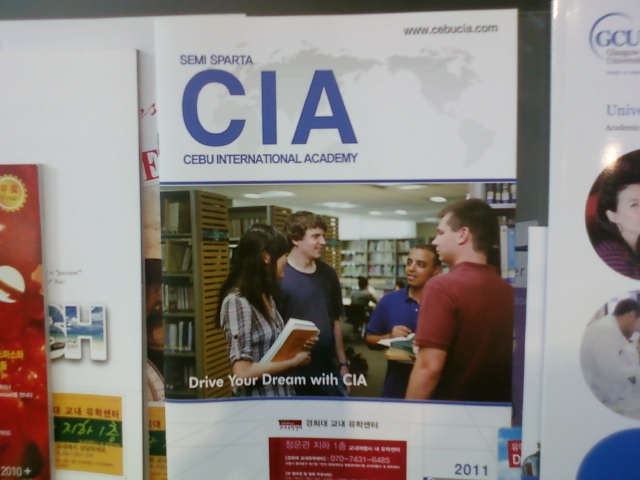
This advertisement for the Cebu International Academy is quite revealing. The term CIA is rather amusing, of course. But it also suggests something about some fundamental trends in our times. As we can see here, the term “CIA,” originally associated with the Central Intelligence Agency established by Harry Truman, has been reduced to a rather amusing phrase that can be assigned to just about anything in a rather light-hearted manner. The authority of force, and the control of information, known from a previous age has been reduced and cheapened. Of course some might say that it is a positive trend, granted the abuses associated with intelligence. But although we should be honest with ourselves about the mistakes of the past, we should also be quite wary of the degradation of terms. Once terms cease to have any real gravitas, authority can be grabbed by just about anyone.


Future Success of Scientific Research Institutes (Article)

KOREA IT TIMES 

Key Factors for the Future Success of Scientific Research Institutes

Friday, September 9th, 2011

Emanuel Pastreich

The future of the research institute is one of the most critical topics of our age. Across the world, research institutes are struggling to define their vision and their function in response to the rapid evolution of technology and a changing economic and demographic environment. Here are a few issues that are central to assuring that a future research institute fully realizes its potential.

1. The need for a vision of how the research institute contributes to society

In the long term, large research projects will be strong candidates for funding, and broad enthusiasm among workers, researchers and taxpayers if they feature an over-arching vision for explicit social contributions. In an age of limited budgets, the need to show social relevance will be decisive. We have many research institutes that describe their research in terms of biotechnology or nanotechnology. Such descriptions are fine from an intellectual point of view, but in the future justifications for funding must be made in terms of a direct response to serious medical, environmental, or energy challenges, locally and internationally. Creating an intellectual backdrop that highlights how the research institute is leading the way, not only in terms of new developments in medicine and biotechnology, but also in an ethical sense, will be the key to building international collaboration networks. Those networks, by extension, will determine the effectiveness of the institution.

Read more

The significance of Peace Studies in 2011

My increased collaboration with the Graduate Institute for Peace Studies at Kyung Hee University, and my work with the Global Peace Festival Foundation in planning the November Global Peace Convention in Seoul has led me to think more deeply about the term “peace” and its significance in our age.

Two things are clear:

First, “peace” is growing in influence as a critical concept for responding to the challenges of our age and an idea with immense intellectual and emotional appeal.

Second, the concept of  “peace” will require a thorough redefinition in light of significant changes in human society that have taken place and the new challenges that we face. We need to build a discourse on peace that is at least as nuanced and authoritative as that used for “security,” or for that matter that used for “economics.”

Read more

Report “Strategies for Promoting Successful International Collaboration in Convergence Technologies” submitted to Seoul National University

The Interdisciplinary Studies Program at Humanitas College, Kyung Hee University, submitted to Seoul National University’s Advanced Institutes of Convergence Technology (AICT) a research report entitled “Strategies for Promoting Successful International Collaboration in Convergence Technologies: A Consideration of the Korean Bio-Medical Field” on September 1, 2011. This report was the culmination of Emanuel’s work over the summer including his discussions with University of Illinois, Yale University, MIT, RIKEN (Japan) and other institutes concerning effective strategies for international collaboration in convergence technology research.

The study was guided by Emanuel Pastreich, Eugene Pak, Ph.D.,  of SNU, AICT, and Vince Rubino of SEE GENE Incorporated. Michael Gehret, Associate Director of the Institute for Advanced Studies  and Richard Herman, Chancellor Emeritus of University of Illinois, Urbana-Champaign, participated in the study.

We hope to expand the study into a long-term program for facilitating international collaboration in the near future.

 

Panel on Transportation and Resources in Mongolia at “Mongolia and Northeast Asia Peace” Conference in Ulaanbaatar

Panel on Transportation and Resources in Mongolia at “Mongolia and Northeast Asia Peace” Conference in Ulaanbaatar

Emanuel Pastreich had the opportunity to head a panel of experts for a discussion of opportunities and challenges in the energy, transportation and natural resources sectors held at the Global Peace and Leadership Conference “Mongolia and Northeast Asia Peace.”

The Global Peace and Leadership Conference “Mongolia and Northeast Asia Peace” (August 25-27, 2011) was a remarkable event bringing together wide range of individuals and groups committed to a peaceful and fair approach to social, cultural, economic and institutional integration in Northeast Asia. The choice of Ulaanbaatar, Mongolia as the site has particular significance as Mongolia is a new power in the debate on Northeast Asian integration. As an emerging economic center, with vast mineral resources and a tradition of leadership in both Central Asia and Northeast Asia, Mongolia has been visited recently by Korean President Lee Myung Bak and United States President Joseph Biden (Vice President Biden was still in town when our conference began on August 25).      

Read more

Teaching Korean Literature in English at Kyung Hee University

On Thursday, September 1, I gave my first lecture for a class on the novels of the Korean writer Park Jiwon for a class of undergraduates in the department of Korean Literature at Kyung Hee University. It was the first class ever at Kyung Hee University’s department of Korean literature that was explicitly designated for instruction in English and one of few such courses at Korean literature departments in Korea being taught in English.

The Ministry of Education, Science and Technology has recently pressed forward with new guidelines for increasing the use of English at Korean universities. Launching a course in English in the Korean literature department has great significance as Korean literature is perceived as the most immune to change and the most closely associated with concepts of cultural conservatism.

Read more