Tomato is one of the most innovative journals in Daejeon, active in promoting theatre, film and art in the Daeheung District of old Daejeon. I spent a good amount of time there with my children back in our happy Daejeon days. The interview describes our website introducing Daejeon: “Daejeon Compass.” There is also a reference to my analysis of the most serious problem facing Korea: the gap in imagination.
Christian Thought (기독교사상) on Emanuel’s work (article in Korean)
This article in the November, 2011 issue of “Christian Thought” (기독교사상) includes a rather lengthy interview in Korean.
Make the Next President of KAIST a Woman! (article in Korean)
Article arguing in Korean that the next president of KAIST should be a woman.
|
|
|
KAIST(한국과학기술원·총장 서남표)는 대한민국 과학의 방향 및 방법의 선도자로서 중요한 역할을 맡고 있다. 지난 7년 동안 KAIST의 혁신은 대한민국의 혁신으로 재빠르게 이어졌다. 로버트 러플린 미국 스탠퍼드대 교수가 총장으로 임명됐을 때 KAIST는 새로 국제적인 전망을 제시하고 한국 연구기관의 국제적인 역할을 강조하면서 한국 교육제도에 적지않은 영향을 미쳤다. 또한 서남표 총장 부임 이후 KAIST 대학운영 및 교육개혁에 대한 국민적 공감대를 형성하는 계기도 마련했다.
Luxury Magazine and the Strange Phenomenon of Magazines for the idle Rich (essay
One of the most fascinating trends these days in Korea -which is paralleled in China and around the world- is the emergence of glossy magazines aimed at the super rich, or perhaps the want-to-be super rich, that are found in hotels, airports, coffee shops and boutiques. I selected the magazine Luxury, but I could have presented any number of this form of magazine. These magazines feature advertisements for expensive watches, clothes and other items completely out of the range of most people.
Talk at Reception for the publication of “Sejong City” by Choi Minho
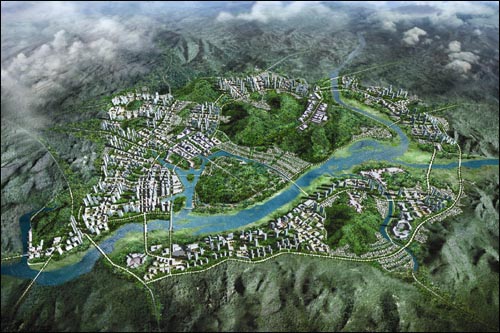
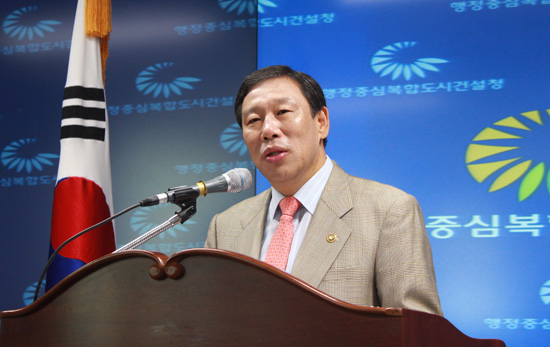
I was invited to deliver a short talk on the occasion of the release of Dr. Choi Minho’s new book “Sejong City: A Fulfilling Life with Sophisticated Neighbors” (풍요로운 삶, 품격 있는 이웃, 세종) on December 3, 2011. Dr. Choi has worked for the last six months as director for construction for the new Sejong City and is a candidate for mayor of the city.
As an entirely new city in Korea that has a number of government ministries slated to move down over the next few years, the challenge of making Sejong City a successful project is great, as is the potential. It was Dr. Choi who invited me to come to Korea in 2006 to serve as assistant to the then governor Lee Wan-gu (who also gave a talk on this occasion). Dr. Choi has been quite supportive of my efforts here in Korea and has displayed a remarkable concern for the arts and literature.
The book “Currency Wars:”
I came across a recent best-seller entitled “Currency Wars” by James Rickards at a book store recently. I did not manage to read the whole book, but as I find the question of currency conflict particularly interesting and the book presented a lively analysis of current issues, I spent some time with the book.
Panel on Cooperation in Energy, Transportation and Environment fields in Northeast Asia at Global Peace Convention
The recent Global Peace Convention in Seoul (November 28-29, 2011) brought together a remarkably diverse group of individuals from NGOs, business and academics to discuss the future of North-South relations. The concept of addressing the North-South division by inviting the input of youth from around the world was particularly striking. See the introductory video for Global Peace Convention for a sense of the approach to North-South relations:
Portraits: Marston Anderson (essay)
Marston Anderson
When I returned from my year in Taiwan, there was a new professor of Chinese literature at Yale whom I had never met. He was a tall man with very short blond hair and a shy personality. The new professor did not talk much unless you engaged in a subject, but then he spoke with an enthusiasm and alertness that was inspiring. His name was Marston Anderson and he had just received a Ph.D. from Berkeley in Chinese literature. I heard later that he had been considered one of the most promising young scholars of Chinese studies. Professor
Portraits: Jonathan Spence (Essay)
Jonathan Spence
Jonathan Spence is the towering intellectual in Chinese studies at Yale, a man who has produced generations of important scholars in Chinese history and inspired many undergraduates at Yale to study Chinese. His most important role, I believe, has been introducing Chinese culture to American intellectuals who would otherwise not take much interest. Because he writes such elegant English, and is so well versed in the Western classics, his writing makes China accessible. I took only one course with Professor Spence, his famous survey of Modern China. We established a close relationship that has lasted to this day.