Colin Allen just posted an article entitled
“The Future of Moral Machines”
on the New York Times Opinionator page. The article offers offers some interesting insights into the moral authority of machines both past and present.
Colin Allen just posted an article entitled
on the New York Times Opinionator page. The article offers offers some interesting insights into the moral authority of machines both past and present.
Korea IT Times
Thursday, January 5th, 2012
Red Alert: Korean Language Instruction in the United States
When I started studying Korean language at Harvard University, there were about 30 students in the class the first day. Twenty-two of them were Korean Americans and eight were non-Koreans. Within two weeks I was the only non-Korean in the room. The instructors of the class were Korean graduate students with no real training in how to teach Korean to non-natives. When the Korean Americans in the class were able to make simple
Here is a fun interview from KBS Good Morning Pops aimed at Korean youth studying English.
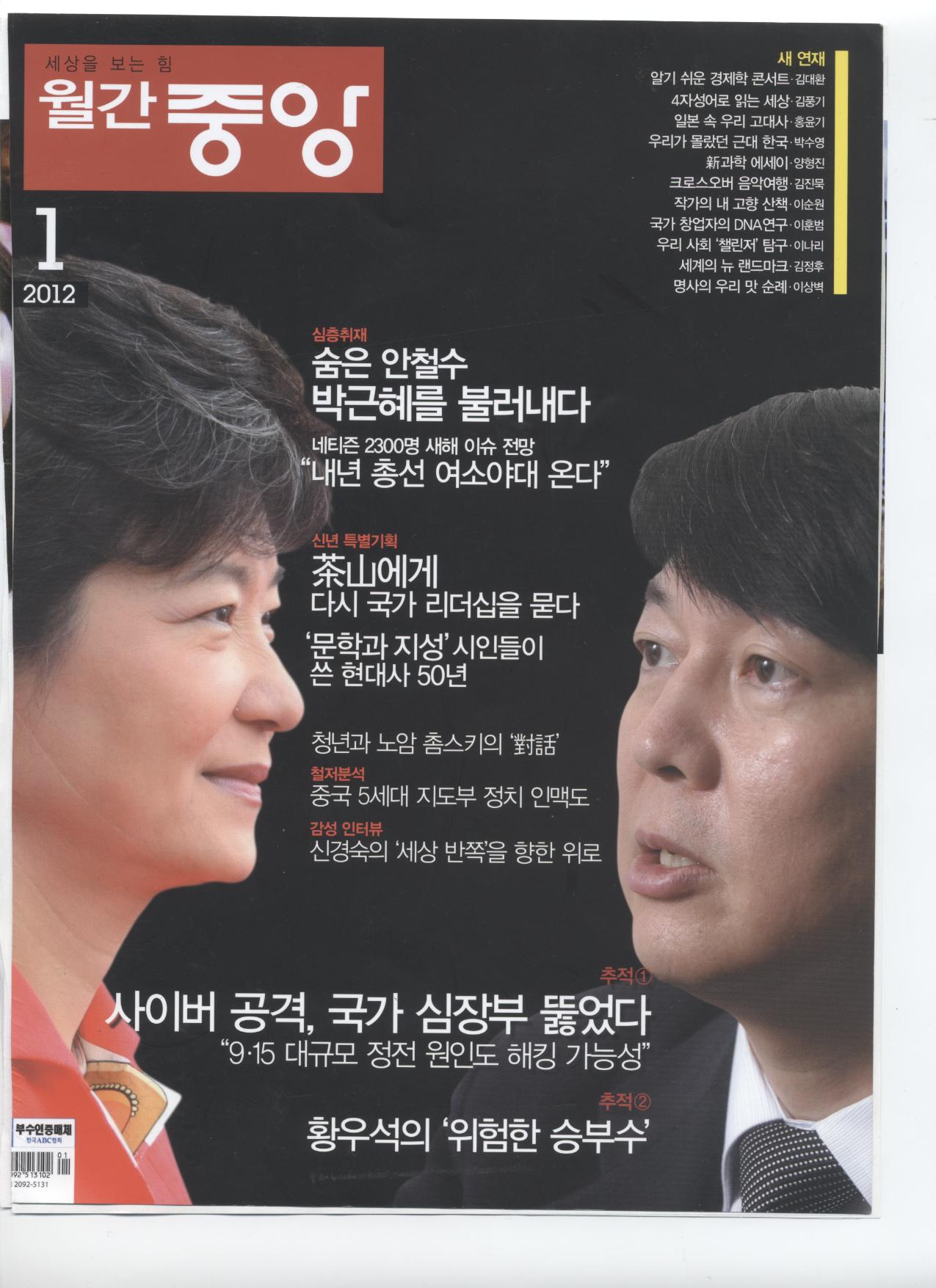
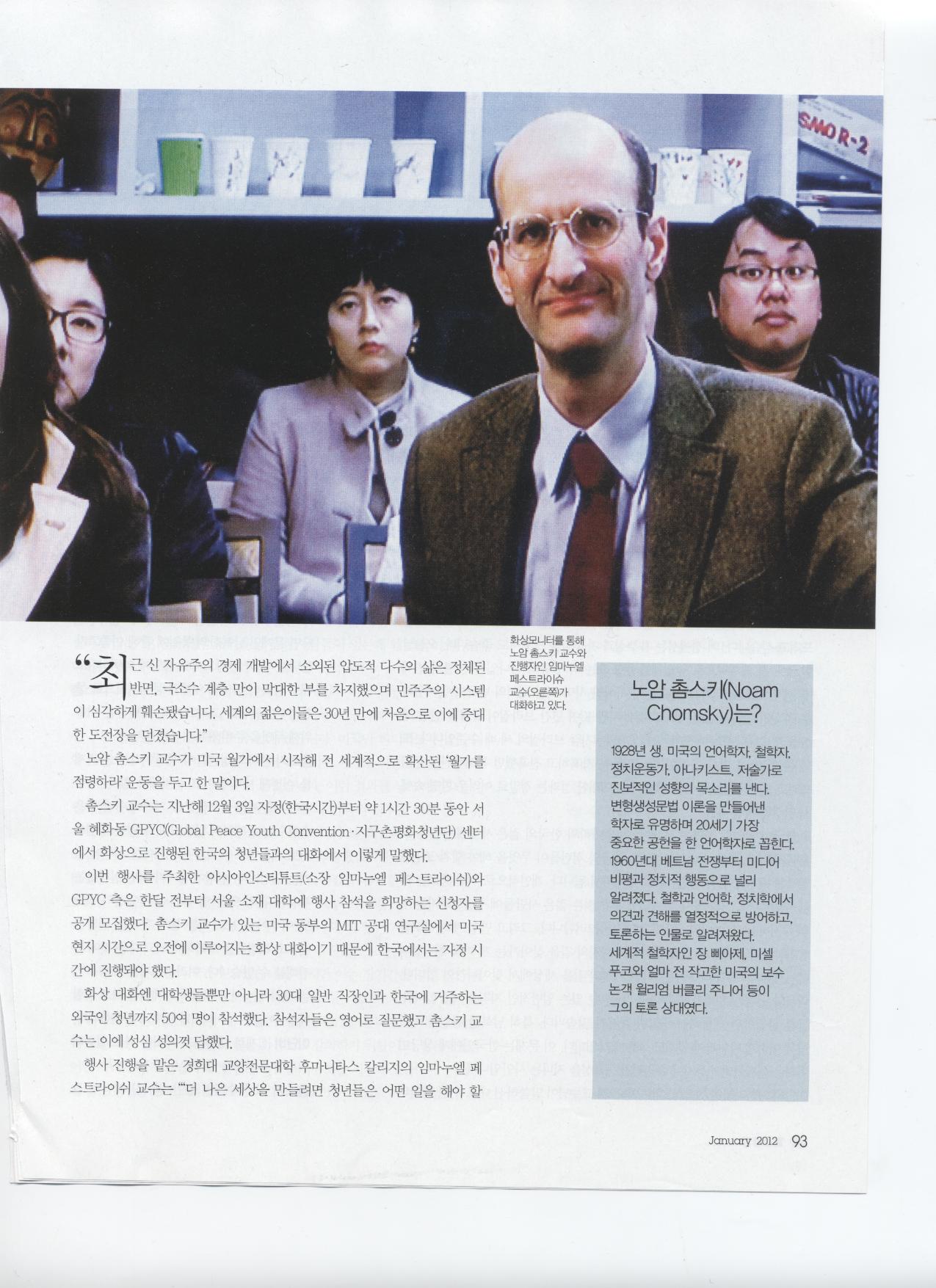
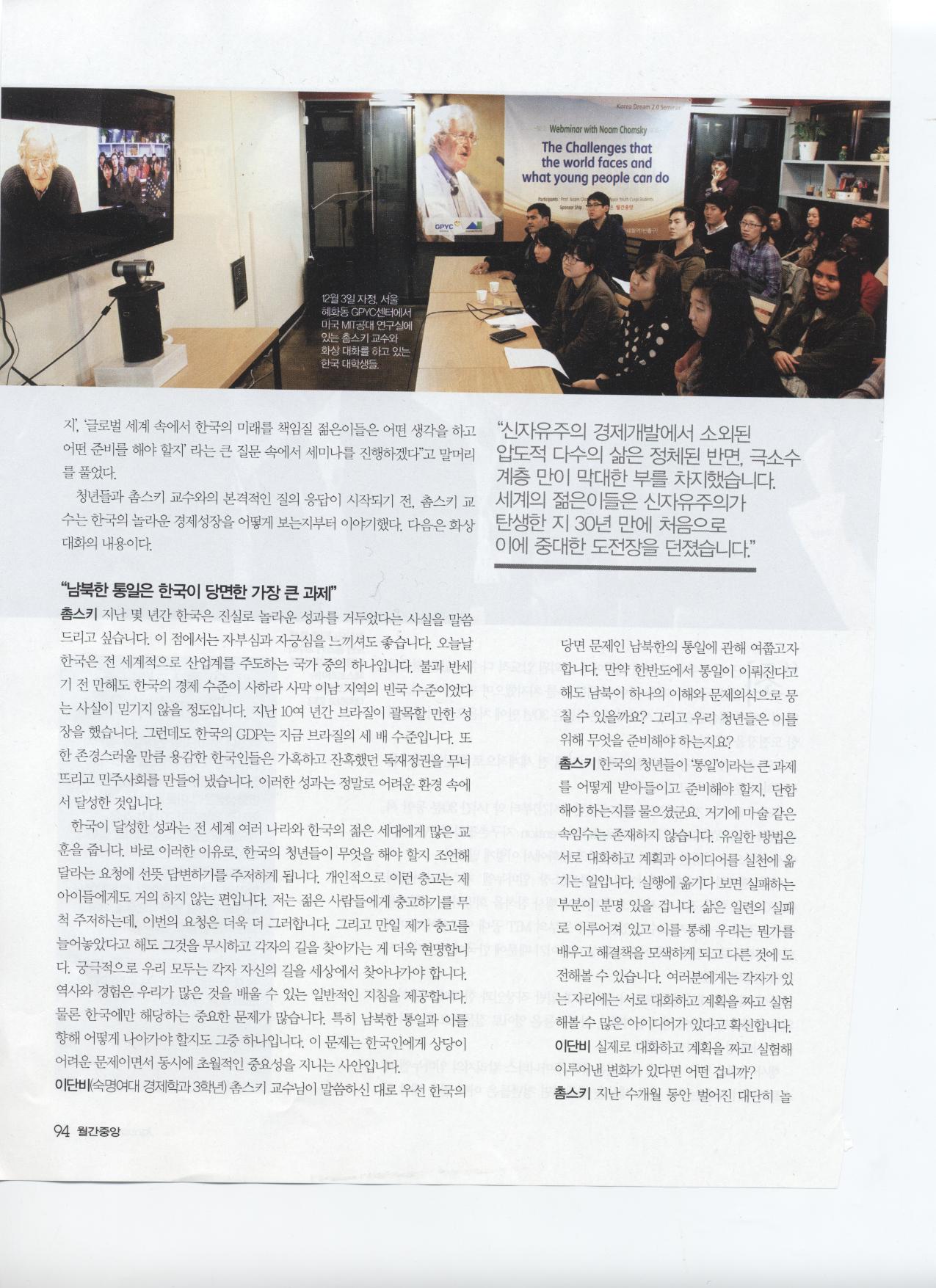
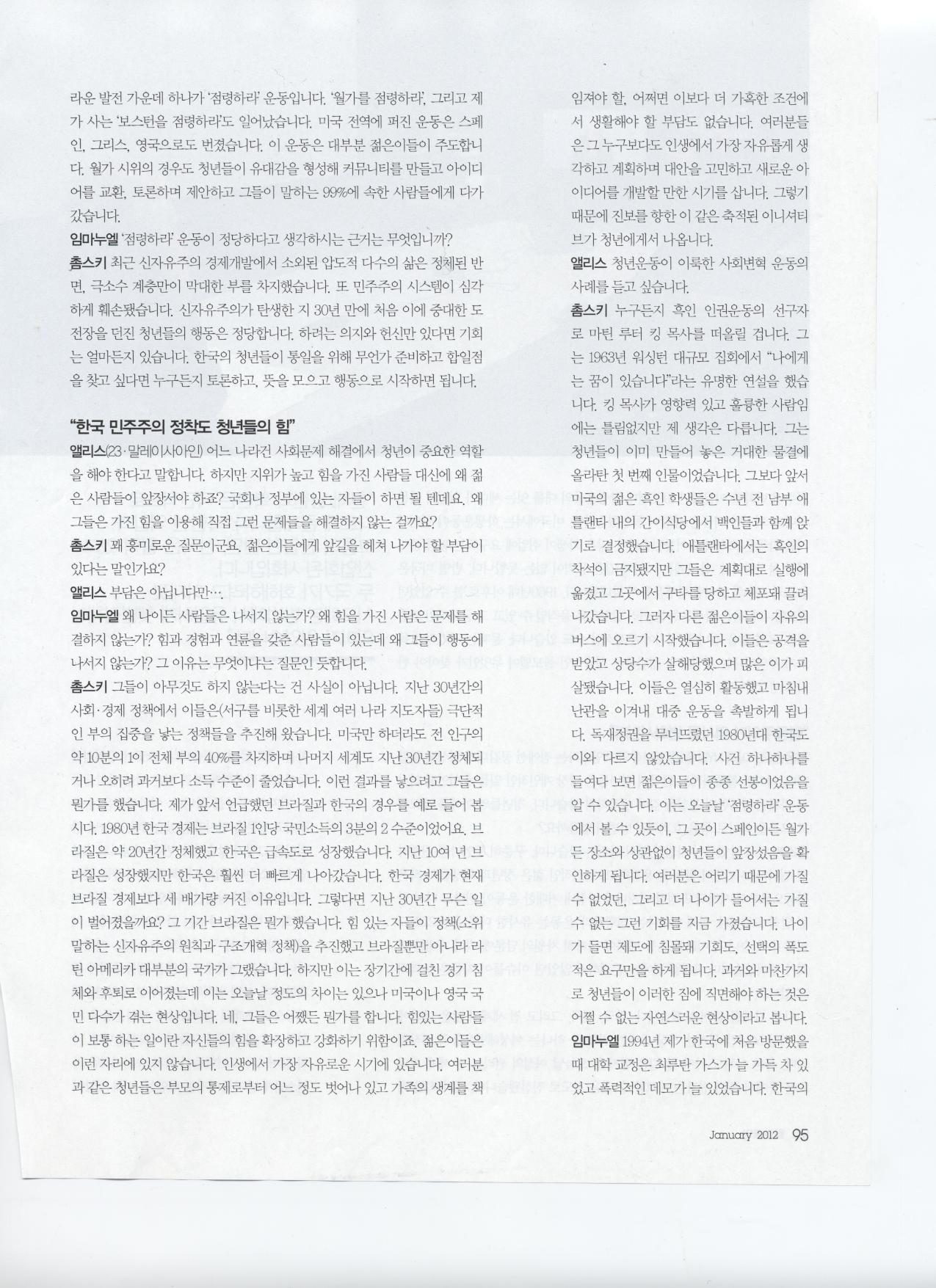
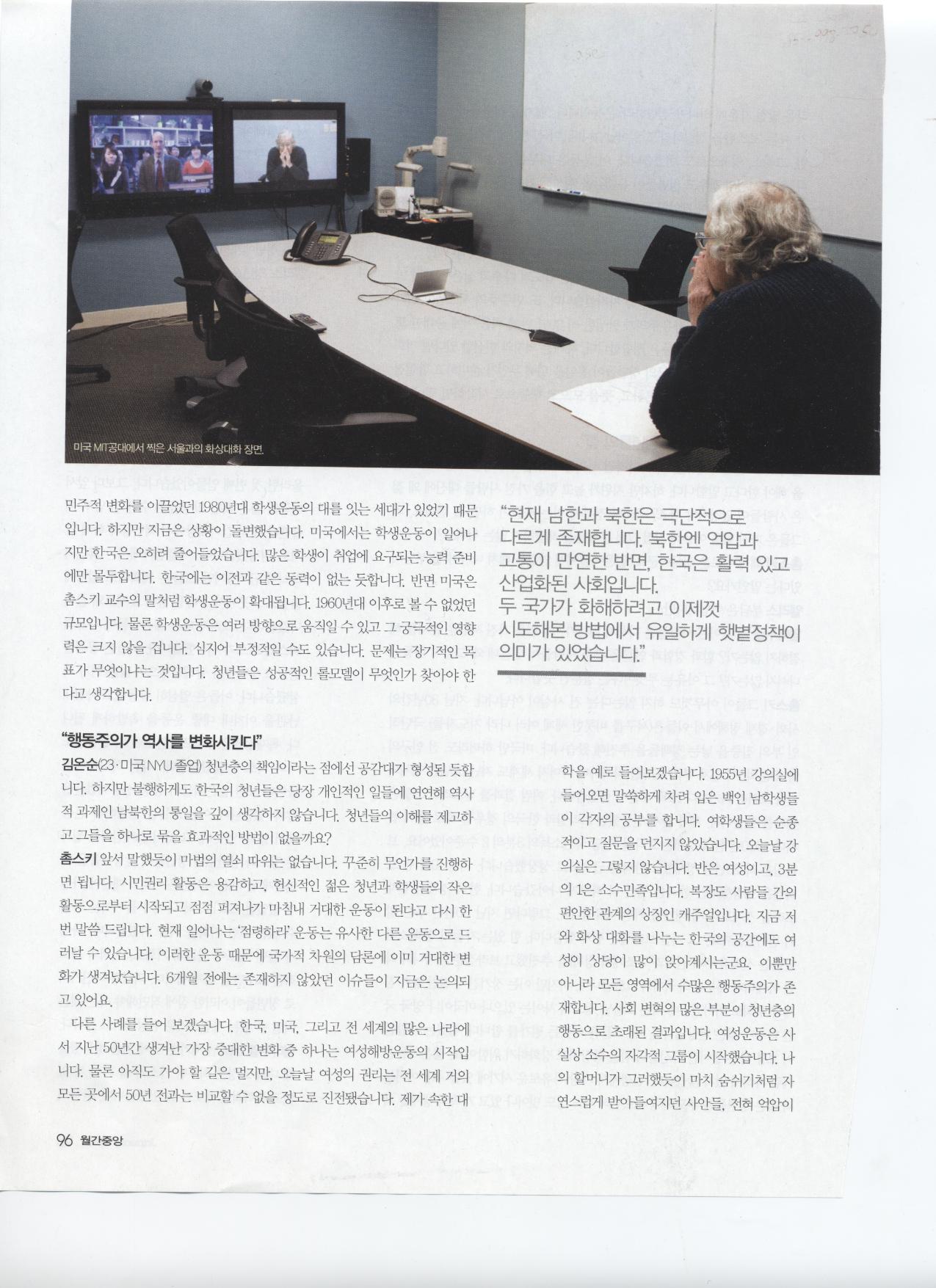
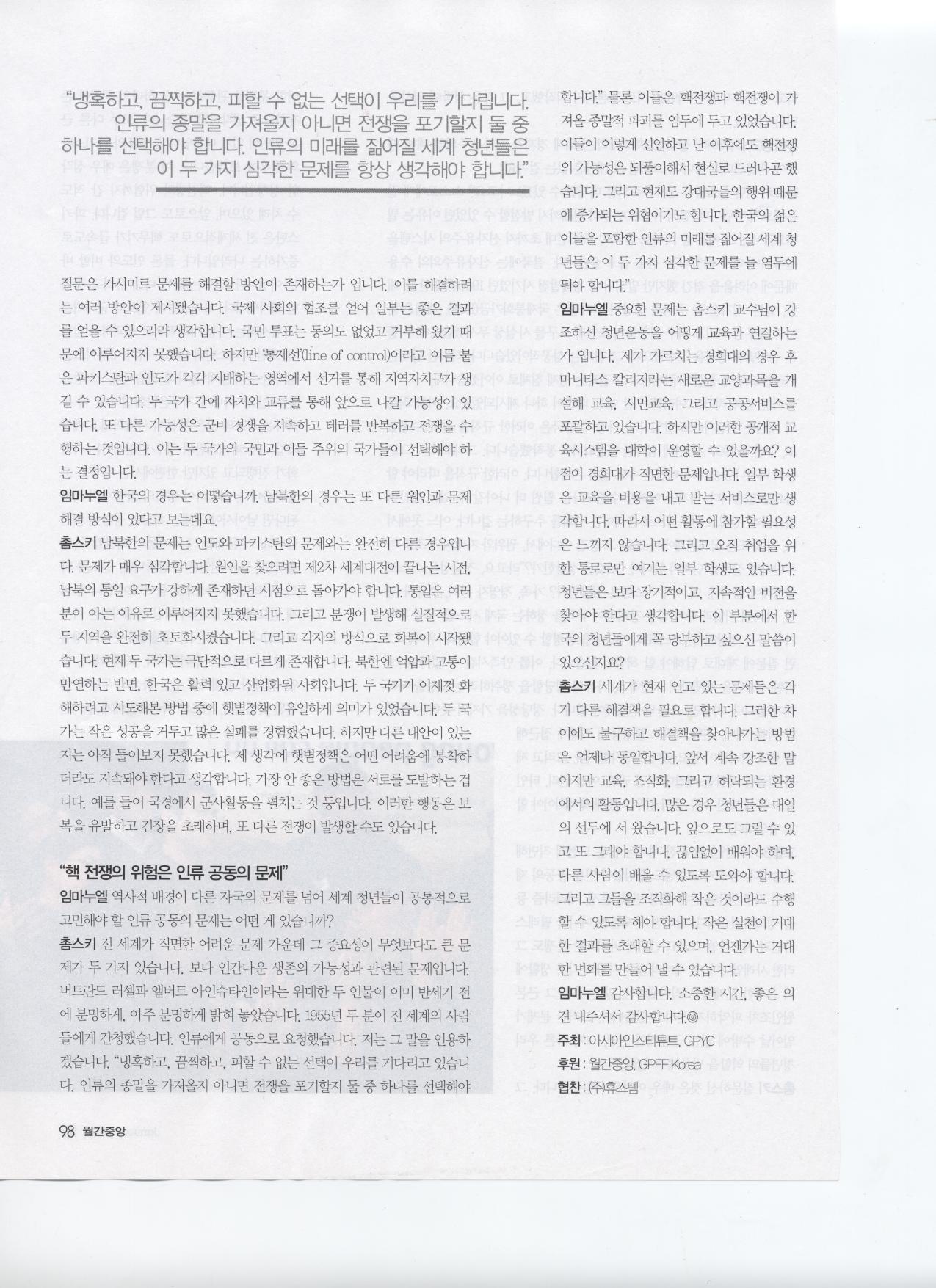
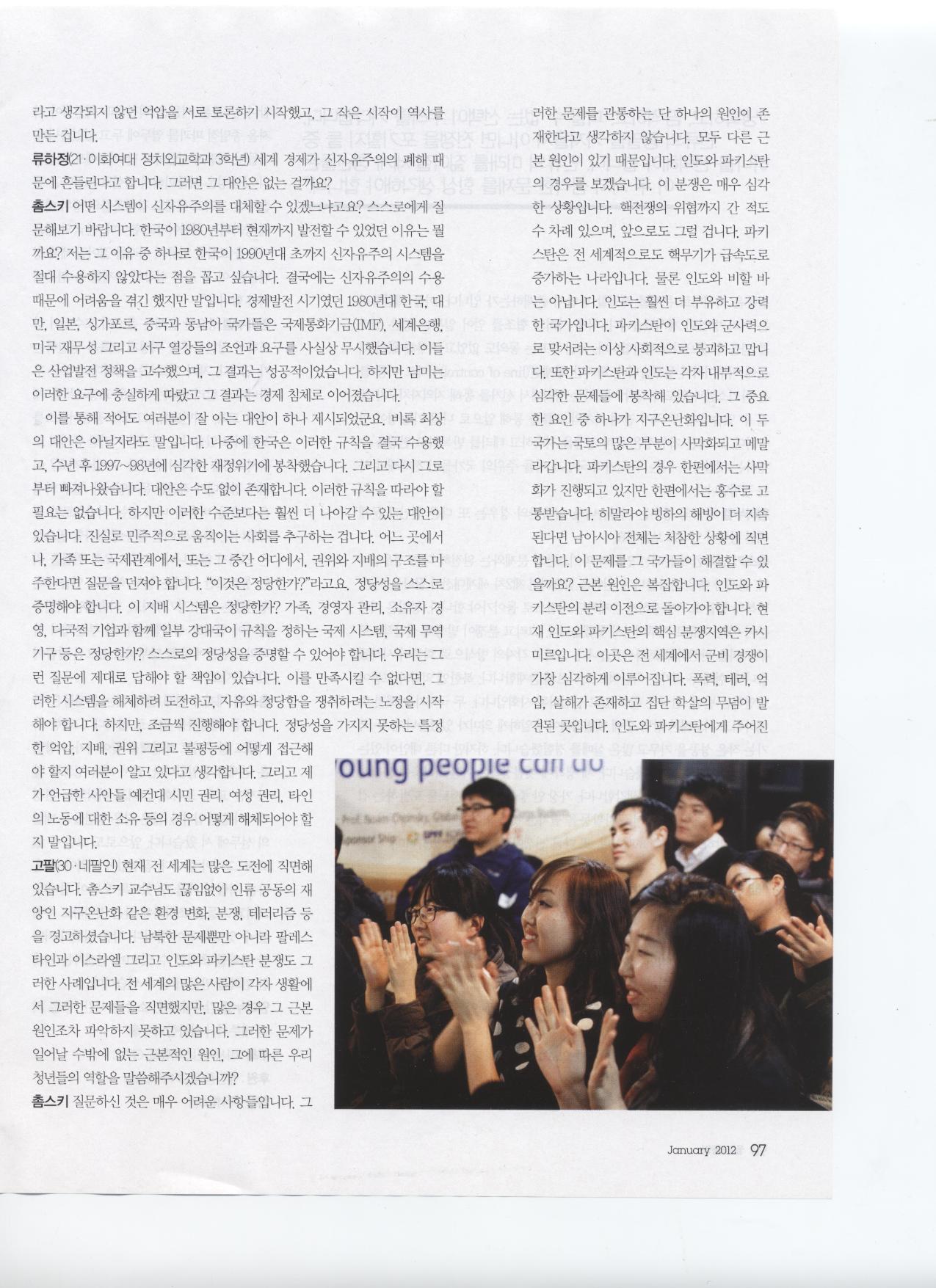
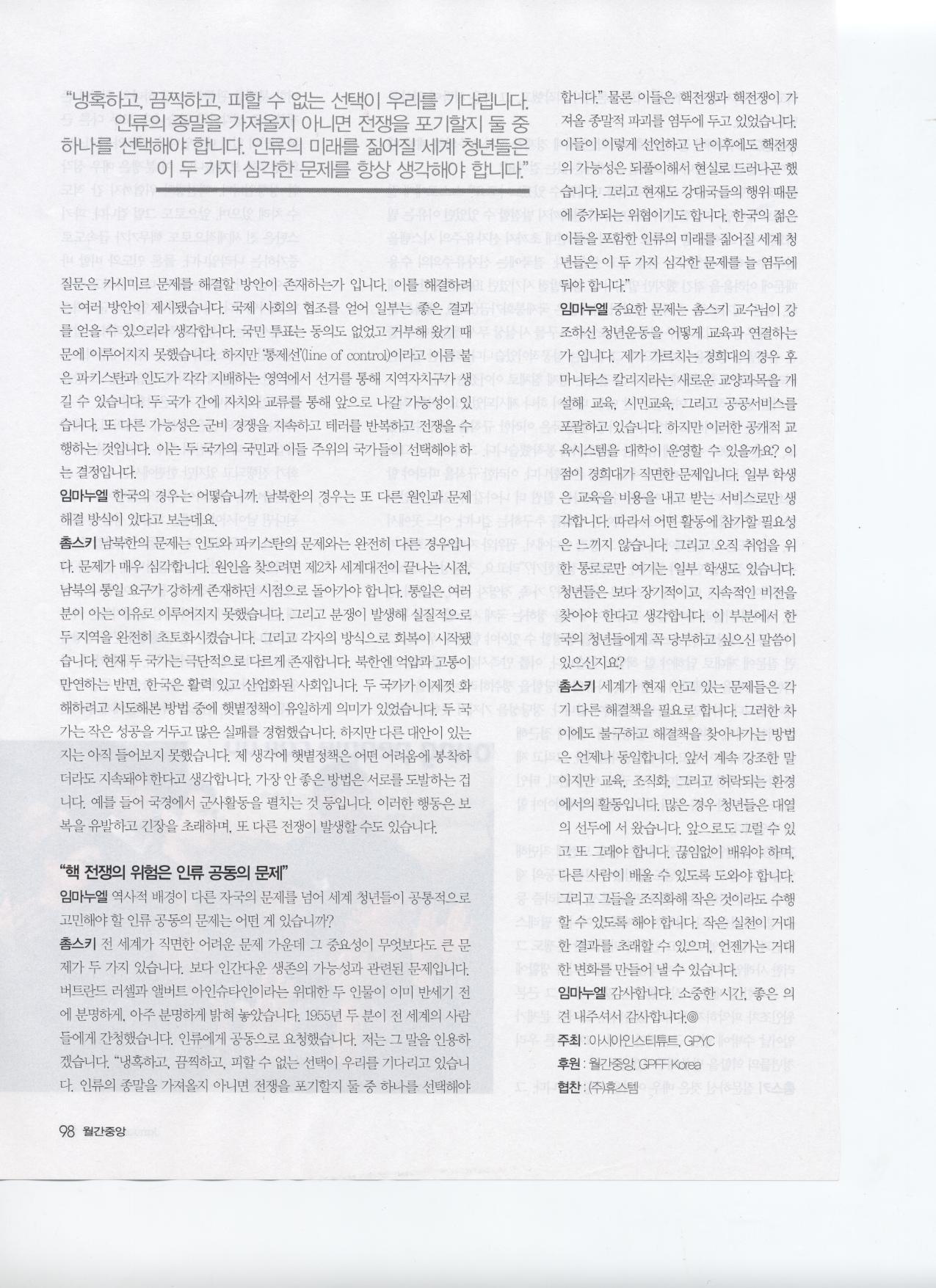
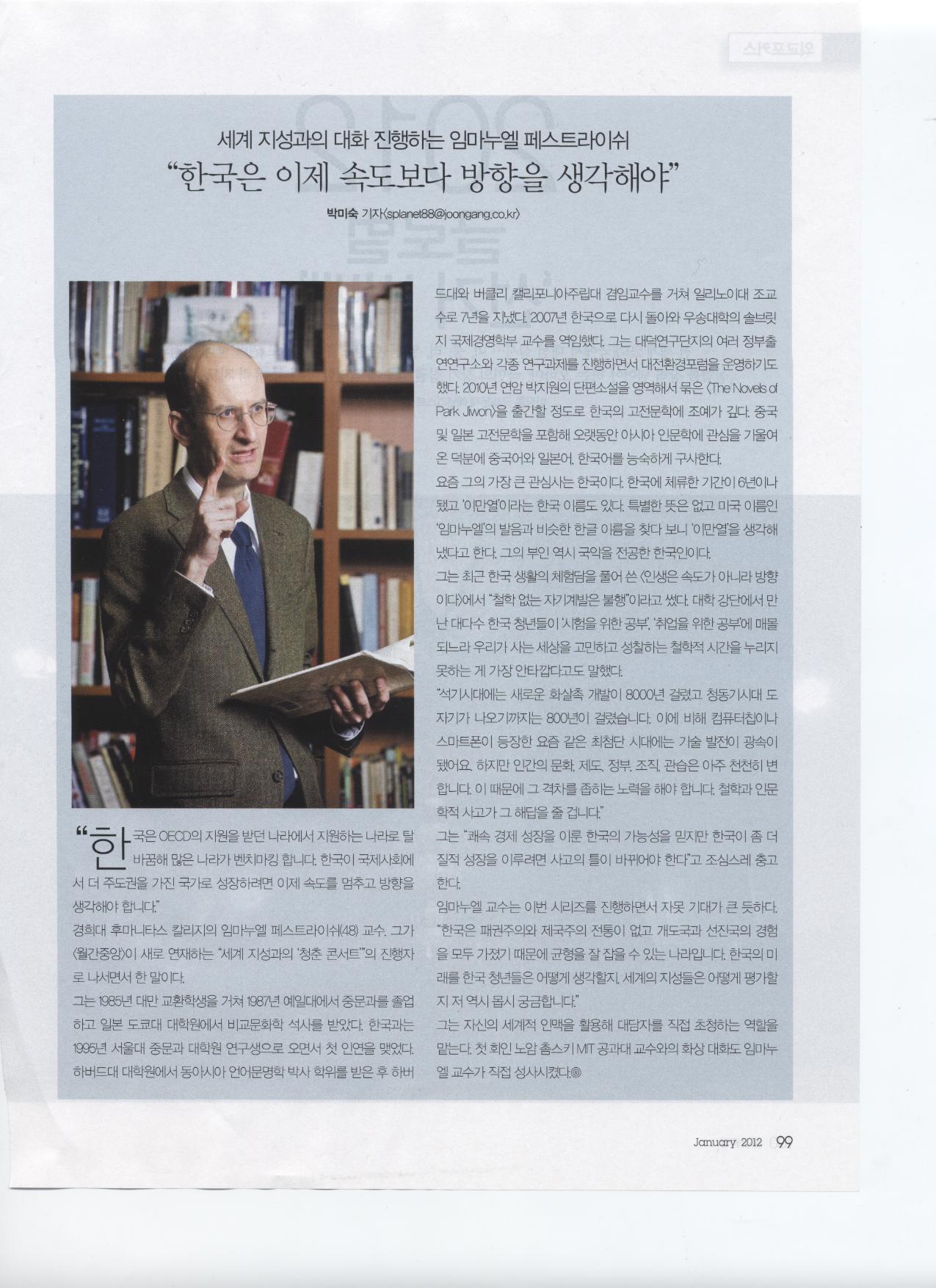
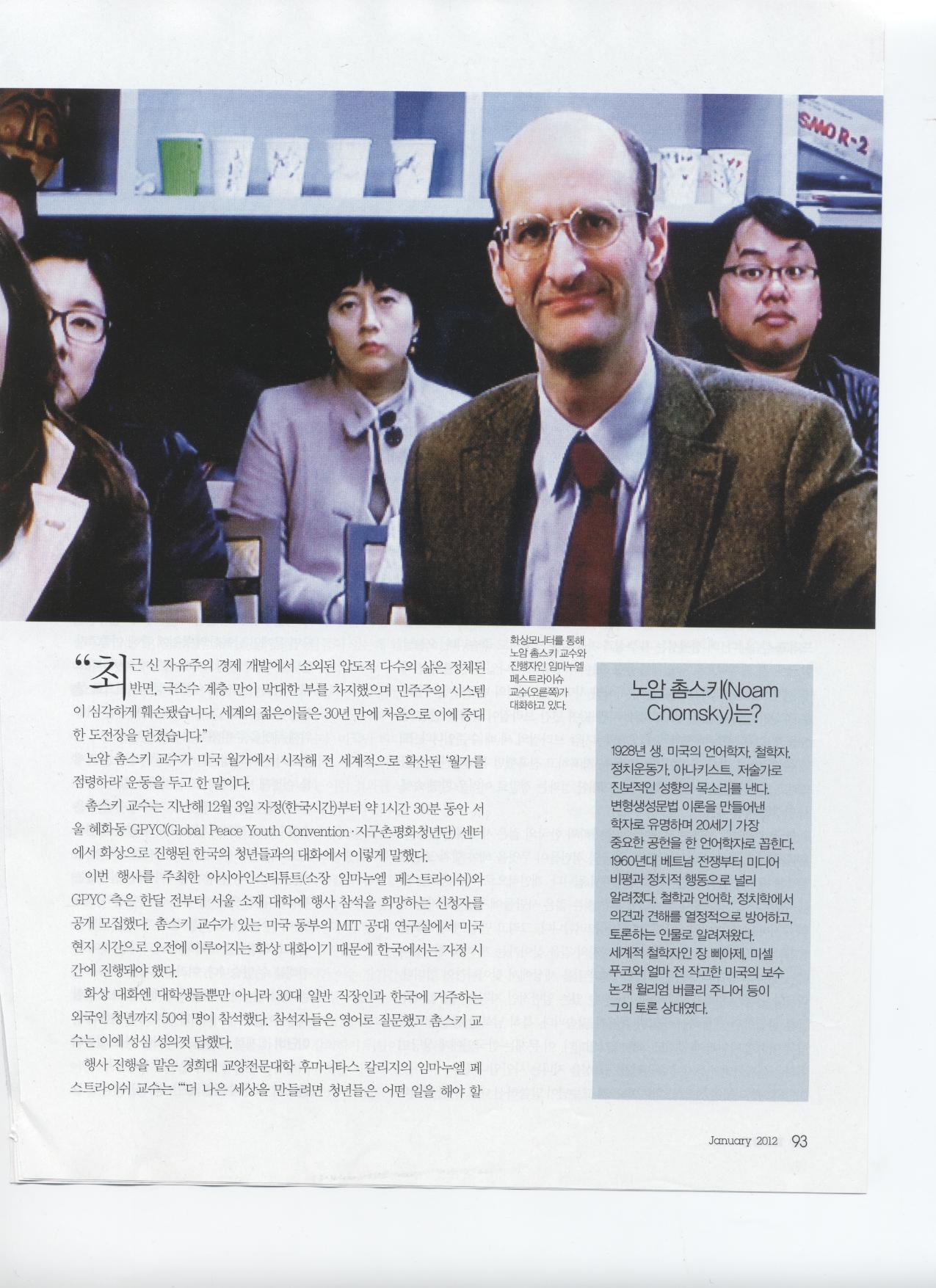
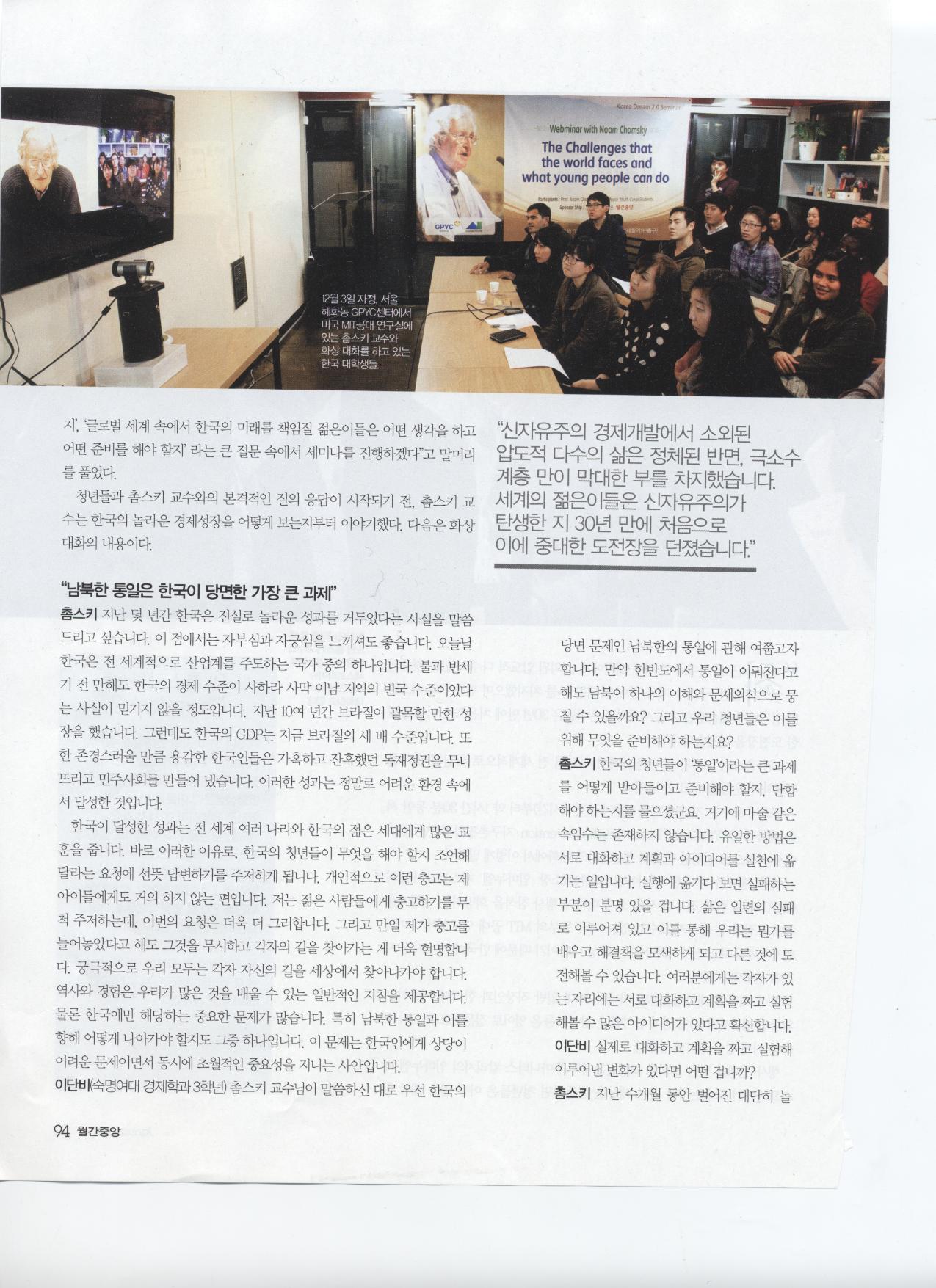
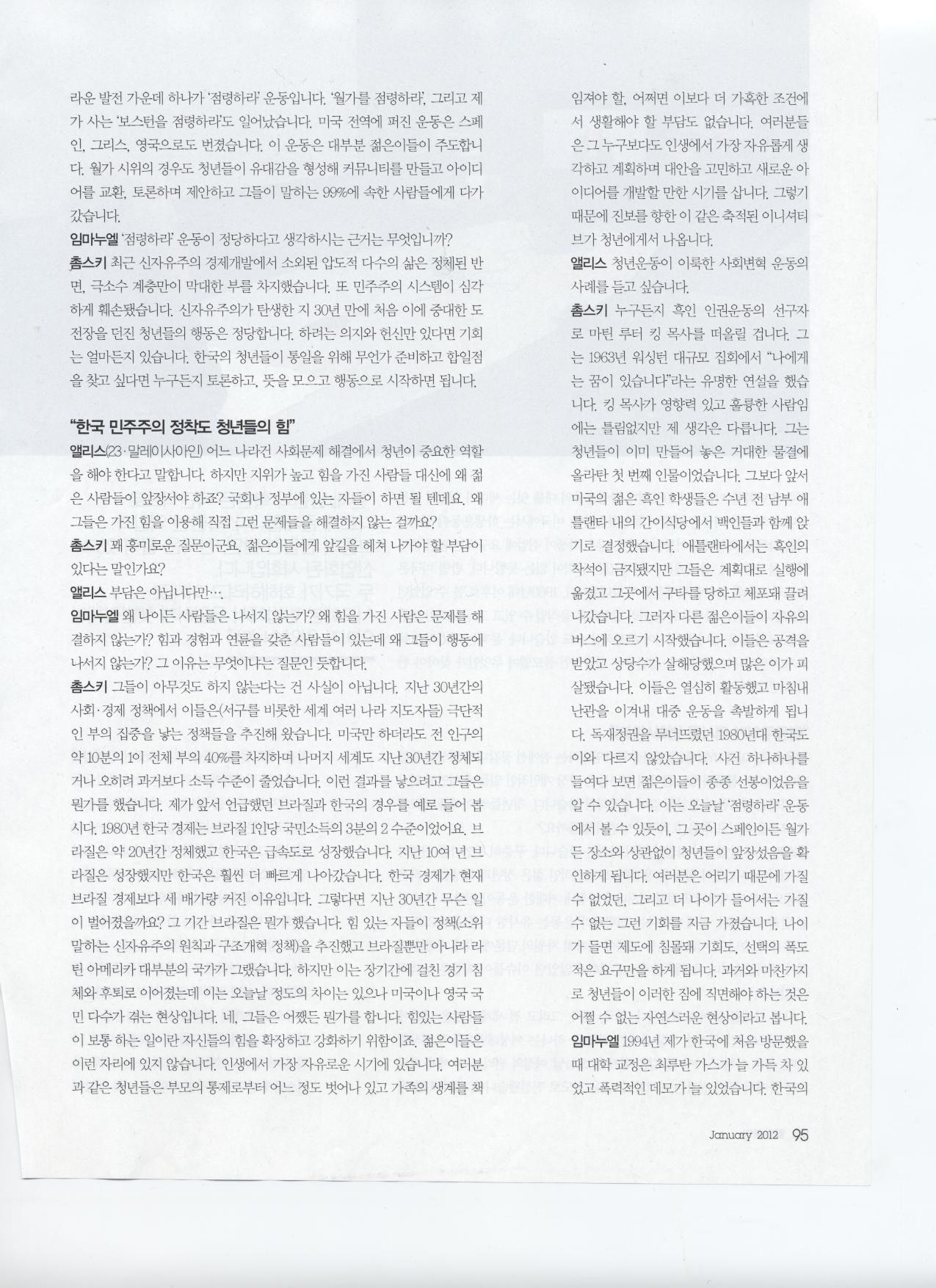
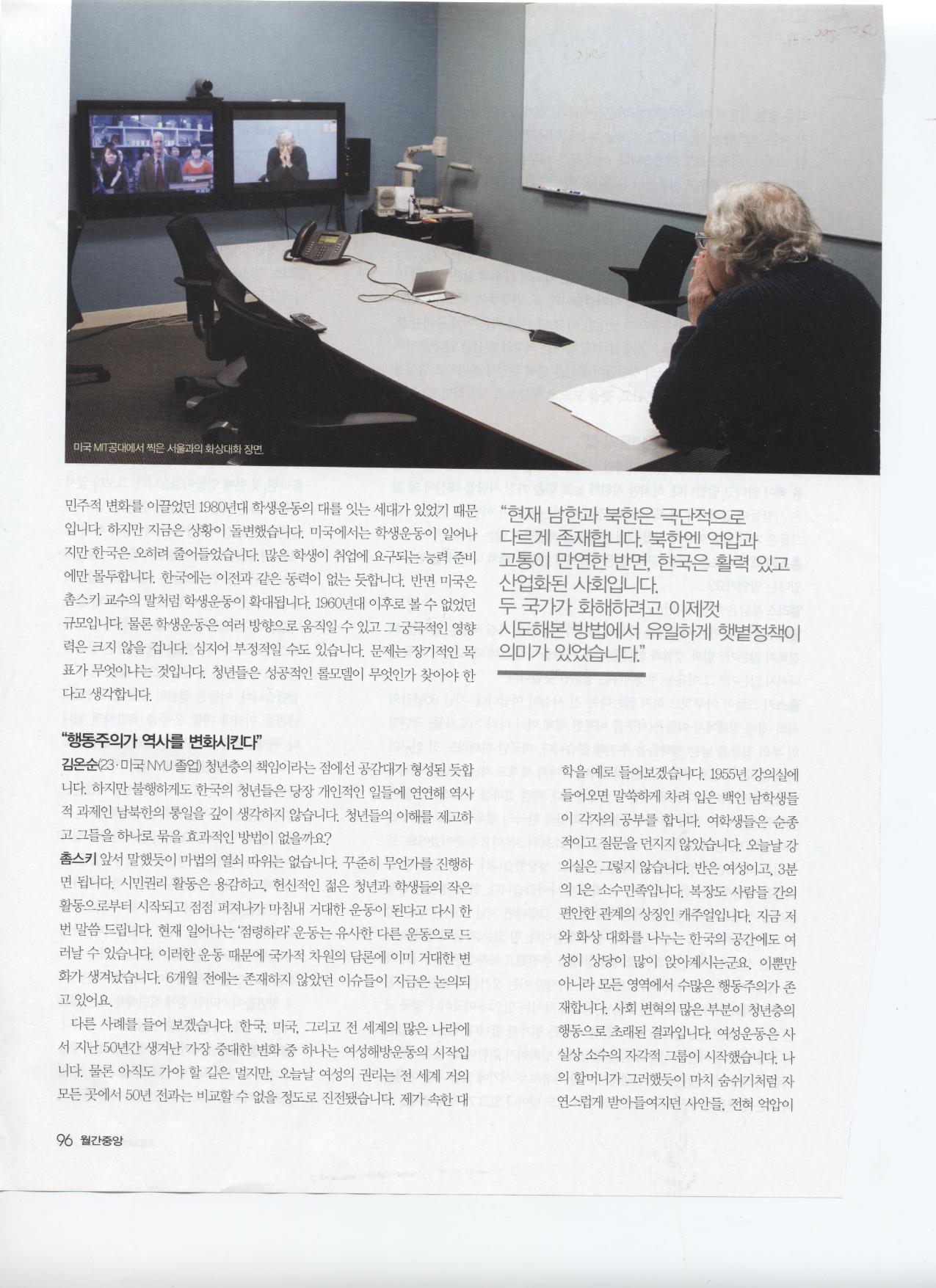
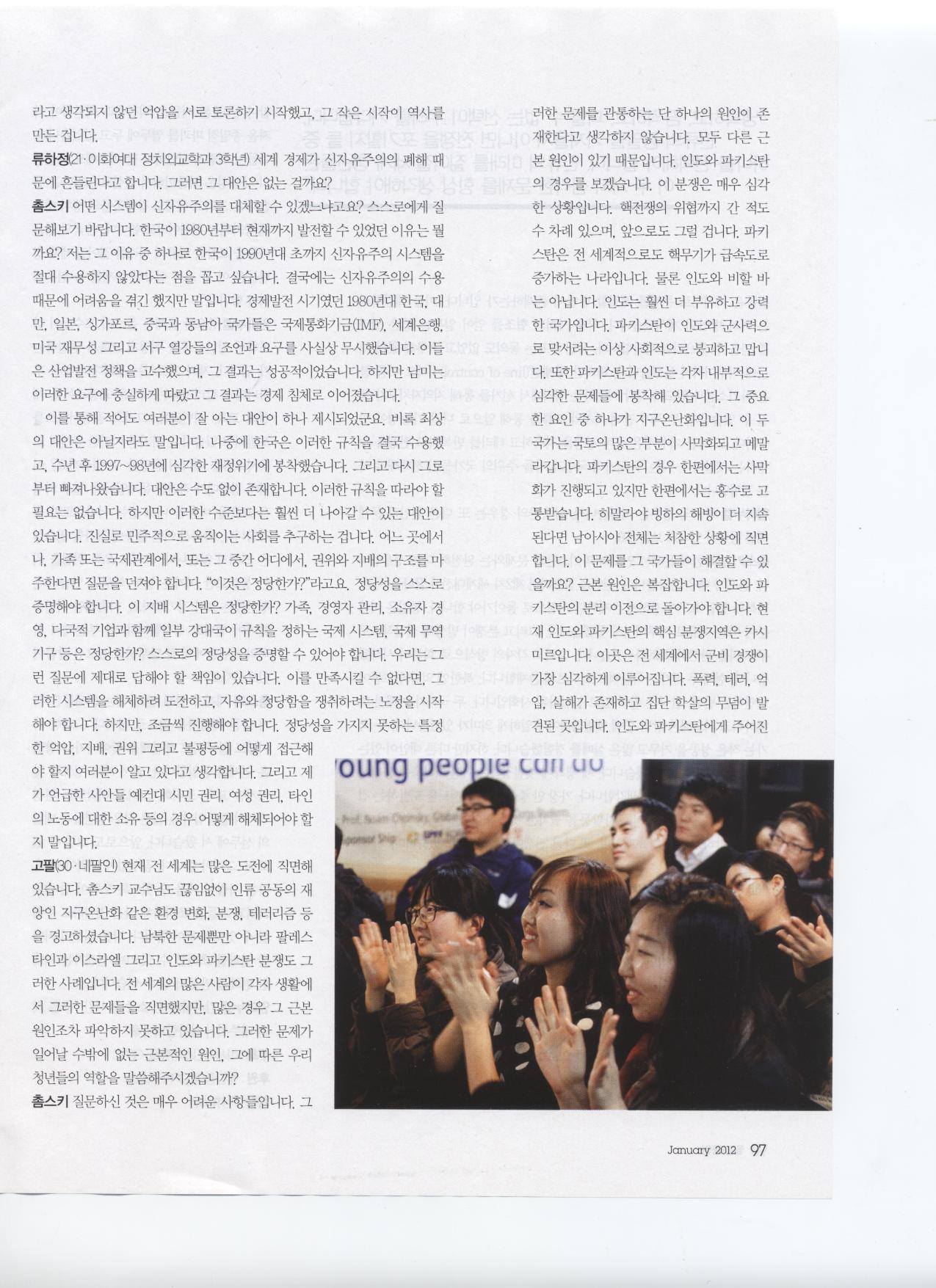
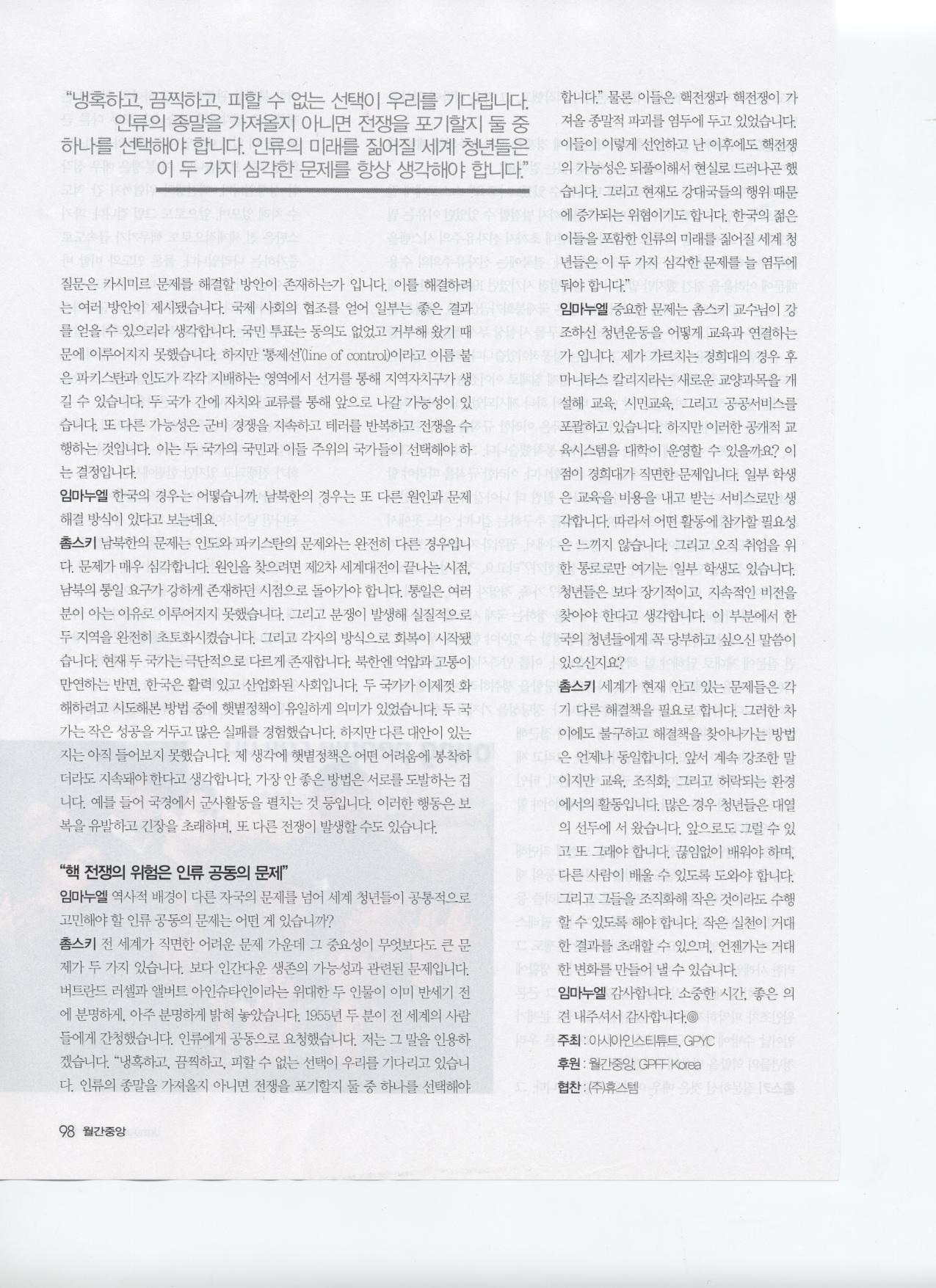
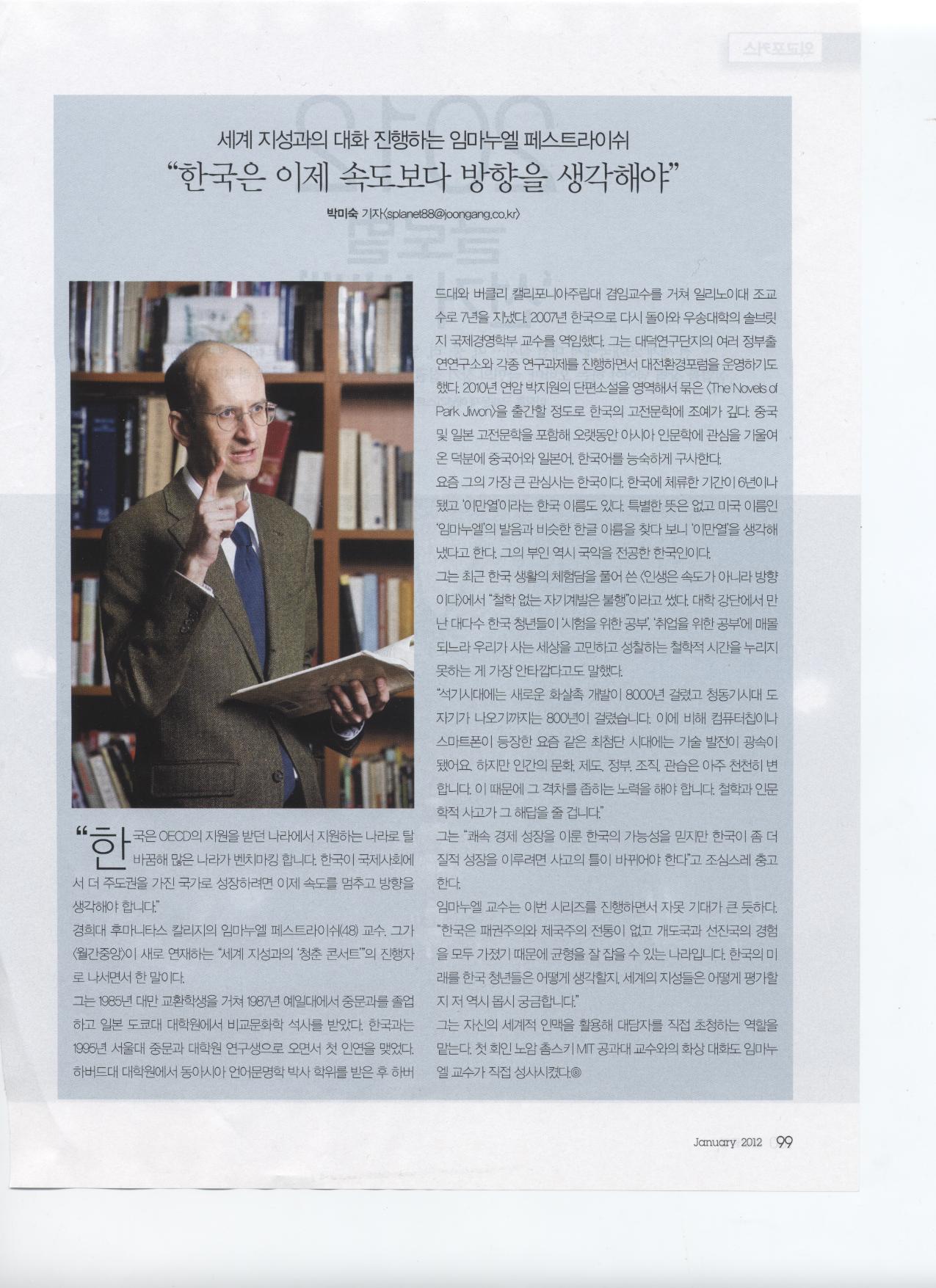
The December issue of Jung Ang Monthly Magazine (월간중앙) featured an extended article on our recent webinar with Professor Noam Chomsky of MIT. Here is a copy of the Korean text. The video and English version will be forthcoming.
The Asia Institute Seminar
December 29, 2011
Interview with Haun Saussy
University Professor of Comparative Literature
University of Chicago
Professor Haun Saussy is a leading scholar of Chinese and comparative literature, has been named University Professor of Comparative Literature in the Division of the Humanities and the College at the University of Chicago. One of the few figures with a deep understanding of both the Western classical and Eastern tradition, who has advanced arguments for a new global approach to comparative literature. Professor Saussy is the 17th person ever to hold the title of University Professor at University of Chicago, an honor given to distinguished scholars.
Saussy’s first book, The Problem of a Chinese Aesthetic (Stanford University Press, 1993), discussed the tradition of commentary that has grown up around the early Chinese poetry collection Shijing. His most recent book is Great Walls of Discourse and Other Adventures in Cultural China (Harvard University Asia Center, 2001), an account of the ways of knowing and describing specific to China scholarship.
In this article in Kukmin Ilbo Newspaper (January 2, 2012) I describe the shortcomings of Korean language education in the United States and make a few concrete suggestions. An English language version of this article is forthcoming.
국민일보
2012년 01월 02일
“적색경보, 미국 내 한국어교육”
“좋은 한국어 교재 만드는 건 작은 투자지만 미래의 한국 전문가 만드는 첩경이다”
하버드대학에서 한국어 수업을 들을 때 이야기다. 첫날 30명이 왔다. 이 중 22명이 한국계 미국인이고 한국계가 아닌 학생은 8명이었다. 그런데 2주일도 지나지 않아 한국계 아닌 수강생은 나 혼자만 남게 됐다. 강사들은 대부분 한국계 대학원생들이었다.

The Japan Times for January 1, 2011 offered this article on a cesium scanning store with the title “The New Normal?”
The implications are striking, if perhaps a bit overblown. Imagine what it would be to have long-term scanning for cesium, and possibly other isotopes, in Japan as part of the quotidian landscape?
You might expect South Koreans to be glued to the TV wondering what will happen next in North Korea. But you would be pretty far off. If anything, it is the internationals who are watching carefully. When I looked at the website of KBS News this evening, North Korea was not even in the top stories listed.
I have yet to see an article discussing the implications of climate change for North Korea. But the topic came up in a recent Asia Institute seminar with Vince Rubino, Matthew Weigand and I. If climate change, the global financial chaos, digitalization and the disorder stemming to domestic and international conflicts sweeping the world worsen in the years to come, there may be some unexpected consequences. Not the least of which would be the strengthening of North Korean power and influence.
“Strengthening of North Korean power? Wait a minute, Emanuel, what are you talking about? I thought North Korea was on the edge of collapse.
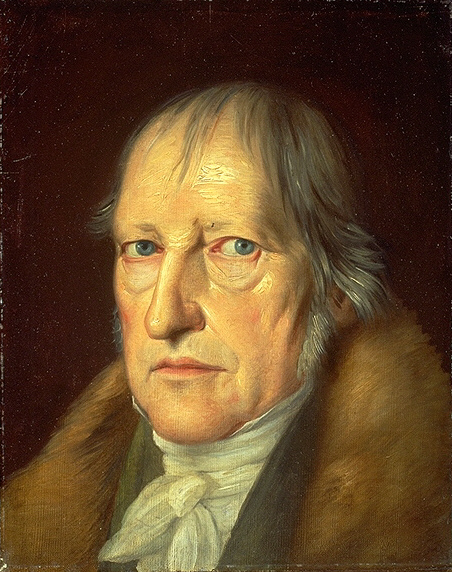
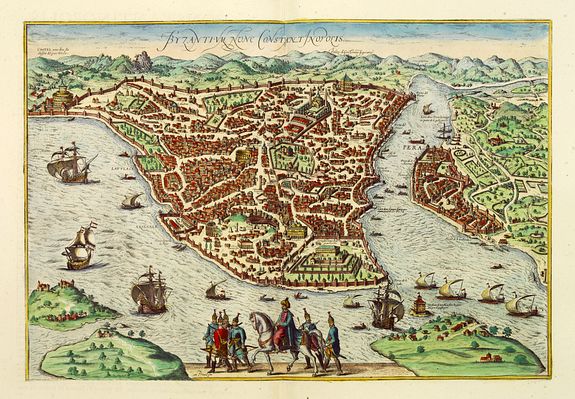

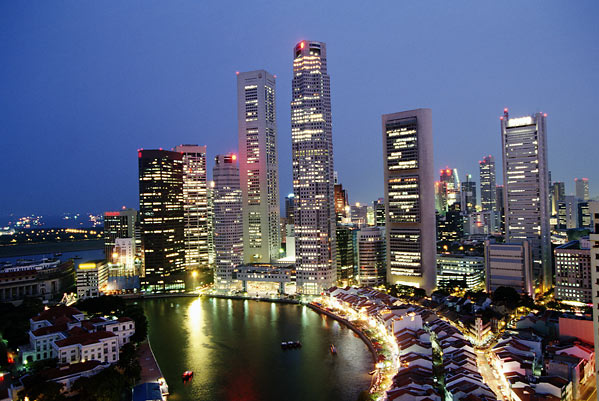
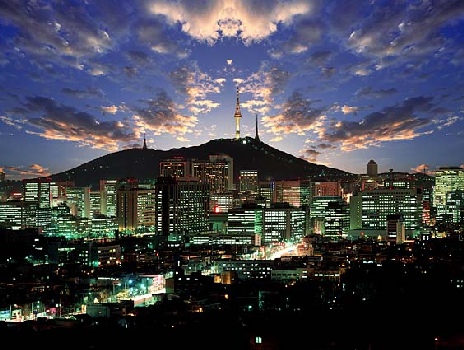
The rapid acceleration of technology today has the effect of speeding up historical processes. We see geopolitical shifts today take place at an increasingly fast pace. I can only think of Georg Wilhelm Friedrich Hegel on steroids. That is to say that historical cycles that would take centuries to unfold in a previous age are now playing out in fast forward.