I don’t know what your thoughts about the Korean pop group Girl’s Generation receiving its own set of stamps from the Korean Postal service. I suppose it is great for the Korean Wave, but personally, I fear that we are
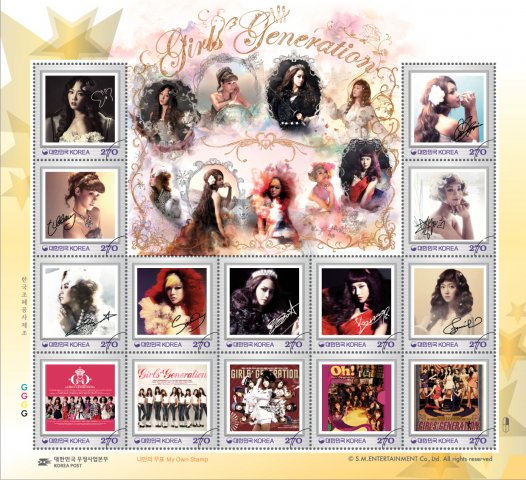
I don’t know what your thoughts about the Korean pop group Girl’s Generation receiving its own set of stamps from the Korean Postal service. I suppose it is great for the Korean Wave, but personally, I fear that we are
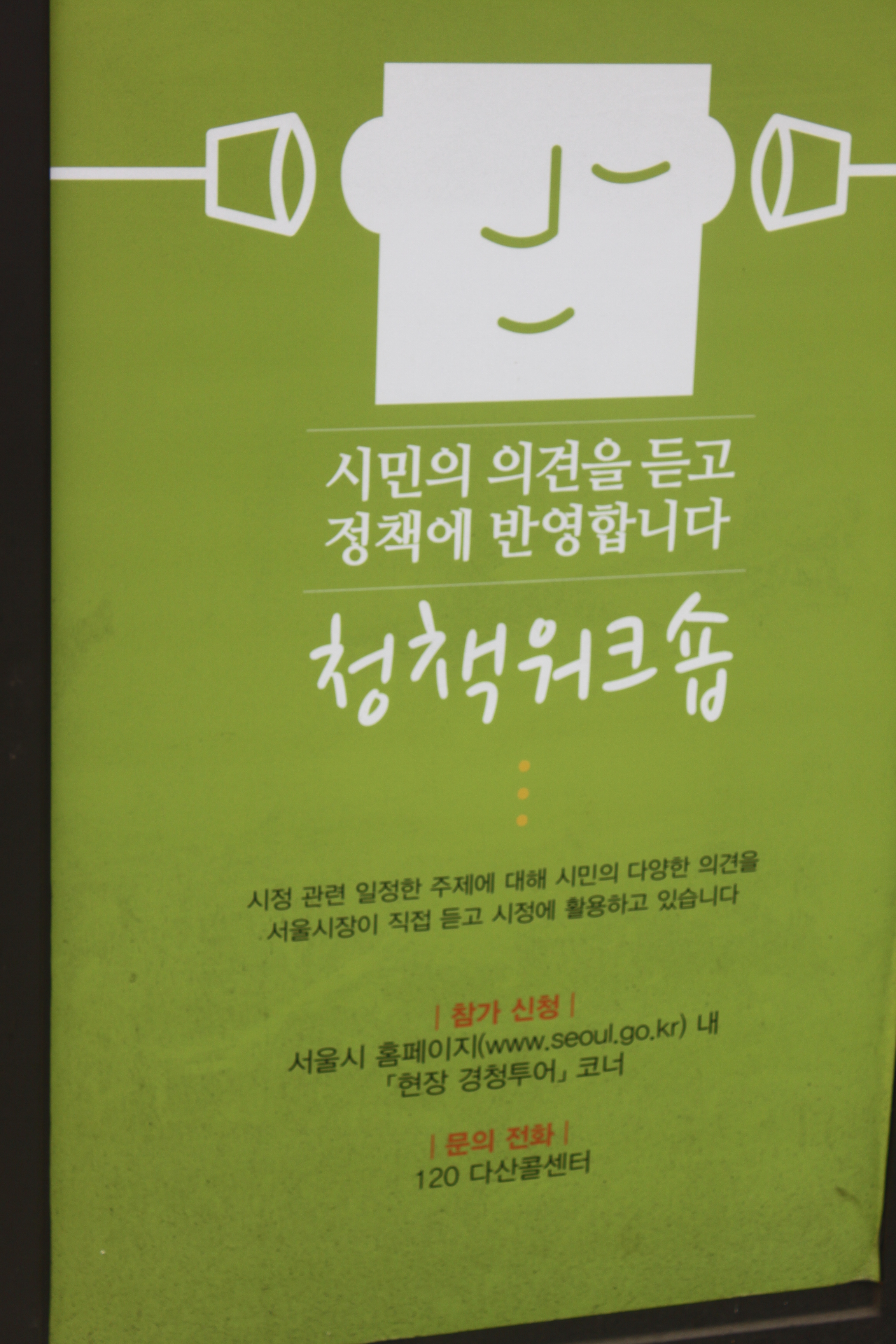
I am not sure what to make of these ads, but they certainly are unlike anything I have seen elsewhere: a call for Seoul’s citizens to participate in policy debate through workshops. I have not attended them, so I cannot say I know what actually happens.
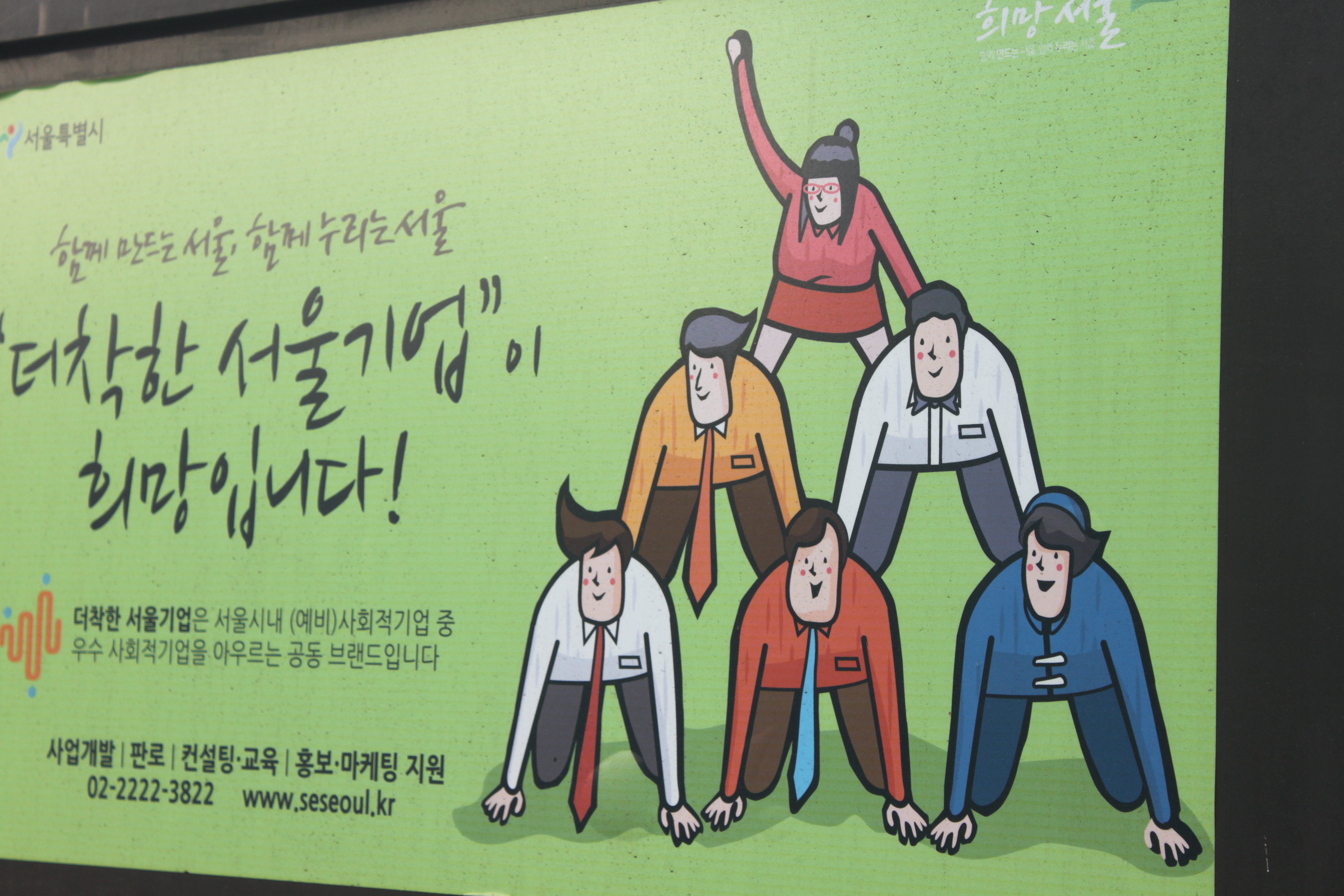
The status of women in Korea is a great mystery. Without any doubt, many of the most thoughtful thinkers are women and women show a assertiveness and determination in school that is striking. Yet within organizations, women have not fared that well.
Seoul City has launched several initiatives to improve the lives of women. Here is a sign that I saw today near my home.
Here are a few more interesting educational comics, “manhwa,” from Korea.

“The Rise of Consumption and the Demise of Causality”
Emanuel Pastreich
There are two enormous challenges today that seem unrelated and yet perhaps can be directly connected through a more profound consideration of the impact of technology on society: the rise of consumption culture and the demise of causality in our thinking, specifically with reference to the impact of our actions on the environment.
The first challenge is the challenge of greed and consumption. There is a deep need among people to consume that has assumed a crisis level in advanced industrial nations, reaching a level completely out of line with either the economic situation (which is dire) or human needs. That need to consume is spreading rapidly. It is common to attribute this situation to “greed” without much consideration for what it is that generates greed, how that act has its own social, historical and even physiological aspects.
Thursday, June 28, 2012
“A Paradigm Shift for Science and Technology: Prospects for Administrative Regimes”
Korean National Assembly
I delivered the keynote address at a seminar at the National Assembly of Korea entitled “A Paradigm Shift for Science and Technology: Prospects for Administrative Regimes” (과학기술패러다임의 변화와 행정 체제). The event was sponsored by
The event was sponsored by the Korean Congressional Research Service, the Korea Federation of Women’s Science and Technology Associations KFWSTA and Korea Advanced Institute of Women in Science, Engineering and Technology.
Opening remarks
Thursday, June 28, 2012
Asia Institute Seminar
“The Great Green Wall and the Fight against Desertification in China”
The Asia Institute seminar on the noble fight against desertification was a wake-call for all of us. I must admit that although I was pleased by the enthusiasm of the participants, I was shocked that we did not have a larger crowd. After all, the spread of deserts in China is perhaps the most serious challenge facing East Asia today and is a crisis that calls for a global solution.
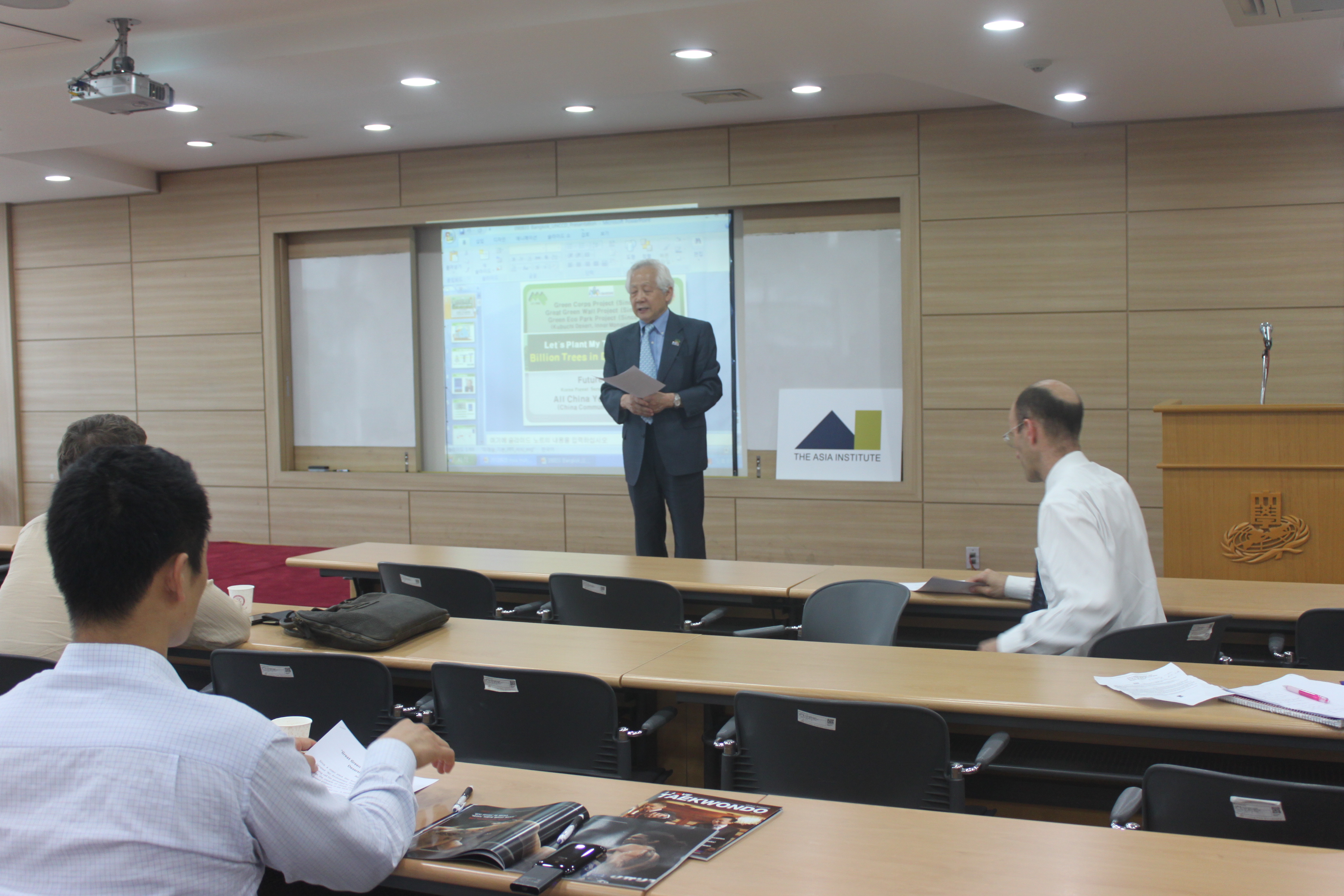
Yet attendance was less than for our seminar on nuclear power in North Korea—an important topic, but not anywhere as significant.
Ambassador Kwon Byunghyun spoke about his NGO Future Forest which
Video
Korean Federation of Industry
International Management Institute
Morning Lecture
Emanuel Pastreich
Director
The Asia Institute
(in Korean)
The Hangyoreh
June 24, 2012
The Korean Dream
Emanuel Pastreich
The United States became the major cultural force in the world during the 1950s and 1960s, putting forth through its media and its cultural institutions an image of a better life in a free society. The United States offered a powerful vision of a society wherein the individual could realize his or her dreams without the terrible institutional and cultural limits that hold back so many. That image of a good life in the United States was known as the “American Dream.” The American Dream was accompanied by significant intellectual and ethical content such as democratic process, social responsibility, the rule of law and excellence in scholarship and the arts that inspired the world to strive for something greater.
Not everything in the United States was as perfect as the vision given to the world. There were dark aspects of the United States such the hypocrisy of racial discrimination in a nation that spoke of equality and the ruthless pursuit of national interest in a nation that spoke of universal values. Nevertheless, the American Dream inspired people around the world to strive for something greater, to raise their standards for education, for fairness and for democracy to a new level. They stepped forward to demand changes in their countries, to innovate and to create a new society in every corner of the world.
A leading figure in speech recognition technology with a focus on Asia, Professor Mark Hasegawa-Johnson visited Seoul for a series of meetings arranged by the Asia Institute. Professor Hasegawa-Johnson works at the Beckmann Institute at University of Illinois, Urbana-Champaign.